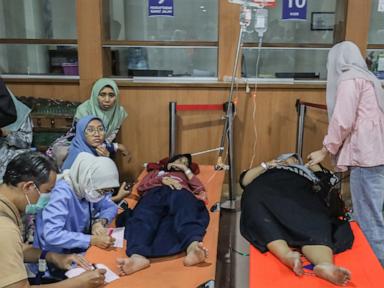
Nearly 2,000 students and teachers across Indonesia fell violently ill within a single week, suffering from severe acute gastroenteritis, nausea, and debilitating cramps. The culprit was not a localized market contaminant or a rogue street vendor, but rather the very initiative designed to save them: President Prabowo Subianto’s flagship Free Nutritious Meals program.
When state-sponsored nutrition schemes outpace the physical infrastructure required to handle mass catering, human cost becomes the margin of error. Over 50,000 individuals have suffered food poisoning across hundreds of recorded incidents since the program's inception, exposing a systemic collision between political ambition and basic biological safety limits.
The Logistical Nightmare of Mass Feeding
Feeding nearly 90 million school children, toddlers, and pregnant women is an unprecedented logistical undertaking. The state established tens of thousands of centralized and decentralized distribution centers, known by the Indonesian acronym SPPG, to cook and box millions of meals daily. Speed became the primary performance metric.
When velocity replaces caution in commercial or industrial kitchens, corners are inevitable casualties. Food safety protocols require strict temperature controls, rapid transit windows, and verifiable cold chains. In tropical climates with high ambient humidity, cooked carbohydrates and proteins left unrefrigerated for even a couple of hours turn into breeding grounds for Bacillus cereus, Salmonella, and Staphylococcus aureus.
Inspectors recently uncovered hundreds of unauthorized or entirely fictitious preparation facilities operating under the radar. When oversight bodies audit thousands of kitchens simultaneously, corruption and administrative shortcuts surface rapidly. Subcontracting to unregulated local vendors allows costs to drop, but it strips away quality control.
Political Will Versus Biological Reality
The political architecture of the program leaves little room for hesitation. Stunting and childhood malnutrition are genuine national emergencies in Indonesia, demanding aggressive structural intervention. Yet, treating food safety as an administrative hurdle rather than an absolute biological boundary creates fatal vulnerabilities.
National Nutrition Agency officials admitted that roughly 80 to 90 percent of previous poisoning outbreaks stem directly from failures to follow fundamental food storage and handling procedures. These are not sophisticated contamination events requiring advanced laboratory forensics to decode. They are basic failures of hygiene: rice left too long in humid containers, pre-cooked meats stored without adequate cooling, and water supplies compromised during preparation.
Public pushback has intensified as independent groups demand independent police investigations and immediate suspensions of offending kitchens. Trust in a state welfare program erodes rapidly when the delivery mechanism lands children in hospital wards instead of classrooms.
Anatomy of an Outbreak
Consider a hypothetical municipal kitchen preparing 3,000 boxed lunches for three separate schools across a dense urban regency. The kitchen operates at double its intended capacity. Rice is cooked at 4:00 AM to meet the early morning delivery deadline, packed while still warm into stacked plastic containers that trap ambient moisture, and left sitting in ambient room temperature waiting for transport vehicles that arrive two hours late.
Inside those sealed, warm boxes, bacterial spores multiply exponentially. By 11:30 AM, when students open their lunchboxes, the meal looks and smells acceptable to a rushed teacher, but it contains a toxic load of bacterial enterotoxins. Within three hours, hundreds of children experience violent vomiting and acute dehydration.
This scenario repeats itself from Central Java to South Sulawesi because the institutional pressure to distribute meals overrides the quiet, unglamorous work of checking refrigeration temperatures and sanitation logs.
The Path Forward Through Hard Restructuring
Shutting down over 830 non-compliant kitchens is a necessary start, but punishing individual operators addresses only the symptom. The structural flaw lies in the rush toward universal coverage before establishing a certified, heavily audited supply chain.
Mandatory health certifications currently cover only a fraction of active cooking units. Until every single distribution center operates under mandatory, unannounced microbial testing and verifiable cold-chain compliance, the program will continue to gamble with public health.
Ambition must yield to accountability if a nutritional lifeline is to avoid remaining a persistent public health hazard.
An investigation has been launched after some children became ill after eating free school meals in Indonesia This video provides on-the-ground context regarding the ongoing safety investigations surrounding Indonesia's mass school feeding initiatives.