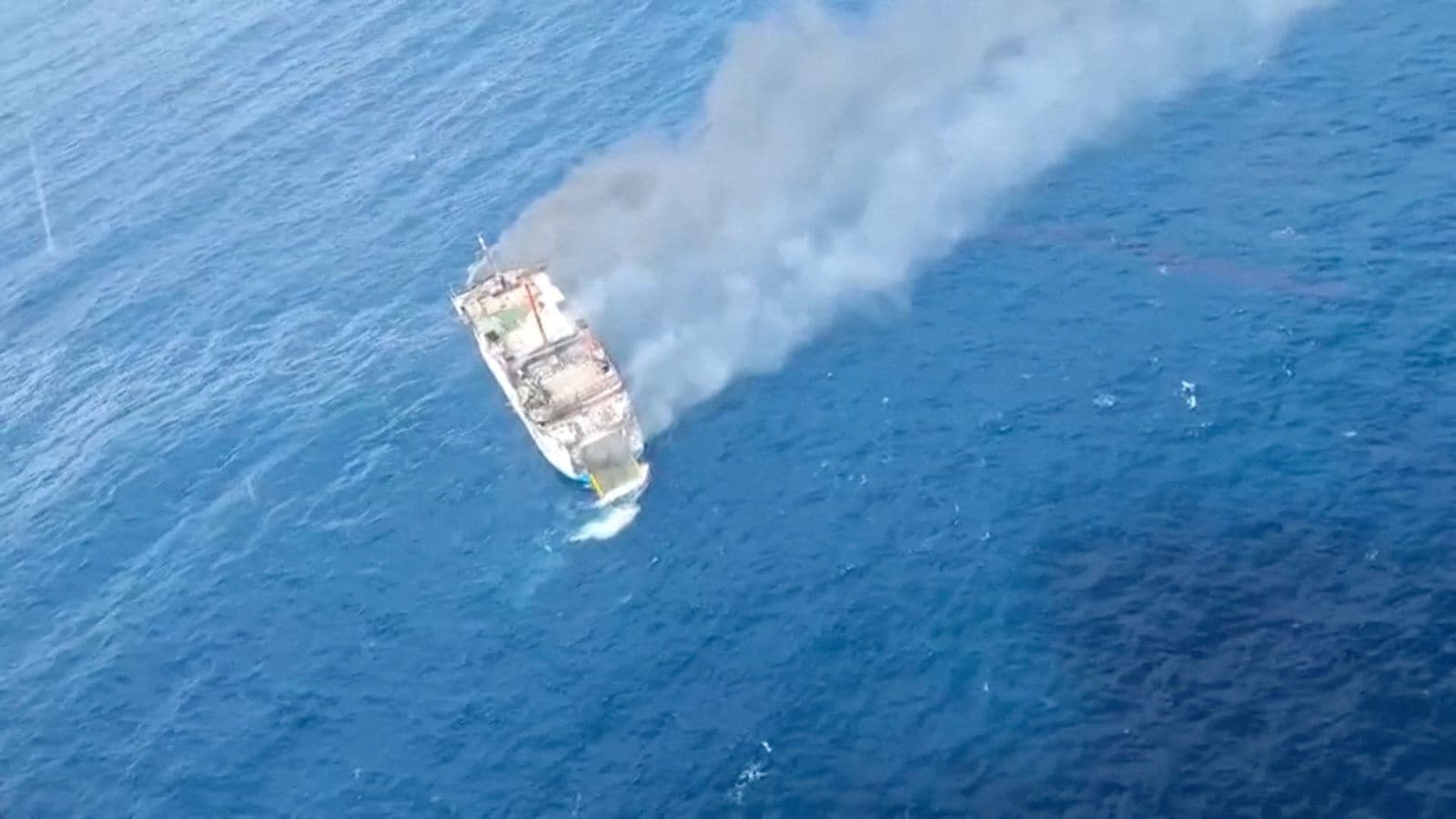
The fire aboard the passenger ferry KM Putri Yasmin broke out in the dark waters of the Lombok Strait at roughly 4:15 in the morning. By the time multi-agency rescue teams completed their evacuation operations, more than 200 people had been pulled from the burning vessel, and one 19-year-old Indonesian woman was confirmed dead. For most wire services, the headline began and ended with the raw casualty figures and the dramatic backdrop of hazardous four-meter waves. But focusing solely on the early morning rescue masks a much darker, systemic failure that repeats itself across the Indonesian archipelago with clockwork regularity.
This latest maritime disaster, occurring as the vessel traveled from Bali's Padang Bai port to Lembar on Lombok, is not an isolated act of bad luck. It is the predictable outcome of an under-regulated transit network operating under structural pressures that stretch safety protocols to their breaking point.
The Manifest Discrepancy Trap
Look closely at the numbers coming out of the Mataram Search and Rescue Office, and a familiar pattern emerges. The ship's official manifest listed a total of 131 people on board, including 17 crew members. Yet, when the evacuation dust settled, authorities accounted for over 200 survivors.
This is not clerical error. It is a chronic symptom of lax port oversight.
In many domestic Indonesian ports, passenger counts are treated as suggestions rather than strict operational limits. Unregistered travelers, informal ticket sales, and cash transactions bypass formal terminal gates with alarming frequency. When a fire breaks out in the dead of night, the manifest becomes instantly useless. Emergency responders are left flying blind, unable to verify if the last soul has been pulled from the water or if dozens remain trapped below deck in the cargo holds.
The KM Putri Yasmin was also hauling 44 vehicles and 53 motorcycles. Packing dense rows of motor vehicles tightly into enclosed hulls creates a tinderbox environment. A single electrical short circuit in a motorcycle battery or a leaking fuel line can transform a vehicle deck into an inferno within minutes. When combined with an unverified human load that far exceeds design specifications, the evacuation math turns lethal.
A History Written in Smoke
Maritime accidents in Indonesia rarely happen in a vacuum. This disaster arrived mere weeks after another major vessel, the KM Mutiara Sentosa 2, caught fire off the coast of Java and Madura, claiming multiple lives. Earlier in the same season, a ferry carrying over 70 people sank near Selayar island, leaving scores unaccounted for.
The archipelago relies heavily on these maritime routes. Spanning more than 17,000 islands, ferries are the economic arteries of Indonesia, moving everything from daily commuters and international tourists to commercial freight. Because bridges cannot span these deep oceanic trenches, the state delegates massive public safety responsibilities to private and semi-private ferry operators.
Competition is cutthroat. Operators face razor-thin profit margins, driving them to cut corners on maintenance schedules, skip mandatory fire-suppression system checks, and ignore the physical aging of their fleets. Many vessels servicing these high-traffic tourist lanes are decades old, retrofitted repeatedly to carry heavier vehicular loads than their original engineering permits allow.
When rough weather hits the Lombok Strait—churning up four-meter swells that complicate rescue efforts—the structural flaws of these aging hulls are violently exposed.
The Cost of Complacency
The immediate response by the Indonesian Navy, Basarnas, and local civilian vessels prevented this incident from turning into a historical catastrophe. Quick action by surviving passengers, many of whom grabbed life jackets and leaped into the dark sea before rescue craft arrived, saved dozens of lives.
Yet praising the rescue operation lets the regulatory bodies off the hook.
Investigations by the National Transportation Safety Committee will likely point toward an accidental electrical failure or auxiliary engine malfunction. They will question the crew and review the charred remains of the hull. But unless authorities address the root causes—systemic corruption at port check-ins, the widespread tolerance of overloaded manifests, and the absence of rigorous fire safety audits—another ferry will burn.
The waters between Bali and Lombok remain heavily traveled by tourists who assume that a routine inter-island crossing carries the safety standards of a modern cruise liner. Behind that illusion lies an overstressed maritime network where accountability is routinely abandoned long before the ship leaves the dock.