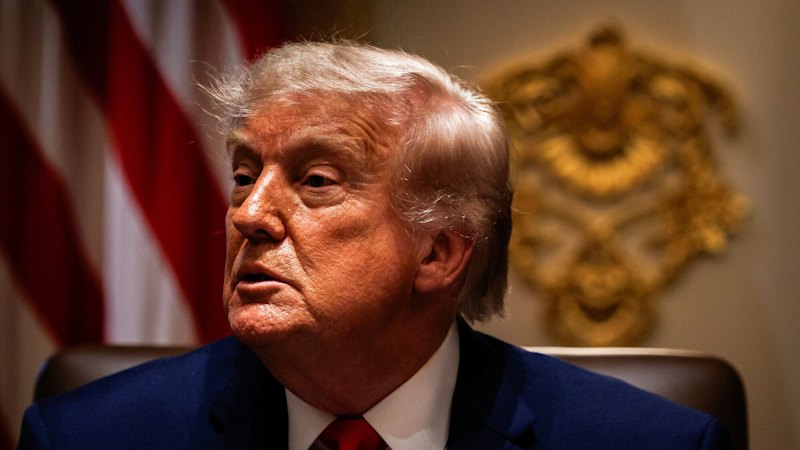
Donald Trump stepped out of a two-hour Situation Room meeting to declare that a comprehensive peace deal with Iran is close to finalization, asserting that Tehran must immediately reopen the Strait of Hormuz to unrestricted shipping without tolls. The American president claims that a sweeping memorandum of understanding is on the verge of execution, outlining an extraordinary list of concessions including the total elimination of Iran's nuclear program and the physical destruction of its highly enriched uranium stockpile. Yet beneath the triumphalist public declarations emanating from Washington, a far more volatile reality is playing out. Top Iranian officials are flatly contradicting the White House narrative, signaling that no such capitulation has occurred.
The disconnect reveals the immense stakes of a high-wire geopolitical gamble. While global markets have rallied on the mere hope of a diplomatic breakthrough, the actual mechanics of what is being negotiated in Islamabad and Muscat suggest that the conflict over the world's most critical maritime choke point is far from resolved. Meanwhile, you can read related events here: Why a Russian Drone Hitting Romania Changes the Rules for NATO.
The Illusion of Total Capitulation
The public terms outlined by Washington resemble less a mutually negotiated treaty and more an unconditional surrender document. According to the administration, the proposed 60-day memorandum of understanding would compel Tehran to allow the immediate removal of naval mines from the Strait of Hormuz, forgo all transit fees, and permit international teams to excavate and destroy its weapons-grade uranium.
The Iranian state apparatus has responded with immediate, coordinated skepticism. Media outlets close to the Islamic Revolutionary Guard Corps (IRGC) quickly labeled the American announcements as a tactical illusion designed to project a swift foreign policy victory. Tehran's foreign ministry confirmed that while messages continue to be exchanged through intermediaries, a final agreement remains elusive. To see the full picture, we recommend the recent analysis by BBC News.
The core of the dispute lies in the irreconcilable gap between American demands and Iranian survival strategies. For Iran, its 440-kilogram stockpile of highly enriched uranium represents the ultimate deterrent against external aggression. Relinquishing that leverage under the shadow of recent military strikes would be viewed by the domestic establishment as a catastrophic capitulation.
The Secret Battle for Maritime Revenue
Beyond the nuclear standoff, a deeper institutional battle is being waged over the long-term management of global trade. The Strait of Hormuz, a narrow waterway through which one-fifth of the world’s petroleum liquids pass daily, has historically been governed by international transit passage rules.
Iran is quietly attempting to permanently alter this framework. During recent closed-door consultations with regional intermediaries, Iranian negotiators have floated plans for a new administrative regime for the strait.
- Sovereign Toll Collection: Tehran intends to formalize a system of mandatory shipping fees for commercial vessels transiting its territorial waters.
- Tactical Security Clearances: Under the proposed framework, the IRGC Navy would assume explicit authority to inspect, clear, and log cargo manifests before granting passage.
- Reciprocal Sanctions Enforcement: Iran wants the legal architecture to bar vessels associated with nations hostile to its economy.
This structural shift explains why the Iranian parliament's national security commission has taken a hard line against the American narrative. They contend that international recognition of Iranian stewardship over the strait must be preserved, meaning the pre-war shipping status quo is effectively dead. If commercial vessels are forced to pay tolls or seek direct IRGC authorization to cross the waterway, the economic balance of power in the Persian Gulf changes completely.
The Broken Mechanics of Maximum Pressure
The current diplomatic impasse is the direct result of a military campaign that achieved its immediate destructive goals but failed to alter the target's strategic calculus. Following the collapse of previous deadlines, the intensive air campaign executed earlier this year aimed to dismantle Iran's command structures and force a swift political collapse.
It did not happen. Despite experiencing significant damage to conventional infrastructure and leadership personnel, the Iranian state did not fragment into internal chaos. The assumption that severe economic dislocation and targeted strikes would trigger an automatic domestic uprising proved fundamentally flawed.
Instead, the conflict entered a grueling economic war of attrition. By implementing a counter-blockade and seeding the shipping lanes with sophisticated naval mines, Iran successfully choked off the flow of regional energy supplies. The move inflicted severe financial strain on Western markets, proving that while Washington holds absolute conventional air superiority, Tehran maintains an effective veto over global maritime logistics.
The Valuation of Frozen Assets
A major sticking point preventing the final signature on any memorandum is the precise sequence of financial relief. Iran is demanding the immediate, unconditional release of approximately $12 billion in frozen overseas assets before any long-term nuclear inspections begin.
The American position dictates a phased approach. Washington intends to hold the funds in escrow, releasing them only as specific milestones are met, such as the verifiable dilution of enriched material.
| Proposed Phase | United States Obligation | Iranian Obligation |
|---|---|---|
| First 30 Days | Ease naval blockade on Iranian ports | Remove naval mines from the shipping channels |
| Day 31 to 60 | Partial release of escrowed assets | Permit IAEA inventory of enriched stockpiles |
| Post-MoU | Comprehensive sectoral sanctions relief | Physical extraction and destruction of uranium |
This structured timeline looks clean on paper, but it ignores the fundamental lack of trust between the two capitals. Iranian negotiators remember previous diplomatic agreements that were unilaterally dismantled by subsequent political shifts in Washington. They view a phased rollout as a trap designed to extract immediate physical concessions while leaving the economic rewards subject to political whims.
The Regional Intermediaries with the Most to Lose
The intense diplomatic maneuvering is not happening in a vacuum. The current framework is being driven forward by a coalition of regional powers that find themselves directly in the line of fire. Pakistan, which has quietly taken the lead in hosting face-to-face negotiations in Islamabad, is desperate to prevent a wider regional conflict that could destabilize its own borders.
Simultaneously, traditional Gulf states are playing a double game. While publicly supporting Washington's efforts to curb Iranian influence, nations like Saudi Arabia and the United Arab Emirates have engaged in intense bilateral discussions to protect their own oil export infrastructure. They recognize that a resumption of active hostilities means their processing facilities and desalination plants become primary targets for asymmetric retaliation.
This regional anxiety gives Tehran an advantage. The Islamic Republic knows that its neighbors are terrified of an extended war, meaning there is constant regional pressure on the United States to accept a compromise that falls short of absolute victory.
The Reality of a Deferred Crisis
The most likely outcome of the current Situation Room deliberations is not a historic grand bargain, but a temporary patch. A 60-day extension of the fragile ceasefire would allow oil prices to stabilize and give all sides a chance to catch their breath.
It solves nothing. A short-term memorandum simply kicks the most explosive issues down the road. It defers the final status of Iran's nuclear enrichment capabilities and leaves the management of the Strait of Hormuz in a dangerous legal limbo.
The underlying reality remains unchanged. Washington cannot tolerate an Iranian nuclear deterrent or an IRGC-controlled toll booth at the gateway to global energy markets. Tehran cannot survive if it surrenders its only viable leverage under the pressure of foreign dictates. Unless one side experiences a fundamental shift in domestic political will, the upcoming announcement from the White House will merely mark a brief intermission in an ongoing conflict.