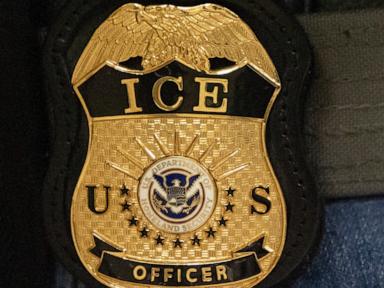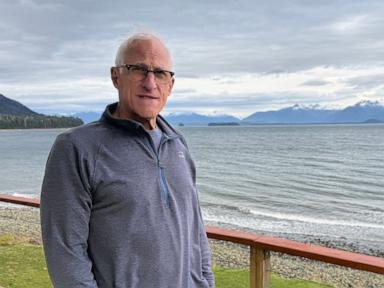
Federal investigators recently visited a campaign contributor in the hometown of U.S. Senator Dan J. Sullivan, signaling that a federal inquiry tied to the Alaska Senate race is examining how political money moves between local donors and national campaigns. According to initial reporting on the visit, agents from the Federal Bureau of Investigation questioned a donor in Sullivan’s hometown as part of a widening probe. That single detail—agents knocking on a door thousands of miles from Washington—points to a familiar, high-stakes reality in American political enforcement. When federal investigators step out of field offices and conduct in-person interviews with individual contributors, they are rarely looking at isolated clerical errors; they are testing whether campaign finance laws were bent, bypassed, or broken.
Yet the public record surrounding this specific inquiry remains deliberately narrow, which is standard procedure during active Department of Justice investigations. Neither the FBI nor Senator Sullivan’s campaign has released comprehensive details about the exact statutory focus of the questioning, and no charges have been announced against the senator or the contributor. Understanding what a visit like this actually means requires separating political theater from the mechanics of federal election law.
What an FBI Door Knock Actually Signals in Campaign Finance Cases
In federal law enforcement, an unannounced or scheduled visit to a campaign donor is an investigative tool designed to lock in testimony before subjects have time to coordinate narratives. It is a calculated move. Investigators in the Public Integrity Section of the Department of Justice and specialized FBI white-collar squads typically spend months analyzing Federal Election Commission filings, bank records, and corporate registries before making physical contact with witnesses.
When agents travel to a candidate’s hometown, they are usually following a specific trail of documentation. Under the Federal Election Campaign Act, individuals are bound by strict contribution limits per election cycle, and corporations are prohibited from making direct contributions to federal candidates. Because modern political fundraising relies heavily on bundled donations—where an individual or executive collects checks from friends, family members, or employees—investigators scrutinize patterns that look statistically improbable.
Consider a hypothetical example to illustrate how this works in practice. Suppose ten employees at a mid-sized regional company all donate the maximum legal amount to a Senate campaign on the exact same Tuesday, despite having no prior history of federal political giving. On paper, every single check is legal. To a forensic accountant at the FBI, however, that cluster is a red flag for a straw donor scheme, also known as conduit contributions. Under 52 U.S.C. § 30122, reimbursing someone for a political contribution—whether through a corporate bonus, an expense account, or cash—is a federal felony.
Agents visit individual donors to ask direct, uncomfortable questions about the source of the funds. Did the donor write the check using their own disposable income? Did anyone suggest the donation, and if so, was there an implicit or explicit promise of reimbursement? Was there pressure from an employer or a local business associate? By asking these questions face-to-face, agents gauge credibility and establish whether the contributor is a witting participant in a scheme or an unwitting conduit who was used to disguise the true source of political money.
The Structural Vulnerability of Hometown Fundraising Networks
Every federal candidate relies on a home base of financial support, and Alaska presents a particularly tight-knit political ecosystem. With a relatively small population and an economy heavily influenced by federal policy—ranging from resource extraction and defense spending to fisheries and Native corporation enterprises—the intersection between business interests and political representation is unusually direct.
In states with smaller donor pools, candidates often lean on long-standing personal and professional networks in their hometowns to build early fundraising momentum. Early money is the lifeblood of a Senate campaign; it signals viability to national party committees, deters primary challengers, and funds initial polling and staff hires. Because hometown supporters often share social clubs, business partnerships, and community boards, fundraising within these circles naturally happens in waves.
That organic clustering creates a persistent gray area for investigators and compliance attorneys alike. A group of local business owners who donate together at a hometown reception might simply be acting out of genuine civic enthusiasm and shared economic interests. Conversely, those same close-knit relationships make it easier for an ambitious fundraiser to quietly coordinate contributions in ways that cross statutory lines.
The Mechanics of Bundling and Compliance Blind Spots
Campaigns are legally required to make "best efforts" to collect and report the name, mailing address, occupation, and employer of every individual who contributes more than $200 in an election cycle. When those filings hit the public FEC database, opposing campaigns, watchdog groups, and federal analysts immediately run them through pattern-recognition software.
Several specific anomalies tend to trigger deeper scrutiny from law enforcement:
- Synchronized giving across non-traditional donors: Multiple maximum-limit contributions arriving within a 48-hour window from individuals whose reported occupations do not typically align with high-dollar political giving.
- Spousal and family splitting: Contributions where a donor gives the legal maximum, followed immediately by identical contributions from a spouse or adult children who have no independent record of political engagement.
- Vendor and contractor overlap: Donations originating from executives or employees of companies that recently secured state or federal contracts, or that have active regulatory matters before a senator’s committee.
- Late-cycle surges: Sudden spikes in hometown contributions right before quarterly FEC reporting deadlines, particularly when a campaign is trailing in cash-on-hand metrics.
Even when a campaign’s internal compliance team follows every verification rule, the campaign itself has limited visibility into a donor’s personal bank account. A campaign treasurer cannot audit a contributor’s private finances to verify that a $3,300 check was not quietly reimbursed by a third party. As a result, campaigns frequently find themselves blindsided when federal investigators begin questioning donors about transactions that appeared entirely routine on the surface.
Why Federal Prosecutors Treat Straw Donor Cases as High-Priority Targets
To the average voter, campaign finance violations can seem technical, bloodless, and disconnected from everyday concerns. To the Department of Justice, however, conduit contribution cases are foundational to protecting the integrity of democratic institutions. If wealthy individuals or corporate entities can bypass contribution limits simply by routing money through friends, relatives, or employees, the entire statutory framework of campaign finance collapses.
Furthermore, prosecutors view straw donor investigations as gateway inquiries. History shows that illegal campaign contributions rarely happen in a vacuum; they are frequently tied to broader questions of quid pro quo corruption, undisclosed lobbying, or regulatory favors. When investigators uncover a scheme to funnel illegal money into a campaign, their next step is almost always to examine what the person behind the money wanted in return.
At the same time, legal history demonstrates that an investigation is not a verdict. Federal campaign finance law is notoriously complex, and the line between aggressive, legal fundraising and an unlawful conduit scheme often hinges on proving intent. Under federal law, prosecutors must prove that a defendant acted "knowingly and willfully"—meaning they knew their conduct was unlawful and chose to do it anyway.
Historical Precedents and the Burden of Proof
Past federal inquiries into Senate and House campaigns across the country illustrate how unpredictable these probes can be. In some high-profile cases, initial FBI interviews with hometown donors unraveled massive, multi-year schemes involving corporate executives who used fake bonuses to reimburse employees for campaign checks, resulting in felony convictions and prison sentences. In other instances, wide-ranging inquiries that generated months of damaging headlines ended quietly with no charges filed against the candidate, or with minor civil fines levied by the FEC against a single overzealous fundraiser.
Consider the distinction between criminal prosecution and civil enforcement:
- Department of Justice (Criminal): Handles cases involving knowing and willful violations, falsification of federal records, or obstruction of justice. Requires proof beyond a reasonable doubt.
- Federal Election Commission (Civil): Addresses reporting errors, inadvertent excessive contributions, and administrative compliance failures. Resolved through conciliation agreements and monetary penalties.
When the FBI is conducting field interviews, the matter sits squarely in the criminal investigative track. Yet even within that track, investigators frequently interview dozens of witnesses simply to rule out wrongdoing and confirm that a suspicious pattern on an FEC spreadsheet has an innocent explanation. A donor might tell agents that they gave because a respected friend asked them to, using their own savings, with zero expectation of repayment. If ten donors tell the same consistent, verifiable story backed by clean bank records, the inquiry loses momentum.
The Political and Legal Calculus for a Sitting Senator
For an incumbent senator like Dan J. Sullivan, news that federal agents are interviewing hometown donors presents an immediate dual challenge: managing legal risk while containing political fallout. In the court of public opinion, the mere presence of the FBI in a candidate's hometown carries an implicit suggestion of scandal, regardless of whether the candidate had any knowledge of the underlying conduct.
Opponents inevitably seize on reports of a widening inquiry to raise questions about judgment, ethics, and the influence of special interests. Meanwhile, legal counsel for a campaign must operate under strict constraints. Saying too much publicly can prejudice an ongoing investigation, alienate potential witnesses, or inadvertently contradict facts that investigators have already established through subpoenas. Saying too little, however, leaves a vacuum that political adversaries are eager to fill.
Standard crisis-management protocol in Washington dictates that campaigns distance themselves from any alleged misconduct while reaffirming their commitment to strict legal compliance. Campaigns typically emphasize that they rely on donors to attest to the legality of their own contributions and state that they will cooperate fully with any official inquiry. Behind the scenes, however, campaign lawyers immediately begin their own internal audit—reviewing every contribution linked to the individuals or networks under scrutiny, segregating questionable funds into escrow accounts, or issuing preemptive refunds to demonstrate good faith.
How Alaska's Unique Political Geography Shapes the Scrutiny
Alaska is not a typical political state, and standard Beltway assumptions often miss the nuances of how money and influence operate there. Because the federal government owns roughly sixty percent of the land in Alaska, decisions made in Washington—regarding oil and gas leasing in the National Petroleum Reserve, mining permits, timber rights, and military infrastructure—directly dictate the state's economic health.
Senator Sullivan, serving on key panels such as the Senate Armed Services Committee, the Commerce, Science, and Transportation Committee, and the Environment and Public Works Committee, occupies positions of direct relevance to Alaska's core industries. Consequently, donors from Alaska's energy, construction, maritime, and logistics sectors have a profound, legitimate stake in his legislative work.
In a state where the business community is small enough that major players know one another by first name, political fundraising is deeply personal. A fundraiser in Anchorage or Fairbanks does not resemble an anonymous ballroom event in Manhattan; it is a gathering of neighbors, former classmates, and longtime business partners. That intimacy fosters high levels of trust, which makes fundraising efficient, but it also blurs the formal boundaries that compliance lawyers prefer to maintain. When a prominent local business leader encourages peers to support a hometown senator, the social pressure to participate can be intense, even when no money changes hands behind the scenes.
What Investigators Look for Next
As an inquiry of this nature develops, the trajectory usually follows a predictable sequence behind closed doors. Following initial field interviews with individual donors, investigators typically assess whether to issue grand jury subpoenas for financial records, email communications, and text messages. Digital trails are often far more revealing than bank statements; a casual text message mentioning "getting squared away" after a fundraiser can transform a routine contribution into a federal felony case.
Investigators also look closely at the role of intermediaries—the fundraisers, consultants, or business associates who organized the donations. If a single bundler is tied to multiple donors who express confusion or hesitation during FBI interviews, that individual becomes the primary focus of the investigation. From there, prosecutors evaluate whether the evidence stops at the intermediary or points toward anyone inside the campaign apparatus who knew, or deliberately ignored, that contributions were being illegally sourced.
For voters and observers watching the Alaska Senate race, the critical distinction remains between the existence of an inquiry and the establishment of culpability. Federal investigations are methodical, opaque, and slow by design. Until prosecutors either unseal an indictment or formally close the file without action, the public is left watching the shadows cast by investigative steps—each knock on a door in Alaska serving as a reminder that in modern federal politics, every dollar has a paper trail, and every trail eventually leads back to its source.