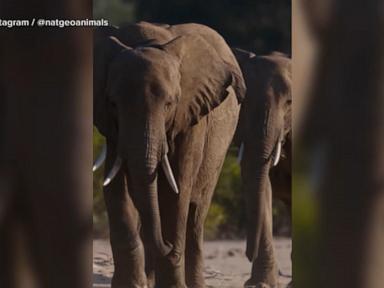
National Geographic’s Secrets of the Elephants and companion promotional spots like "Moment on the Earth" give viewers front-row seats to trunk hugs, desert treks, and deep family bonds, yet cinematic wonder often hides the brutal reality of shrinking ranges, ivory trafficking, and daily survival. Elephants are not merely gentle giants posing for 4K cameras. They are keystone architects of entire ecosystems whose rapid decline reshapes forests, savannas, and human livelihoods across Africa and Asia.
Watching a herd move across a screen feels timeless. The math on the ground is anything but.
Poaching for ivory continues to strip wild populations faster than calves can be born, even decades after international bans were meant to choke off demand. At the same time, expanding farms, roads, and settlements fracture ancient migration routes, pushing elephants and people into violent, costly collisions. Celebratory wildlife media brings millions of eyes to the screen, but awe alone does not stop a snare, rebuild a corridor, or pay for a ruined harvest.
Why Cinematic Wonder Masks a Harder Truth
Prestige wildlife television relies on intimacy. Viewers watch matriarchs guide young calves through arid riverbeds or touch trunks in moments that look unmistakably affectionate. Those scenes work because they bridge an emotional gap between urban audiences and wild animals.
There is a catch. High-definition storytelling frequently isolates behavior from political and economic pressure. When a camera lingers on a quiet gathering at a waterhole, it rarely shows the fenced boundary ten miles away where a farmer spent the night banging drums and lighting firecrackers to keep hungry bulls out of maize fields.
Audiences leave with a warm feeling about elephants. Field researchers and community leaders return to budgets that never quite cover the basics.
- Emotional connection versus structural reality: Seeing individual personalities builds public goodwill, yet goodwill rarely translates into sustained funding for anti-poaching patrols or corridor land acquisition.
- Selective visibility: Savanna herds in famous reserves are easier to film and monitor than elusive forest elephants tucked inside dense Central African canopies.
- Short attention spans: A viral clip or streaming episode peaks for a few weeks, while habitat fragmentation and climate stress grind on year after year.
Media coverage is not the enemy of conservation. It is a megaphone. The problem starts when the megaphone is pointed exclusively at spectacle while the mechanics of survival stay off-camera.
Two Species Under Very Different Pressures
For years, conservationists treated African elephants as a single management unit, a shortcut that blurred crucial biological and ecological differences. Genetic and morphological research cemented the split between the African savanna elephant (Loxodonta africana) and the African forest elephant (Loxodonta cyclotis), and the International Union for Conservation of Nature has increasingly separated their status reporting to reflect distinct realities.
Forest elephants live in smaller groups inside dense tropical forests and reproduce more slowly than their savanna cousins. Because their habitat offers thick cover and fewer open sightlines, counting them has historically been far harder than flying aerial transects over open grass. Newer genetic tools, such as dung DNA analysis, have helped researchers refine population estimates in forested areas, yet those same forests have faced severe pressure from logging, road building, and ivory poaching.
Savanna elephants face a different set of bottlenecks. Where protected areas are fenced or hemmed in by agriculture, high local densities can strip woody vegetation and alter fire regimes. Elsewhere, poaching spikes and drought strain water sources.
| Dimension | African Savanna Elephant | African Forest Elephant |
|---|---|---|
| Primary Habitat | Open savannas, woodlands, and arid edges | Dense tropical rainforests |
| Social Structure | Larger, more visible family herds | Smaller, more elusive foraging units |
| Survey Challenge | Aerial and ground counts in open terrain | Dense canopy requires dung DNA and acoustic methods |
| Core Threat Mix | Poaching, corridor loss, drought, human conflict | Heavy historical poaching, forest roads, habitat loss |
Calling both simply "elephants" makes for tidy headlines. It makes for sloppy policy.
The Economics of Coexistence Nobody Wants to Admit
Conservationists love the word coexistence. In practice, coexistence is an uneven bargain.
A tourist flying into a game reserve sees a magnificent bull cross a dirt track and feels lifted by the sight. A smallholder farmer living along the edge of a corridor sees a two-ton animal flatten a season's worth of food in a single night. When livelihoods are thin, tolerance wears down fast.
A wild elephant can be a global treasure to a viewer thousands of miles away and an existential threat to a family trying to harvest crops before the rains fail.
Compensation schemes sound fair on paper. In reality, they often bog down in slow verification, underfunded pools, or disputes over whether a fence was properly maintained. Even when payouts arrive, they rarely match the timing or full shock of lost food and lost sleep.
Consider a hypothetical example to see how incentives collide. Suppose a village sits beside a vital forest corridor linking two elephant habitats. Keeping the corridor open protects genetic diversity and lets elephants move seasonally without getting trapped. If the villagers earn little or nothing from eco-tourism and lose crops every autumn, asking them to value the corridor on ecological grounds alone is asking them to absorb costs they cannot afford.
Practical human-elephant conflict tools do exist, and several show real promise when paired with local leadership:
- Beehive barriers: Stringing hives along farm edges can deter elephants while generating honey income for households, though maintenance requires ongoing training and reliable markets.
- Early-warning networks: Community scouts, trip alarms, and mobile alerts help families protect crops and avoid dangerous night encounters on footpaths.
- Planned land use: Keeping high-value or highly palatable crops away from known movement paths reduces losses without requiring permanent walls everywhere.
None of these measures is a silver bullet. Bees abandon hives during dry spells, fences need repair, and elephants learn quickly when a deterrent stops working. Real progress depends on whether local residents see tangible benefits from sharing space rather than bearing all the risk.
Why Ivory Bans and Ranger Patrols Only Go So Far
Law enforcement is essential when armed syndicates target tusks. Rangers on the ground put their lives on the line to confiscate snares, track poachers, and protect core habitats.
Yet enforcement alone treats symptoms late in the supply chain. Smuggling routes adapt to border checks, corrupt intermediaries move cargo across jurisdictions, and demand in distant markets keeps prices attractive enough to tempt desperate or well-funded actors.
A hardened security approach can also backfire if it alienates nearby communities. When park authorities treat local residents solely as suspects rather than partners, intelligence dries up and resentment grows. Sustainable protection requires community-led monitoring, fair employment inside conservation programs, and credible legal prosecution higher up the trafficking chain.
At the same time, climate shifts are rewriting the rulebook. Longer dry spells shrink seasonal pools and stress vegetation, forcing herds to wander farther in search of water and forage. A corridor mapped twenty years ago may no longer match where water remains in a hotter, drier decade.
What Real Accountability Looks Like Next
Great nature television does a real service when it pulls people out of apathy and reminds them what the planet stands to lose. Still, watching a screen is the easiest part of caring about wildlife.
Anyone who wants more than fleeting inspiration can judge conservation stories and campaigns by sharper standards. Look past dramatic footage and ask who gets paid, who bears the cost of living next to wildlife, and whether a project funds long-term local capacity or just short-term publicity. Support organizations that publish transparent field outcomes, back community-led conflict reduction, and push for cross-border corridor protection before remaining habitats shrink past the point of recovery.
Secrets of the Elephants Season 1 Episode 3 on YouTube
This National Geographic episode shows how elusive forest elephants navigate rainforest pressures on screen, giving context to the real-world survival challenges discussed in the article.