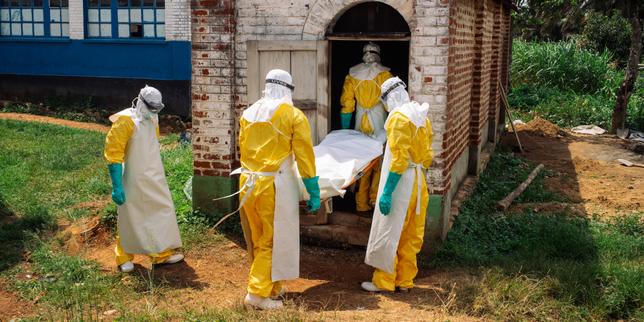
The current Ebola outbreak in the eastern Democratic Republic of the Congo has surpassed 1,200 confirmed cases and 320 deaths, driven by a rare viral strain for which there is no approved vaccine or specific treatment. While international health agencies track the statistics, the true crisis is unfolding off the grid in the artisanal gold-mining hub of Mongbwalu. Here, the intersection of an unmapped, highly transient migrant workforce, systemic local distrust, and an invisible multi-month delay in initial detection has created an epidemiological blind spot. Containment efforts are failing not because of a lack of medical knowledge, but because standard outbreak protocols are entirely incompatible with the reality of an active conflict zone dependent on illegal gold economies.
The Blind Spot of an Unmapped Index Case
Medical investigators now trace the origin of the current crisis back to February 4, 2026, when a local pastor was buried in Mongbwalu. His body was handled by relatives, and the coffin broke during the ceremony. He was never tested for Ebola. Within weeks, nearly 50 people who attended or had direct contact with the family died of severe hemorrhagic symptoms.
By the time the Congolese Ministry of Public Health officially declared the outbreak on May 15, 2026, the Bundibugyo virus strain had already been circulating undetected for more than three months.
Standard containment strategies rely on identifying an index case—the first documented patient—and tracing every physical contact within a 21-day window. In Mongbwalu, this is structurally impossible. The local economy revolves around informal, artisanal gold pits. Thousands of young men move between these unmapped wilderness camps daily, hiding from both state authorities and local armed groups. When miners fall ill, they do not visit public clinics; they hide in the forest or travel back to their home villages across provincial borders, carrying the virus with them.
The data bears this out. The epidemic spread from a single mining town to the provincial capital of Bunia, jumped south into North Kivu, and crossed the international border into Kampala, Uganda, within a matter of weeks. The World Health Organization declared it a Public Health Emergency of International Concern on May 17, yet the formal response is still fighting an outbreak that existed months ago, rather than the one moving through the bush today.
The Science of the Bundibugyo Strain
Unlike the more common Zaire strain of Ebola, which caused the catastrophic West African epidemic and subsequent outbreaks in North Kivu, the current crisis is fueled by the Bundibugyo virus species. This distinction is critical.
The highly effective Ervebo vaccine, which saved thousands of lives in previous outbreaks, targets the surface glycoprotein of the Zaire strain. It offers zero cross-protection against Bundibugyo. Monoclonal antibody treatments like Ebanga and Inmazeb are similarly ineffective here.
Ebola Virus Strains & Medical Countermeasures (2026 Status)

[Zaire Strain] ------------> Ervebo Vaccine / Ebanga Treatment (Approved & Available)
[Bundibugyo Strain] ------> No Approved Vaccines / No Approved Therapeutics
Health workers are left with basic supportive care: oral or intravenous hydration, blood pressure regulation, and symptom management. The case fatality rate for this specific outbreak hovers around 28 percent. While lower than the 50 to 60 percent seen with the Zaire strain, the lack of a medical shield changes the entire psychology of the response. Public health teams cannot walk into a village and offer an immediate vaccine ring to protect neighbors. They can only isolate the sick and wait.
Armed Conflict and the Breakdown of Trust
Ituri Province is currently home to a complex humanitarian crisis, with over 900,000 internally displaced persons fleeing decades-old ethnic violence. Armed groups, including the Allied Democratic Forces, operate throughout the dense terrain around Mongbwalu. More than 170 civilians were killed in militia violence in May alone.
In this environment, an influx of international medical teams driving white SUVs and wearing full-body personal protective equipment does not inspire confidence; it inspires terror. Rumors have spread that international organizations introduced the virus to depopulate the gold fields or to profit from experimental treatments. Multiple healthcare workers have been attacked, and community structures have been burned down.
This resistance is not a product of simple ignorance. It is a rational response to historical abandonment. Local populations have watched billions of dollars in gold leave their soil for decades while their clinics remain devoid of basic medicine, electricity, or running water. When the state and international actors suddenly mobilize millions of dollars only when a disease threatens global health, the local community views the intervention with deep suspicion.
Why Free Healthcare is Failing to Soften the Impact
In an attempt to encourage early reporting, the DRC Ministry of Health introduced a pilot program offering free healthcare for all illnesses across Ituri Province. The logic appeared sound: if patients do not have to pay to visit a clinic for malaria or typhoid, they will seek care earlier, allowing triage teams to catch early Ebola symptoms, which mimic common tropical fevers.
The initiative has run into harsh structural realities.
- Many informal clinics in mining zones are completely outside the state network and receive no subsidies.
- The delay in diagnostic testing remains severe; until recently, blood samples had to be flown across the country to Kinshasa, taking days to return a result.
- Malnutrition affects over half of the children under five in the region, compromising immune systems and making younger populations twice as likely to die from the virus as adults.
A sick miner or a mother with a febrile child weighs the prospect of entering a state-run facility against the certainty of losing daily wages, being stigmatized by neighbors, or being caught in a militia raid on an isolated road. Most choose to stay home.
The response cannot succeed by simply repeating the playbooks used in predictable urban settings. Until public health operations integrate directly with the informal networks running the artisanal gold trade and address the fundamental security vacuum of Ituri, the virus will continue to outrun the statistics.