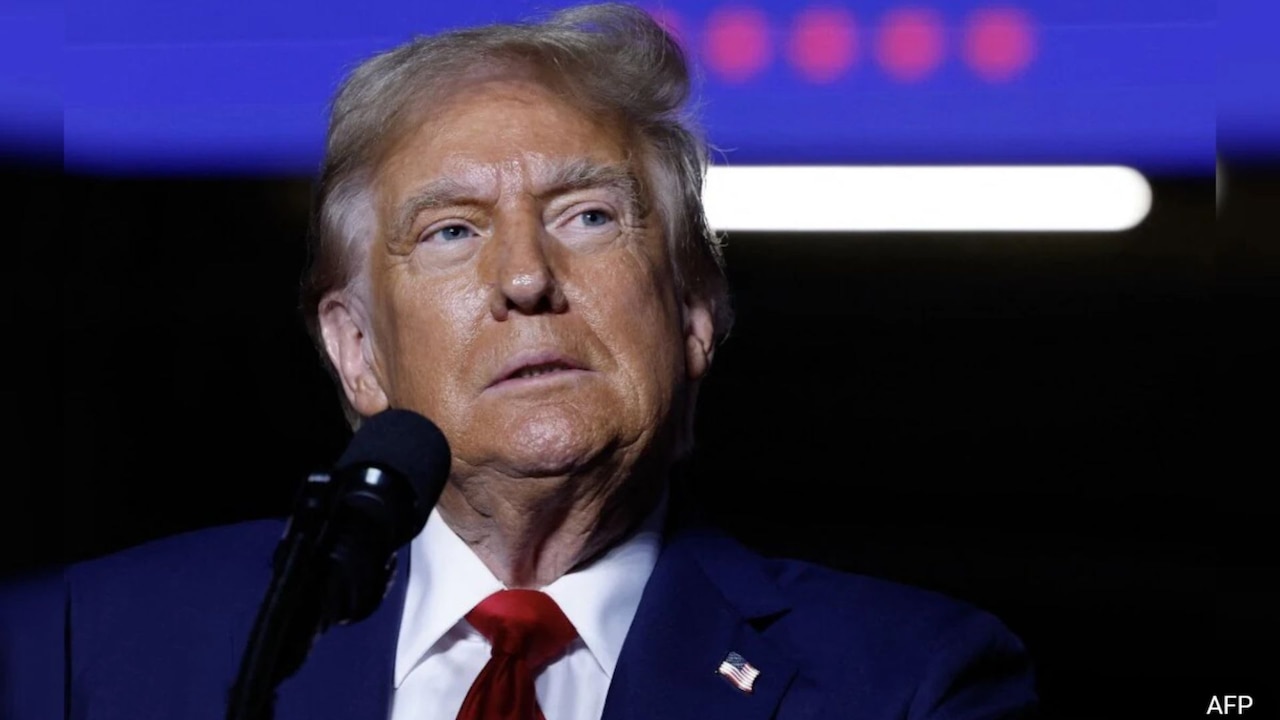
Donald Trump has explicitly warned that he will "destroy" the Democratic Party if lawmakers attempt to impeach him again, signaling a calculated shift from defensive legal maneuvering to preemptive political warfare. Rather than treating impeachment as a constitutional check, Trump and his inner circle view any third effort to remove him from office as an existential threat that justifies total institutional retaliation. This threat is not mere campaign-trail bravado. It is the opening salvo in a coordinated campaign designed to paralyze Democratic leadership through primary challenges, aggressive Department of Justice investigations, and the weaponization of executive oversight before a single article of impeachment can even be drafted.
Washington has seen this movie before, yet the stakes have changed dramatically. During his first term, Trump survived two impeachments—first in 2019 over his dealings with Ukraine, and again in 2021 following the January 6 Capitol attack. Both times, the Senate acquitted him. Both times, the process consumed months of legislative oxygen. Now, with Trump back in the White House and the political math of the 2026 midterm elections looming over Capitol Hill, the rhetoric has hardened into an explicit doctrine of mutually assured destruction.
The Anatomy of a Preemptive Strike
To understand what Trump means by "destroying" his opposition, you have to look past the cable news chyrons and examine the machinery currently being assembled in Washington. In political terms, destruction rarely looks like a single dramatic event. It looks like systemic attrition.
Trump’s threat operates on three distinct fronts, each aimed at raising the personal and political cost of impeachment for individual Democratic lawmakers to an unbearable level.
The first front is financial and electoral. Trump sits atop a fundraising apparatus that has fundamentally altered Republican politics, proving he can end the careers of sitting GOP lawmakers who cross him—a fate suffered by figures like Liz Cheney and Adam Kinzinger. His strategists have made it clear that any vulnerable Democrat in a swing district who backs impeachment will face an immediate, multimillion-dollar blitz of targeted spending, opposition research dumps, and primary interference designed to fracture their local coalition.
The second front involves the executive branch itself. Throughout his return to power, Trump has championed the unitary executive theory—the legal doctrine that the president possesses sole, sweeping authority over the executive branch. By installing loyalists across key agencies, particularly at the Department of Justice and the FBI, the administration has positioned itself to launch reciprocal investigations into Democratic lawmakers, their donors, and their family members. When Trump threatens destruction, he is reminding Congress that the subpoena power does not belong exclusively to the legislative branch.
The third front is narrative warfare. Trump understands better than almost any modern politician that impeachment is fundamentally a public relations battle, not a legal trial. By framing any potential impeachment inquiry as an illegitimate "coup" by an entrenched political class before it even begins, he aims to inoculate his base and exhaust independent voters before the facts of any alleged misconduct can reach the public square.
Why Impeachment Still Haunts the White House
If Trump survived two impeachments and still won reelection, why does the prospect of a third trigger such an aggressive response? The answer lies in the brutal realities of second-term governing and the fragile margins in Congress.
A president's second term is always a race against irrelevance. Once the midterm elections arrive, the focus of Washington inevitably shifts toward the next presidential cycle, turning the sitting commander-in-chief into a lame duck. An impeachment inquiry accelerates that decay. It freezes the administration's legislative agenda, forces White House counsel to spend millions on legal defense rather than policy execution, and dominates the daily news cycle with damaging headlines.
More importantly, the 2026 midterms present a genuine vulnerability for the administration. Historically, the party holding the White House loses seats in midterm elections. Should Democrats recapture the House of Representatives, the gavel of the House Judiciary Committee and the House Oversight Committee would immediately change hands. Subpoenas would fly. Administration officials would be dragged before cameras for hours of hostile questioning. Even if the Senate remains firmly out of reach for the two-thirds majority required to convict and remove a president, a Democratic House can inflict severe political damage simply by holding the hearings.
Trump knows this. His threat to destroy the opposition is an attempt to deter swing-district Democrats from campaigning on accountability, forcing them to choose between appeasing their progressive base and surviving their own reelection bids.
The Democratic Dilemma on Capitol Hill
Inside the Democratic caucus, the prospect of another impeachment battle is sparking a quiet, intense civil war. Publicly, party leaders insist they are focused on kitchen-table issues—inflation, healthcare costs, and infrastructure. Privately, many strategists view the previous impeachments as a cautionary tale.
Consider the political fallout of the 2019 Ukraine impeachment. While it galvanized the Democratic base and brought in record small-dollar donations, it failed to move the needle with independent voters in battleground states. In fact, Trump’s approval ratings actually ticked upward during the Senate trial in early 2020. For moderate Democrats representing districts that Trump won or narrowly lost, voting for impeachment is political poison.
Yet the pressure from the party's left flank is relentless. Progressive activists and major donors argue that failing to use the Constitution's ultimate remedy in the face of perceived executive overreach amounts to institutional surrender. They contend that normalizing norm-breaking behavior only invites further abuses of power.
This leaves Democratic leadership trapped in a strategic vise. If they pursue impeachment, they walk directly into the trap Trump has set, allowing him to rally his supporters around a narrative of victimhood while unleashing the full weight of his political machine against vulnerable incumbents. If they hold back, they risk demoralizing their own base, leading to depressed turnout in crucial elections. Trump’s scorched-earth rhetoric is explicitly designed to widen this fault line within the Democratic coalition.
Historical Precedent and the Erosion of Constitutional Guardrails
To grasp how far American politics has drifted from the Founders' design, it helps to look at the history of impeachment before the modern era. For nearly two centuries, impeachment was treated as the nuclear option of American governance—a solemn, last-resort mechanism used only once against a president, Andrew Johnson in 1868, until Richard Nixon faced certain removal in 1974.
When Nixon resigned, he did so because leaders of his own party walked into the Oval Office and told him the votes to convict were there. The system worked because institutional loyalty outweighed partisan allegiance.
That era is dead. Starting with the impeachment of Bill Clinton in 1998, the process began transforming from a constitutional safeguard into a routine weapon of partisan warfare. By the time Trump entered the White House, tribal loyalty had entirely replaced institutional restraint. Neither party is willing to break ranks to remove its own leader, rendering the Senate trial a foregone conclusion before the opening arguments are even delivered.
Trump’s threat to destroy his opponents represents the logical endpoint of this evolution. When impeachment loses its power to actually remove a president, it becomes purely an instrument of political attrition. In response, the presidency itself transforms into an instrument of political retaliation. The guardrails that once kept executive and legislative conflicts within institutional bounds have been stripped away, replaced by raw power dynamics.
The Mechanics of Political Retaliation
Critics often dismiss Trump’s rhetoric as hyperbole, pointing out that presidents cannot simply "destroy" a major political party in a two-party system. That critique misses the point. You do not need to outlaw a party to cripple its ability to compete for national power.
Look at how modern political warfare is waged at the state and local levels. By combining aggressive litigation, targeted regulatory enforcement, and relentless media pressure, an administration can systematically drain an opposition party's resources.
Imagine a scenario where the federal government aggressively audits progressive non-profit organizations, challenges state-level voting laws in Democratic strongholds through the Justice Department, and strips federal funding from blue-state infrastructure projects under the guise of regulatory compliance. None of these actions requires passing a single law through Congress. Every single one of them forces the opposition to spend tens of millions of dollars on lawyers instead of voter outreach.
At the same time, Trump’s dominance over the conservative media ecosystem allows him to dictate the terms of the national conversation. When he labels a political opponent corrupt or treasonous, that framing is instantly amplified across thousands of podcasts, local radio stations, and social media feeds, creating an informational bubble that traditional fact-checking cannot penetrate. For a Democratic lawmaker in a purple district, the constant threat of becoming the main character in the conservative outrage machine is a powerful deterrent against taking bold action.
The Blind Spot in the White House Strategy
For all its ruthless efficiency, Trump’s deterrence strategy carries a massive, potentially fatal flaw. Threats only work when the target believes they have something left to lose.
If the administration pushes executive power to a point where Democratic lawmakers feel their political survival—or the survival of their constituents' rights—is already compromised, the deterrent effect of Trump’s threats evaporates. Cornered politicians do not surrender; they lash out. By escalating the rhetoric to absolute terms, Trump risks creating a self-fulfilling prophecy where Democrats conclude that impeachment, despite all its political perils, is the only tool left to slow down an unchecked executive.
Furthermore, American voters have a long history of punishing perceived overreach by whichever party holds power. When a president appears more focused on settling personal scores and crushing political rivals than on lowering the cost of groceries or securing the border, independent voters quickly sour on the administration. The very tactics Trump intends to use to destroy the Democrats could easily alienate the suburban swing voters who handed him the presidency in the first place.
Public fatigue with endless political warfare is real. Most Americans do not wake up thinking about constitutional crises or committee subpoenas. They care about interest rates, job security, and local schools. A White House consumed by vendettas risks looking chaotic and self-obsessed, handing the opposition the exact contrast they need to win back the electorate.
The Reality of the New Washington Playbook
The era of collegiality in Washington is not coming back, and no amount of nostalgic commentary will revive it. Trump’s warning to the Democratic Party is a blunt acknowledgment of how power is actually exercised in modern American politics. It is no longer a debate over policy papers or competing visions of governance; it is a bare-knuckle fight for institutional dominance.
Democrats now face a stark choice that will define the remainder of the decade. They can either call Trump’s bluff, embrace the political carnage of another impeachment battle, and bet that the public will reward them for taking a stand, or they can absorb the blow, keep their powder dry, and focus entirely on winning elections at the ballot box. Either way, the rules of engagement have been permanently rewritten, and the next clash between the White House and Capitol Hill will leave no room for survivors on the middle ground.