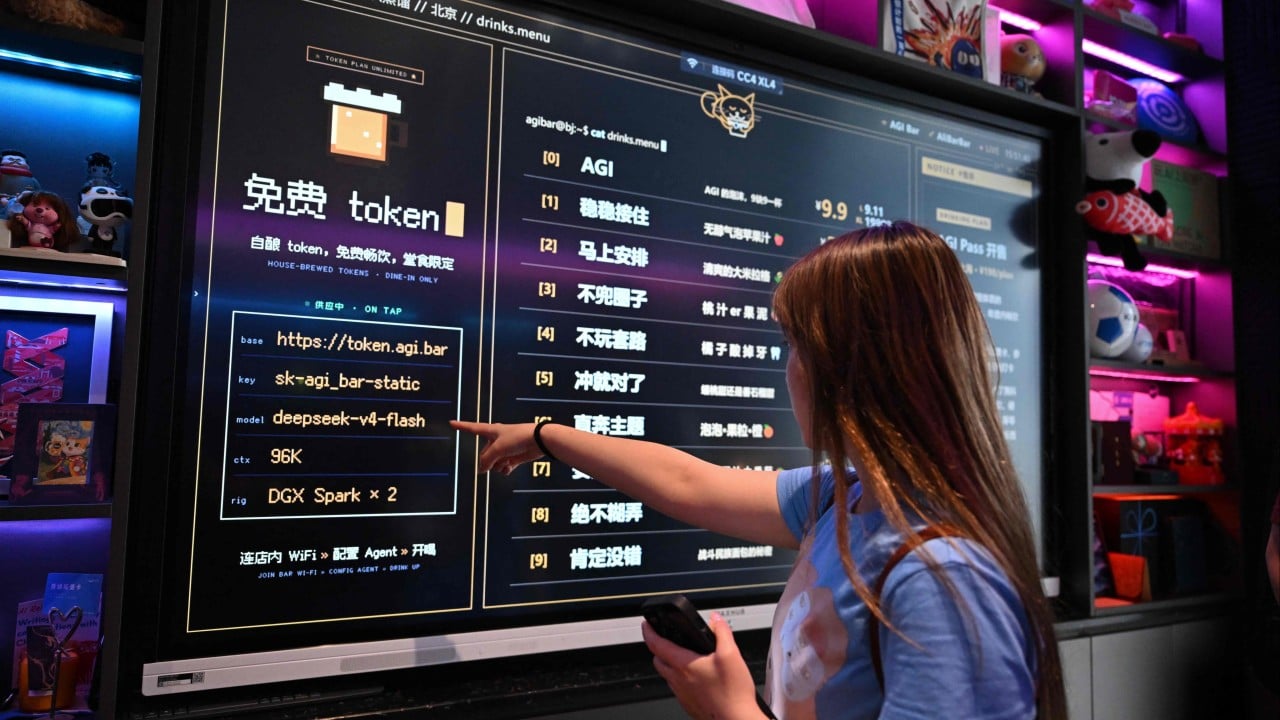
For the past two years, white-collar employees across Beijing and Shenzhen enjoyed a quiet corporate indulgence. Major internet enterprises handed out internal AI tokens like office snacks. Engineers at Baidu, Tencent, Alibaba, and ByteDance watched their usage meters spin freely as they deployed large language models to write boilerplate code, draft marketing copy, and summarize endless internal documents. Consuming vast quantities of computing power became an informal office status symbol.
That era of unmetered abundance has slammed shut. You might also find this similar coverage interesting: Why Taiwan Testing US Drones Changes the Strait Equation.
Behind closed glass doors, enterprise cost accounting has caught up with the generative artificial intelligence boom. The reality of infrastructure economics is biting hard, forcing China's tech heavyweights to quietly clamp down on internal consumption. Workers are discovering that their daily token budgets have been slashed, throttled, or subjected to intense managerial scrutiny. What began as an aggressive campaign to force internal adoption has transformed into a desperate scramble to control runaway operational expenses.
To understand why China's biggest firms are rationing compute for their own staff, one must look past corporate PR statements about efficiency and examine the raw arithmetic of inference. Processing requests through advanced models requires immense compute power, primarily driven by specialized hardware that remains severely constrained under ongoing geopolitical trade restrictions. Every query submitted by an engineer or product manager carries a literal, measurable electricity and hardware cost. When multiplied across hundreds of thousands of corporate employees running multi-step agentic workloads—which consume exponentially more compute than basic chat queries—the financial drain becomes staggering. As highlighted in recent coverage by Gizmodo, the effects are widespread.
Corporate leadership originally viewed heavy internal AI usage as a positive metric of digital transformation. Employees were encouraged to experiment, automate, and build workflows around proprietary models. Yet management eventually realized that unrestricted consumption was inflating overhead without yielding proportional returns on productivity. An engineer using ten thousand tokens to write a basic Python script might save twenty minutes of manual labor, but if that cycle repeats millions of times daily across a workforce, the cost curve detaches entirely from commercial reality.
This tension exposes a deeper structural flaw in the current technology cycle. The market has shifted past the initial novelty phase of conversational chatbots and moved into the era of autonomous software agents. These systems do not merely answer a prompt; they execute complex, multi-step operations that involve reading databases, running tests, and calling external APIs. The token consumption of an autonomous agent operating for twelve hours can dwarf a traditional user session by a factor of fifty. When companies scale these tools across their internal operations, the resulting compute bill threatens quarterly profit margins.
Consequently, internal governance has tightened dramatically. Employees at major tech firms report receiving monthly token quotas, tiered access levels, and explicit warnings against running unoptimized prompts. In some divisions, excessive usage now requires departmental sign-off or direct cost-center billing. The messaging from executive suites has shifted from an unconditional push for automation to a sober demand for fiscal discipline.
This internal rationing serves as an early warning indicator for the broader commercial market. If enterprises with direct access to domestic foundational models must restrict usage among their own technical staff, the path toward profitable enterprise software becomes considerably steeper. The transition from subsidized experimentation to strict industrial accounting shows that computing power is treated less like software and more like raw industrial electricity.
The free-flowing tap is closed. The real cost of the artificial intelligence transition has finally arrived at the office desk.