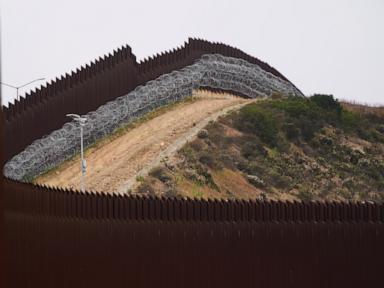
Along the winding stretches of the Rio Grande, a small Texas community finds itself locked in a high-stakes standoff with federal authority. When national border security policies mandate federal land condemnation and sweeping wall construction, towns like Laredo, Eagle Pass, and the tiny enclaves scattered across Webb and Maverick counties bear the immediate economic, legal, and environmental brunt. Property owners who have held deeds for generations are receiving eminent domain notices, forcing a confrontation over private property rights, local commerce, and the realities of border enforcement.
Federal mandates often treat the southern border as a uniform blank slate. Local residents know better. The opposition taking root in rural Texas is not merely a political statement; it is a battle over survival, land ownership, and economic self-determination.
Property Deeds Against Federal Power
The legal mechanism behind federal border wall acquisition relies heavily on eminent domain, a process that allows the government to seize private property for public use provided "just compensation" is offered. For border landowners, the reality of this process is far more complicated than a simple financial payout.
Federal land acquisition attorneys often issue taking notices under the Declaration of Taking Act of 1931. This law allows the federal government to assume immediate title to the land upon filing a petition in court and depositing an estimated value of the property into the court's register. Property owners are frequently left with two choices: accept an initial valuation that rarely accounts for lost water access or diminished land utility, or spend tens of thousands of dollars in legal fees to contest the taking in federal court.
Land in southern Texas is rarely just open dirt. Ranchers depend on direct access to the Rio Grande for irrigation and livestock watering. When a continuous steel bollard structure is built hundreds of feet inland from the riverbank to accommodate terrain and construction equipment, it effectively cuts ranchers off from their primary water source. The land trapped between the wall and the actual river becomes an unusable, legal no-man's-land.
"When the government places a physical barrier half a mile inside your property line, you do not just lose acreage. You lose the water rights, the operational flow of your ranch, and decades of equity."
Legal fights in the United States District Court for the Southern District of Texas demonstrate how slow and uneven these battles are. While the government possesses virtually unlimited litigation resources, individual property owners must pool resources or rely on pro bono legal coalitions to file injunctions.
The Economic Engine of the Border
National rhetoric frequently frames border communities as passive zones requiring protection. The economic reality is that these towns operate as crucial engines of international trade.
Texas border crossings facilitate hundreds of billions of dollars in bilateral trade annually with Mexico. Cities like Laredo handle thousands of commercial trucks daily across international bridges. The local economies rely on a fluid, highly regulated ecosystem of cross-border commerce, logistics, warehousing, and retail.
Commercial Disruptions
A physical barrier built near commercial zones and downtown waterfront districts introduces severe logistical hurdles:
- Downtown Gridlock: Physical walls alter municipal traffic flows, impeding the transport of goods from border processing sites to inland distribution hubs.
- Retail Decline: Border towns depend heavily on Mexican shoppers crossing legally for everyday commerce. Constructing severe physical barriers creates a psychological and operational environment that discourages routine cross-border visits.
- Property Devaluation: Industrial and residential land adjacent to heavy military-style infrastructure suffers immediate drops in market value, shrinking the local tax base that funds municipal emergency services and public schools.
When federal infrastructure programs bypass consultation with local city councils and flood control districts, municipal planners are left to manage the fallout. A wall built across natural floodplain zones can exacerbate river flooding during severe storm events, potentially directing torrents of water directly into residential neighborhoods.
Environmental Realities along the Rio Grande
The ecological impact of continuous concrete and steel barriers extends far beyond aesthetics. The Rio Grande basin is a fragile ecosystem where wildlife movement and water management are intricately linked.
Steel bollards set close together act as massive strainers during heavy rain cycles. Debris floating down the river during high-water events gets caught against the structures, turning an intentional security barrier into an unintended dam. During major floods, trapped water backs up into agricultural fields and local townships, threatening infrastructure and accelerating soil erosion.
Wildlife migration represents another critical operational challenge. Species such as the ocelot, jaguarundi, and various migratory bird populations depend on uninterrupted corridors along the river ecosystem. Breaking these corridors threatens long-term ecological balance and jeopardizes federal and state conservation investments made over the past half-century.
Bridging the Policy Gap
Addressing border security without devastating local communities requires shifting from a blunt, one-size-fits-all approach to a strategy rooted in localized intelligence and technology.
Smart Border Alternatives
Advocates for border property rights and local officials consistently argue for non-intrusive alternatives that deliver security without land destruction:
- Autonomous Surveillance Towers: Utilizing radar, thermal imaging, and artificial intelligence to detect movement over large areas without building physical obstructions.
- Fiber-Optic Ground Sensors: Deploying underground sensing arrays along sensitive corridors to detect foot traffic and vehicular movement in real time.
- Targeted Infrastructure: Focusing physical barriers exclusively on high-density urban areas while using high-tech monitoring in rural, agricultural, and topographically difficult zones.
The conflict between national mandates and local reality highlights a fundamental flaw in top-down policy creation. When Washington decisions ignore the voices of the people who actually live, work, and farm along the Rio Grande, the result is prolonged legal litigation, economic strain, and deeply damaged trust between rural Americans and federal authorities. Defending national sovereignty does not require destroying the property rights of the citizens living on the front lines.