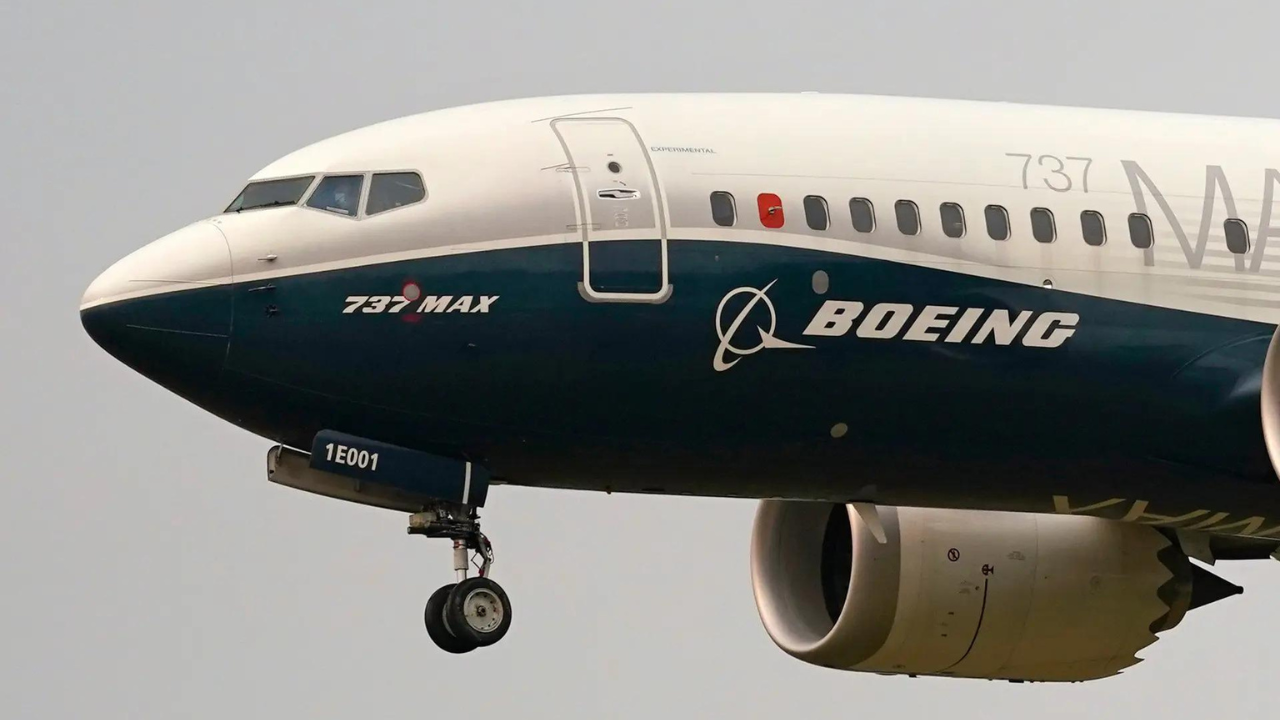
The Federal Aviation Administration’s recent move to mandate inspections for improperly secured passenger seats across 453 domestic Boeing 737 Max aircraft reveals a deeper systemic vulnerability. It is not merely a matter of a few loose bolts. When the agency published its airworthiness directive targeting track-mounted seat assemblies, it exposed an unsettling reality about modern commercial aviation manufacturing and assembly line oversight.
Up to 69 passenger seat assemblies per aircraft fail to meet safety specifications because their aft fitting shear plungers were left unengaged from the seat tracks.
In a catastrophic event, an unanchored row of seats behaves like a dynamic missile. Under severe G-forces during an emergency landing or violent turbulence, these assemblies can completely detach from their floor anchorages. The physics are unforgiving. Passengers strapped into these seats lose all structural protection, while the heavy metallic frames risk telescoping forward into rows ahead. Alternatively, a dislodged assembly can shift laterally, instantly blocking the primary evacuation corridors. Seconds matter during a cabin evacuation. A blocked aisle transforms a survivable incident into a fatal bottleneck.
The Manufacturing Breakdown
How do seats on a modern commercial airliner get installed incorrectly on a mass scale?
The answer points straight back to assembly line velocity and supplier handoffs. Commercial aircraft interior configurations are rarely monolithic. Airlines frequently customize cabin layouts, specifying everything from pitch to upholstery and premier reclining mechanisms. These components arrive late in the production cycle, often installed by third-party contractors or airline modification teams working under intense pressure to deliver planes to revenue service.
When assembly instructions are dense and shift metrics are demanding, basic mechanical verifications get skipped. The specific failure cited by regulators—unengaged shear plungers—suggests a tactile verification step was missed. Technicians are supposed to physically ensure that locking pins or plungers drop entirely into the floor track detents. When a production line values speed over physical verification, mechanical intuition takes a back seat to meeting delivery quotas.
Boeing supporters note that the manufacturer actually issued a special service bulletin regarding this exact issue, attempting to get ahead of the curve before federal regulators stepped in with a mandatory directive. Yet, the fact that voluntary warnings required a heavy-handed federal mandate to achieve compliance across 453 airframes demonstrates that the carrier ecosystem struggles with self-regulation.
The Broader Context of Scrutiny
This directive lands at a delicate juncture for the manufacturer. Ever since the structural blowout of an emergency exit door plug on an Alaska Airlines 737 Max 9, every mechanical hiccup is viewed through an existential lens. Chief Executive Officer Kelly Ortberg has inherited an industrial culture trying desperately to pivot toward rigorous quality control.
Yet, quality cannot be restored through press releases or executive mandates alone. It requires changing the incentive structures on the factory floor. When workers are penalized for raising flags that halt production, mistakes slip through.
A seat attachment failure might sound mundane compared to flight control software or engine cowlings, but it sits at the absolute baseline of passenger safety. Aircraft certification assumes that the airframe envelope, the retention systems, and the interior architecture act as a single cohesive unit to protect human life. If the floor tracks cannot hold the seats, the cabin becomes a liability.
Economic Realities and Operational Friction
For the airlines operating these 453 aircraft, the federal mandate introduces immediate logistical friction. Each affected assembly requires roughly one hour of inspection and corrective work. While this sounds minor on paper, fleet scheduling is a zero-sum game. Pulling an aircraft out of rotation to inspect nearly 70 individual seat connections creates cascading delays across domestic networks.
Financial mitigation is expected. Boeing has indicated that warranty coverage or service bulletins may absorb portions of the direct repair costs, estimated at a few million dollars collectively. But the real cost is reputational. Every time an airworthiness directive hits the wire, public confidence dips another notch. Frequent flyers grow weary of scanning aviation news for the latest structural anomaly on the planes they board weekly.
The broader aviation sector must ask hard questions about how oversight is distributed. When third-party completion centers and airline maintenance bases inherit unfinished or poorly documented cabin integrations, the margin for human error widens exponentially. Standardizing foolproof, error-proof mechanical interlocks—designs where a seat literally cannot be bolted down unless the locking pins are fully engaged—remains an engineering challenge the industry has yet to fully mandate across all interior suppliers.
Inspections will proceed across domestic hangars over the coming weeks. Shear plungers will be checked, logged, and locked. But the underlying pressure to keep planes moving through assembly lines while maintaining absolute structural integrity remains an unresolved tension at the heart of commercial aviation.