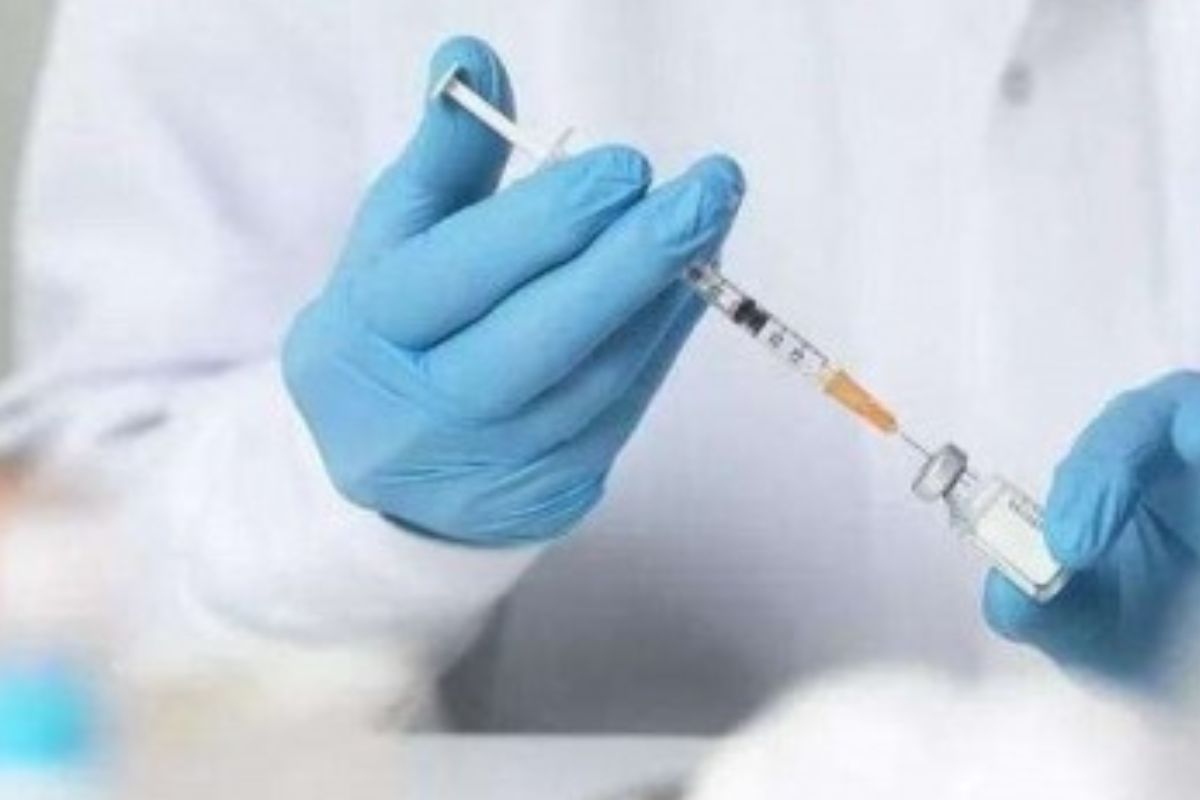
The modern battle over reproductive rights is no longer fought solely in the marble halls of the Supreme Court or on the steps of state capitals. It has moved into the sterile, bureaucratic machinery of the Food and Drug Administration (FDA). As of April 2026, the Trump administration finds itself caught between a restless base demanding an immediate rollback of medication abortion and a legal reality that moves far slower than political rhetoric. The goal for opponents is clear: use the administrative state to achieve what the 2024 election and subsequent court rulings could not—a functional national ban on the mail-order delivery of mifepristone.
At the heart of this friction is the Risk Evaluation and Mitigation Strategy (REMS). This is the regulatory framework the FDA uses for drugs that require extra oversight. Over the last decade, and specifically during the pandemic, the FDA eased these rules, allowing patients to receive mifepristone via mail and through telehealth consultations. These changes essentially neutralized state-level bans for millions of women. Now, anti-abortion strategists are leveraging every possible lever of executive power to force the FDA to reinstate "in-person dispensing" requirements, a move that would effectively kill the telehealth model overnight.
The Slow Walk of the Administrative State
President Trump’s Department of Health and Human Services (HHS), now under the leadership of Robert F. Kennedy Jr., has initiated a formal "safety review" of mifepristone. To the outside observer, this looks like a win for the anti-abortion movement. However, inside the beltway, the mood is one of mounting frustration. The FDA, led by Commissioner Marty Makary, has indicated that a thorough, "data-driven" review could take until late 2026 or even 2027 to complete.
This timeline is a political nightmare for the GOP. With midterm elections approaching, the pressure from groups like Susan B. Anthony Pro-Life America and Students for Life has reached a fever pitch. They aren't asking for studies; they are asking for the enforcement of the Comstock Act. This 1873 law, which prohibits the mailing of "obscene" materials or items intended for abortion, has been dormant for a century. Reviving it wouldn't require a long FDA review; it would only require a shift in Department of Justice (DOJ) policy.
Yet, the administration has been hesitant. The political cost of a sudden, nationwide disappearance of abortion pills is a variable the White House is clearly weighing. While the base wants blood, the broader electorate has consistently voted to protect abortion access in every state-level ballot initiative since the fall of Roe. This creates a "deadlock of intent" where the administration's public-facing officials promise action while its lawyers file for extensions in court.
The Shield Law Paradox
While Washington stalls, a fascinating and legally precarious counter-offensive has emerged in blue states. Massachusetts, New York, and California have enacted "shield laws" designed to protect their clinicians who mail pills to patients in states where abortion is banned. This has created a bifurcated medical reality.
If you live in a state with a total ban, your access to healthcare now depends on a provider located a thousand miles away, operating under the protection of a state government that refuses to extradite its citizens for "crimes" that are legal within its own borders. This is a direct challenge to the supremacy of federal law and the traditional cooperation between state law enforcement agencies.
Anti-abortion attorneys general, led by Louisiana’s Liz Murrill, are currently suing to break these shields. They argue that the availability of these pills via mail makes their state bans "toothless." They aren't wrong. Data suggests that despite the overturn of Roe, the total number of abortions in the U.S. has actually remained stable or even increased in some months, primarily due to the rise of the "telehealth-and-mail" pipeline.
The Science of "Junk Science"
A major component of the current FDA review is the scrutiny of the data used to justify the original 2000 approval of mifepristone. Opponents claim the drug’s safety profile is artificially inflated by "under-reporting" of adverse events. They point to studies—many of which have been retracted or heavily criticized by the broader medical community—suggesting that medication abortion leads to high rates of emergency room visits.
The medical establishment, including the American Medical Association (AMA) and the American College of Obstetricians and Gynecologists (ACOG), maintains that mifepristone is safer than Tylenol or Viagra. The clinical reality is that serious complications occur in less than 1% of cases. However, in the realm of administrative law, "safety" is a subjective term that can be redefined by the agency in power. If the FDA decides that the potential for a patient to be far from a hospital during a rare complication justifies an in-person requirement, they can reinstate the restriction without technically "banning" the drug.
This is the "death by a thousand cuts" strategy. By making the drug legally available but logistically impossible to obtain, the administration can satisfy its donors without the political fallout of a total ban.
The Missouri and Louisiana Fronts
The legal battle is currently concentrated in two major cases: Missouri v. FDA and Louisiana v. FDA. In Missouri, three states are attempting to invalidate every FDA action on mifepristone taken since the year 2000. This is an audacious legal gambit. If successful, it would not only end telehealth access but also remove the two generic versions of the drug from the market, leaving only the more expensive brand-name version—if it stays on the market at all.
In Louisiana, a federal judge recently ordered the FDA to report on its safety review by October 2026. This puts a ticking clock on the agency. It forces a choice: either produce evidence of harm that justifies new restrictions or admit that the drug is safe and risk the wrath of the Republican base.
The administration’s DOJ has, surprisingly to some, asked courts to pause these cases while the FDA conducts its review. This "delay and see" tactic serves a dual purpose. It keeps the administration from having to take a definitive, legally binding stance before the midterms, and it keeps the status quo in place while they search for a regulatory justification that can survive an inevitable challenge in the liberal-leaning D.C. Circuit Court of Appeals.
The Invisible Supply Chain
Even if the FDA were to successfully reinstate the in-person requirement tomorrow, the cat may already be out of the bag. The rise of international "gray market" providers like Aid Access has proven that the internet is remarkably resilient to domestic regulation. These organizations operate outside of U.S. jurisdiction, shipping pills from pharmacies in Europe or India directly to American doorsteps.
A federal crackdown on the domestic mail system would likely just push more patients toward these unregulated international sources. This presents a genuine public health risk. While the pills themselves may be the same, the lack of medical oversight and the risk of counterfeit products increase when the legal domestic pipeline is severed.
The administration’s focus on the FDA may be a case of fighting the last war. While they focus on REMS and clinical trials, the actual distribution of reproductive healthcare has become decentralized, digital, and increasingly beyond the reach of the traditional regulatory state.
The Comstock Wildcard
The true "nuclear option" remains the Comstock Act. If the Trump administration’s DOJ decides to begin prosecuting the CEOs of UPS, FedEx, and the leaders of the U.S. Postal Service for carrying "abortion-related materials," the entire system collapses. No "shield law" can protect a postal worker from federal charges.
This would be a radical expansion of federal power, one that would likely trigger a constitutional crisis regarding the First Amendment (freedom of information) and the Fourth Amendment (privacy of mail). It would also represent a massive shift in how the government regulates the flow of legal goods between states.
For now, the White House is keeping Comstock in its back pocket, using it as a threat to keep the anti-abortion movement in line while the slow-motion bureaucracy of the FDA grinds forward. The question is how long the movement will be satisfied with "reviews" and "reports" before they demand the enforcement of the 19th-century law they believe is their ultimate trump card.
The FDA’s upcoming October report will be the first real indicator of which way the wind is blowing. Until then, the abortion pill remains the most contested six millimeters of chemistry in American history, sitting at the intersection of administrative law, partisan desperation, and a rapidly evolving underground medical network.