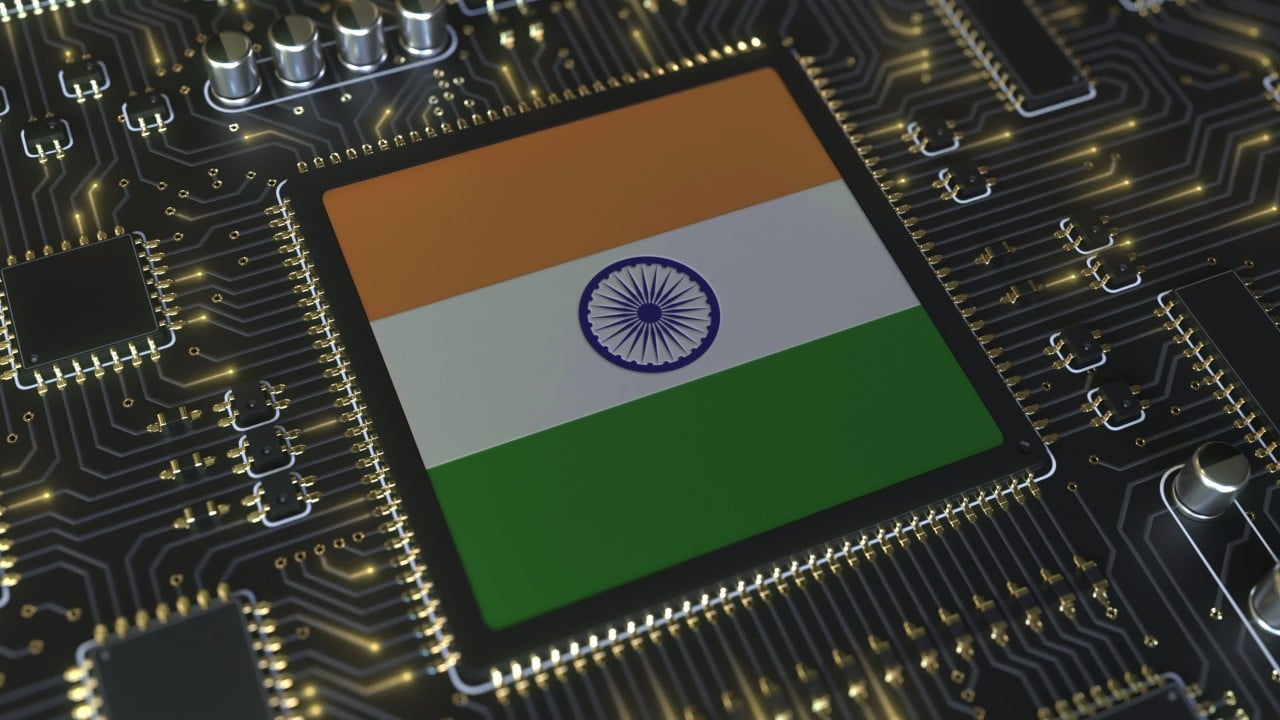
India wants to build your next microchip. Behind the multi-billion-dollar subsidies, the red-carpet welcome for foreign foundries, and the lofty political rhetoric lies a quiet bet on a single national asset: human capital. Policymakers in New Delhi argue that an army of hundreds of thousands of design engineers and technical graduates gives the country an unassailable edge in the global semiconductor supply chain.
Yet, treating a massive demographic of engineering graduates as a secret weapon ignores structural realities on the factory floor and inside university lecture halls.
The strategy assumes that sheer volume translates directly to technological supremacy. It assumes that churning out fresh engineering degrees can substitute for decades of institutional knowledge in silicon manufacturing. But the world of microelectronics does not care about graduation statistics. It cares about cleanrooms, precision chemistry, massive capital expenditure, and tacit know-how that cannot be acquired from a textbook.
The Talent Surplus Myth
Every year, Indian universities hand out millions of engineering degrees. State governments point to these numbers as proof of readiness for the global semiconductor boom.
The reality is starkly different. Only a fraction of these graduates possess the specialized skills required for advanced node chip design or fabrication plant operations. Academic curricula lag behind industry standards by nearly a decade. Most students complete their degrees without ever touching electronic design automation tools from companies like Synopsys or Cadence, let alone stepping foot inside a sub-micron cleanroom environment.
Bridging this gap requires more than a casual curriculum update. It demands heavy investment in specialized laboratory infrastructure and faculty who have actually worked inside commercial fabrication facilities.
Right now, a structural disconnect persists between what state-sponsored training programs deliver and what companies like Micron or Tata Electronics actually need on day one. When a multinational corporation sets up an assembly, testing, marking, and packaging facility in Gujarat, they do not just need warm bodies with engineering diplomas. They need technicians who understand electrostatic discharge protocols, vacuum systems, and automated optical inspection workflows.
The Design Paradox
India holds a comfortable and legitimate claim to a significant share of global integrated circuit design. Major technology corporations station thousands of engineers in Bengaluru, Hyderabad, and Noida to write the VHDL and Verilog code that gives microchips their logic.
Designing a chip on a computer screen, however, is fundamentally different from manufacturing it.
Design is software-heavy, intellectual property-driven, and relies on talent that can be trained through standard corporate onboarding. Fabrication is physics, chemistry, and extreme material science. A single misstep in a semiconductor fabrication plant can ruin millions of dollars worth of silicon wafers in seconds.
Policymakers frequently blur the line between design capability and manufacturing prowess. Having a massive workforce capable of layout design does not mean the country can effortlessly pivot to lithography, etching, and chemical vapor deposition. The physical infrastructure required to manufacture silicon is punishingly capital-intensive and unforgiving of infrastructural bottlenecks like erratic power grids or water scarcity.
The Global Talent Drain and Regional Competition
Securing a domestic semiconductor ecosystem becomes exponentially harder when the best minds look outward. Top-tier graduates from elite institutions often migrate to Silicon Valley, Taiwan, or Europe, where compensation packages, research facilities, and career trajectories are far more mature.
At the same time, regional rivals are not standing still. Vietnam, Malaysia, and Singapore have spent decades building reliable back-end packaging ecosystems with predictable regulatory environments and established supply chain links. These nations offer plug-and-play environments that reduce time-to-market for foreign investors.
India's bureaucratic inertia remains a formidable friction point. Land acquisition, environmental clearances, and utility hookups for massive industrial plants still involve bureaucratic friction that frustrates multinational executives used to frictionless deployment in East Asia.
Rewriting the Playbook
Turning the demographic advantage into a genuine industrial pillar requires brutal honesty about current deficiencies.
Subsidies and tax incentives will attract initial announcements and ceremonial groundbreaking photographs. Long-term survival depends on transforming the educational pipeline from a mass-production factory of generic degrees into a precision instrument for technical excellence. Industry leaders must take direct control of academic syllabi, embedding students into live manufacturing environments years before graduation.
The human element remains India’s most potent card, but only if the country stops confusing potential with execution.
article>

:max_bytes(150000):strip_icc():format(webp)/VWH-DermNetNZ-HeatRashUrticarial-01-32963ef943024d088bdb3ace69900c00.JPG)

