For decades, the standard playbook for Indian immigrants in America followed a predictable path. You study hard, land a tech or medical job, buy a nice house in the suburbs, and stay entirely out of trouble. Politics? That was something to avoid. It was messy, loud, and risky for people trying to build a stable life in a new country.
That hands-off strategy is officially dead.
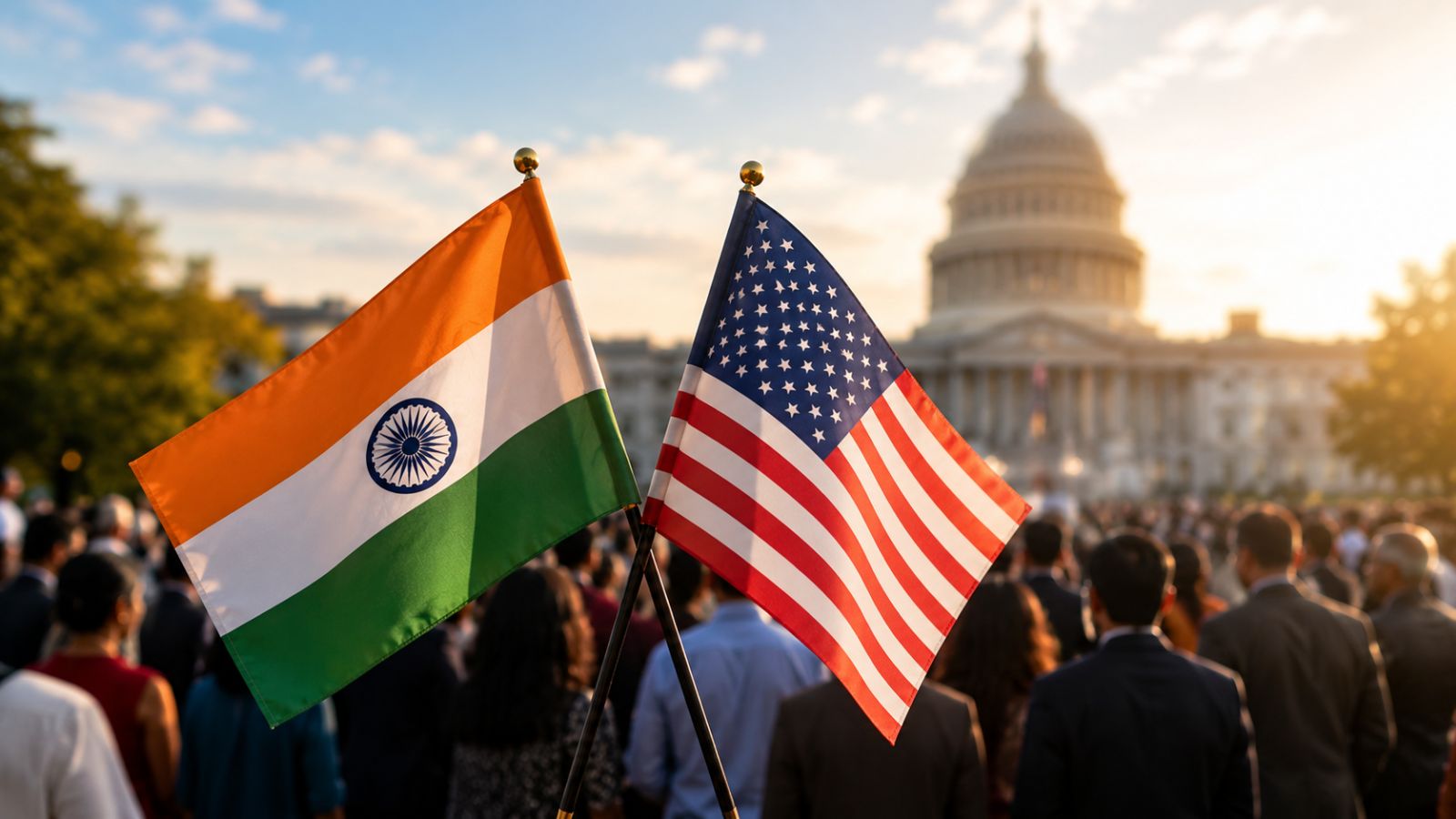
At a recent Capitol Hill gathering hosted by the Foundation for India and Indian Diaspora Studies, the message from top lawmakers was stark and uncomfortable. Indian Americans are now facing a sharp rise in targeted hate, temple vandalism, and online vitriol. The comfortable bubble has burst.
If you aren't visible in local government, your community becomes an easy target.
The Menu Analogy That Every Immigrant Needs to Hear
During the Capitol Hill event, Congressman Raja Krishnamoorthi dropped a classic Washington line that perfectly sums up the current crisis. He warned that if you don't have a seat at the table, you're on the menu.
It is a brutal truth. For a community that boasts the highest median household income in the United States and massive academic achievements, political representation hasn't kept pace with economic success.
Look at the numbers. The US Census Bureau puts the Indian American population at over 5 million people. Yet, outside of a few high-profile members of Congress, grass-roots political power remains thin. When local school boards debate curriculum or city councils vote on zoning laws that affect religious structures, there is rarely an Indian American voice in the room. This absence creates a vacuum.
Hate thrives in vacuums. Recent data from the 2026 Indian American Attitudes Survey reveals a troubling spike in online harassment and public discrimination. White supremacist groups have openly protested outside Texas city halls, shouting anti-India slurs. Temples across California and New York have faced repeated vandalism.
When these incidents happen, a distant congressman in Washington can't fix your neighborhood. You need local allies. Better yet, you need to be the local official.
Why Your Local City Council Matters More Than Congress
Most people focus entirely on presidential elections or congressional races. That is a mistake.
Congressman Suhas Subramanyam and Representative Shri Thanedar both pointed out that the real battle against discrimination starts at the lowest levels of government. City councils, county boards, and school districts control local police budgets, hate crime reporting systems, and community safety initiatives.
If a temple is vandalized, it is the local police chief who decides how to investigate it. If your children face bullying at school because of their heritage, it is the local school board that sets the disciplinary policy.
Where the Diaspora Falls Short
- Low voter turnout in local primaries: Many citizens only show up for presidential votes every four years.
- Reluctance to run for school boards: Education is a core value for Indian families, but few parents run for the boards running those schools.
- Viewing politics as partisan warfare: People worry that entering politics means picking a side in an ideological war.
Krishnamoorthi made it clear that party labels do not matter here. Whether you run as a Democrat, a Republican, or an Independent, the goal is the same. The community needs bodies in the room where decisions are made.
Balancing Foreign Policy with Domestic Reality
Fixing the domestic representation problem requires facing an awkward truth. The diaspora is politically divided over events back in India.
Academic studies on political attitudes show a fascinating double standard. Many Indian Americans hold deeply progressive views on US civil rights, immigration, and social spending. But when the conversation shifts to Indian politics, those same individuals often support highly conservative nationalist policies.
This ideological split creates friction. It makes it easy for outside critics to question the community's domestic priorities.
When local leaders get bogged down in foreign geopolitical debates, they lose focus on the immediate issues impacting their neighborhoods. US Senator Roger Marshall recently highlighted the economic benefits of a US-India trade agreement for American farmers. That is important work. But macro-economics won't stop a teenager from getting harassed on his way to school in Chicago or Edison.
The diaspora must separate its emotional attachment to homeland politics from the practical realities of living in America. Your primary focus must be the safety and legal protection of your family right where you live.
Practical Steps to Build Local Influence
You don't need to quit your job and run for the US Senate tomorrow to make a difference. Political power is built slowly.
Start by attending your next township or city council meeting. Sit in the back. Listen to how local laws are passed. Introduce yourself to your local representatives and make sure they know who you are before you actually need their help.
When school board elections come around, look at the candidates. If none of them represent your values, find someone in your social circle and convince them to run. Help fund their campaign. Write checks to local candidates who show a genuine interest in protecting minority communities from harassment.
The days of quiet survival are over. If Indian Americans want to protect their families and their institutions from rising hostility, they have to show up, speak out, and claim their seat at the table. Anything less means staying on the menu.