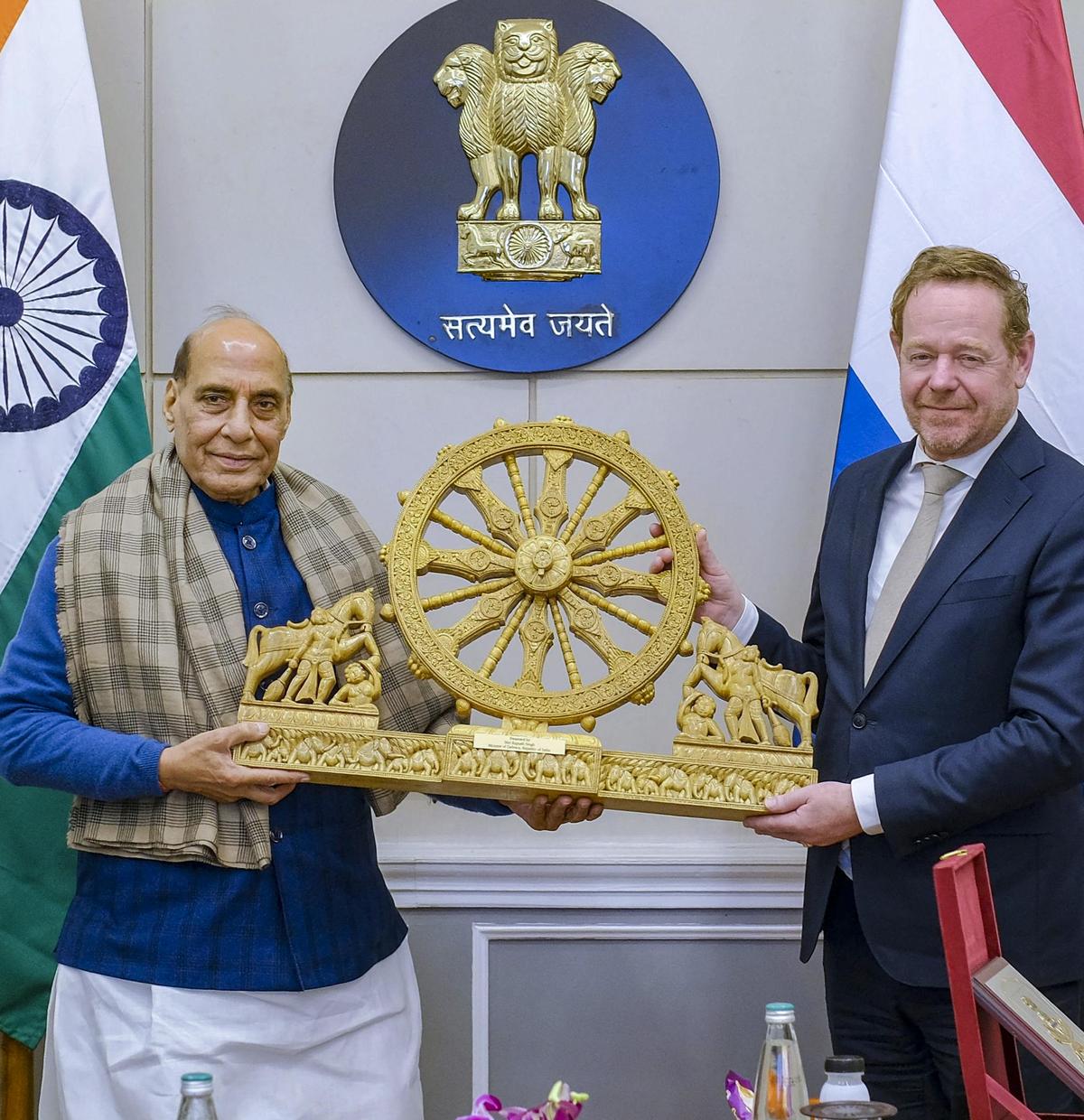
The newly minted strategic partnership between India and the Netherlands, announced by Prime Minister Narendra Modi and Dutch Prime Minister Rob Jetten in The Hague, aims to fix a critical vulnerability in India's economic ambitions: the desperate need to back up rapid manufacturing growth with high-end technological depth. While political rhetoric focuses on combining India’s speed and skill with Dutch expertise, the real story is a transactional calculation. India requires advanced lithography and maritime engineering to sustain its domestic manufacturing push. The Netherlands requires an alternative manufacturing base and a massive market to diversify away from tightening Chinese supply chains.
It is a marriage of necessity disguised as diplomatic alignment. This relationship will either redefine global tech supply chains or stall under the weight of bureaucratic friction.
Moving Beyond the Lip Service of Bilateral Trade
Bilateral trade numbers look impressive on paper. The Netherlands has quietly climbed to become India’s 11th largest merchandise trading partner globally and its second largest within the European Union, yielding a trade surplus of over $17 billion for India in the 2024-2025 fiscal year. Yet, looking closely at the data reveals a glaring structural asymmetry.
India’s exports to the Netherlands are dominated by refined petroleum products, organic chemicals, and textiles. Conversely, Dutch exports to India consist of high-value electronic components, medical instruments, and specialized machinery. India is essentially shipping raw commodities and low-margin processed goods to Europe's gateway while importing the foundational tools required to build a modern economy.
The strategy behind the newly signed Strategic Partnership Roadmap is to shift this imbalance. By moving past simple import-export dynamics, New Delhi wants to pull Dutch capital and intellectual property directly into Indian factories. The joint establishment of the India-Netherlands Joint Trade & Investment Committee (JTIC) is an attempt to create a fast-track mechanism to clear the regulatory hurdles that historically cause foreign investors to pull back from the Indian market.
The Semiconductor Deal and the ASML Factor
The absolute core of this diplomatic push is the semiconductor industry. During the summit in The Hague, a major agreement was finalized between Tata Electronics and ASML, the Dutch giant that holds an effective global monopoly on extreme ultraviolet (EUV) lithography systems.
India is currently spending billions in state subsidies through its Production Linked Incentive (PLI) schemes to build domestic semiconductor fabrication plants, notably in states like Gujarat and Rajasthan. However, building the physical factories is the easy part. Operating them requires access to a highly restricted global supply chain of machinery, gases, and software.
Global Lithography Supply Chain Node
[ASML (Netherlands)] ---> [Tata Electronics Fab (India)] ---> [Domestic Electronics Supply Chain]
                                                                     |
                                  [Target: Reduced Import Dependence via 2026 PLI Schemes] <+
Without direct cooperation from Dutch industry leaders, India's chip manufacturing ambitions would risk obsolescence before the first silicon wafers are polished. The agreement with ASML is not about buying off-the-shelf equipment; it is about establishing long-term training pipelines and research collaborations.
The risk is that India's domestic ecosystem lacks the ultra-pure infrastructure and uninterrupted power grids required by these sensitive machines. If India cannot upgrade its local logistics and utility reliability, the advanced equipment secured through these diplomatic channels will operate below capacity, burning through capital without delivering the promised self-reliance.
Water Management and Agricultural Realities
Away from the cleanrooms of the tech sector, the partnership faces an equally urgent challenge on the ground: water and food security. The Netherlands is a global leader in agricultural efficiency and flood control, managing to become the world's second-largest agricultural exporter despite severe geographic and land constraints.
India is currently facing a dual crisis of falling groundwater tables and highly unpredictable monsoon cycles driven by climate shifts. The traditional flood-irrigation methods used by Indian farmers are unsustainable, consuming vast amounts of water while yielding low crop returns per acre.
The Problem with Technology Transfer
Bringing Dutch agricultural technology to rural India is a highly complex task.
- Scale mismatches: Dutch farming relies on heavily automated, capital-intensive, climate-controlled greenhouses designed for large cooperative setups or high-margin businesses.
- Fragmentation: The typical Indian farmer owns less than two hectares of land and operates on razor-thin credit margins.
- Cost barriers: Smallholder farmers cannot afford expensive automated drip systems or sensor-driven soil management tools without ongoing state support.
If the joint initiatives in agricultural technology focus solely on high-tech solutions without adjusting for local economic realities, the benefits will remain restricted to a small group of wealthy corporate agribusinesses, leaving the broader agricultural crisis untouched.
Geopolitical Realities in the Indo-Pacific
The diplomatic shift toward Western Europe occurs alongside changing realities in the Indo-Pacific. The European Union's broader strategy increasingly views India as an essential counterweight to Chinese economic influence. For the Netherlands, which operates the Port of Rotterdam—the largest maritime gateway into Europe—securing resilient, non-Chinese supply chains for critical components is an economic necessity.
This explains the unexpected inclusion of defence industrial cooperation in the joint statement. The two nations signed a Letter of Intent on Defence Cooperation, aiming to build a structured framework for manufacturing defence equipment, components, and maritime security systems.
India has traditionally relied heavily on Russian military hardware, a dependency that has become increasingly risky due to supply disruptions and shifting geopolitical alignments. By partnering with the Dutch, who possess deep expertise in naval engineering and radar systems, New Delhi is attempting to diversify its defence procurement.
However, Western defence technology comes with strict end-user monitoring and export control regulations. Merging these rigid Western frameworks with India’s historical preference for strategic autonomy and domestic co-development will require navigating complex intellectual property negotiations.
Capital Inflows vs. Execution Realities
The success of the India-Netherlands roadmap depends heavily on converting intent into real investments. The Netherlands is already one of India’s top five foreign investors, but the capital has historically flowed into safe, established sectors like banking, insurance, and consumer goods.
Shifting those investment flows into high-risk, long-gestation projects like green hydrogen plants and semiconductor packaging units requires more than political goodwill. It demands a regulatory environment free from sudden tax policy shifts and bureaucratic delays.
While the Indian government highlights the country's rapid infrastructure rollout, foreign executives frequently point to local land acquisition hurdles, complex labor laws, and state-level regulatory variances as persistent pain points. The creation of the Fast Track Mechanism within the JTIC is an acknowledgment of these issues, but its effectiveness remains to be proven on the ground.
The strategic partnership is a clear-eyed acknowledgement that neither nation can navigate the shifting global economic order alone. India offers the massive market scale and raw labor power; the Netherlands holds the specialized technological keys. But unless both sides address the practical challenges of technology absorption, infrastructure gaps, and regulatory friction, this agreement risks joining a long list of well-intentioned bilateral frameworks that look excellent in joint communiqués but deliver little structural change to the global economy.