Geopolitics usually feels like a game of giants clashing over borders, weapons, and energy lines. You see Washington, Beijing, and New Delhi trading barbs or signing massive defense pacts. But something entirely different just happened in Northern Europe. India quietly re-engineered its foreign policy strategy, and it doesn't look like anything we've seen before.
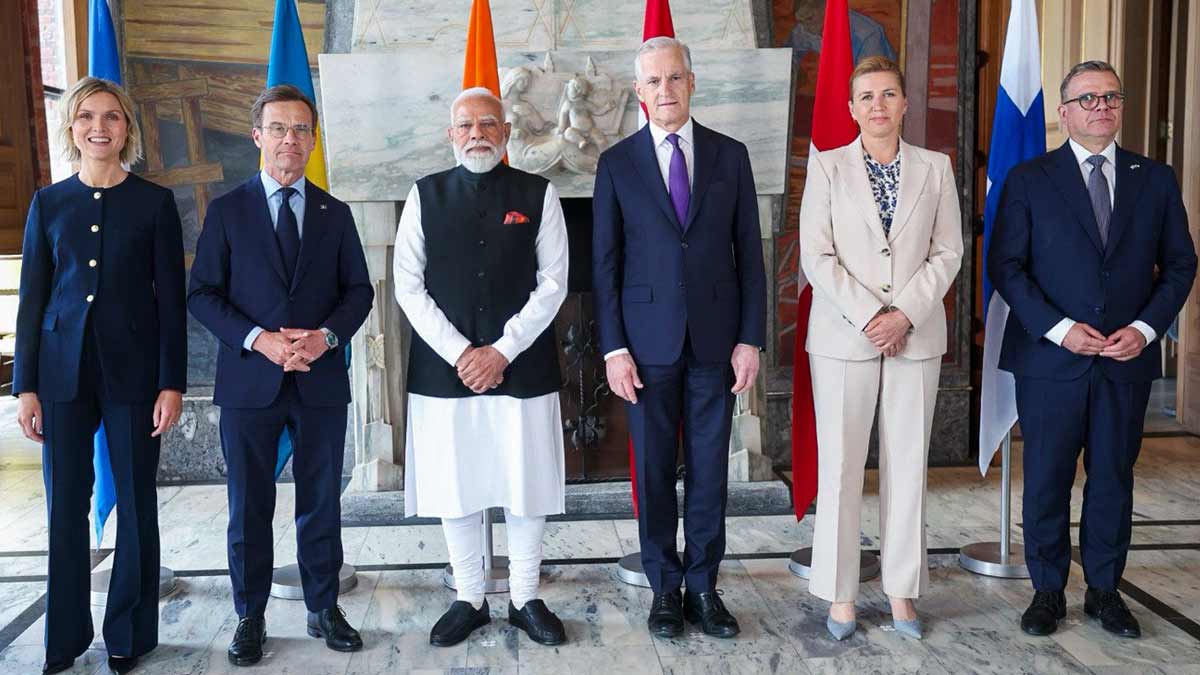
The 3rd India-Nordic Summit in Oslo wrapped up on May 19, 2026. Prime Minister Narendra Modi met with the leaders of Denmark, Finland, Iceland, Norway, and Sweden. This wasn't just another photo-op for world leaders. It marked a massive shift toward what's being called the Green Technology and Innovation Strategic Partnership.
If you're wondering why India is spending capital and energy on five relatively small nations at the top of the world, the answer is simple. India needs what the Nordics have already perfected, and the Nordics need India's sheer scale. This isn't about military alliances. It's about practical survival in a climate-threatened world.
The Massive Pivot From Ideology to Infrastructure
For decades, India's approach to Northern Europe was practically non-existent. Indira Gandhi was the last Indian prime minister to visit Norway way back in 1983. For 43 years, New Delhi basically ignored the region because it didn't fit into the old Cold War or post-Cold War chessboards.
That changed when India realized that its domestic goals—like running on 500 gigawatts of non-fossil fuel energy—cannot happen using old industrial methods. You can't build a modern, clean economy with 20th-century tech.
The strategy makes perfect sense when you aggregate the Nordic bloc. Individually, these countries have small populations. Together, they represent an absolute powerhouse of sovereign wealth and advanced engineering.
We are seeing a hard numbers game play out. Bilateral trade between India and the Nordic countries has grown nearly fourfold over the last decade. Nordic investment funds poured money into India's growth story, jumping roughly 200% in that same timeframe.
The Hard Cash Behind the Treaties
Diplomatic talk is cheap. The real proof is in the legal frameworks that went live right before this summit. The India-EFTA Trade and Economic Partnership Agreement (TEPA)—signed with Norway, Iceland, Switzerland, and Liechtenstein—officially entered into force on October 1, 2025.
This isn't a vague statement of intent. Under Article 7.1 of the agreement, the EFTA states committed to a legally binding target. They will mobilize $100 billion in foreign direct investment into India over the next 15 years, aiming to create one million direct jobs.
Let that sink in. This is the first free trade agreement India has ever signed that ties market access to enforceable investment and employment milestones. If the money doesn't flow, the deal breaks.
To make sure things don't get stuck in bureaucratic mud, Invest India opened a dedicated India-EFTA Desk back in February 2025. It acts as a single-window shop to speed up capital deployment in green hydrogen, life sciences, and manufacturing. Then, just months ago, India wrapped up negotiations for its free trade agreement with the European Union, which directly pulls Denmark, Finland, and Sweden into the same economic orbit.
Matching Nordic Niches with Indian Scale
The real brilliance of India's Nordic opening is how specific the targeting is. New Delhi isn't treating these five countries as a monolith. It's treating them like a specialized tech menu.
Iceland and the Heat Underground
Iceland has a population smaller than a single neighborhood in Mumbai, but it dominates geothermal technology and deep-sea sustainable fisheries. India has vast, untapped geothermal potential in regions like Ladakh and Himachal Pradesh. The partnership translates Iceland's subterranean expertise into clean energy for India's freezing border outposts.
Norway and the Blue Economy
Norway is a maritime titan. Beyond managing massive sovereign wealth, Oslo leads in carbon capture, deep-sea exploration, and green shipping. India's maritime trade needs a complete overhaul to cut emissions, and Norwegian tech is the blueprint for modernizing ports under the SagarMala project.
Sweden and Heavy Industry
Sweden brings serious industrial muscle and defense technology. Bilateral trade between India and Sweden sits at roughly $7.75 billion, and both sides just launched the Joint Action Plan 2026-2030 to double that number within five years. Sweden is helping India green its steel production and co-develop next-generation defense equipment on Indian soil.
Finland and the 6G Race
Finland knows connectivity. With Nokia leading the charge, Helsinki signed major telecommunications and digital transformation pacts with New Delhi. As India rolls out 5G and lays the groundwork for 6G, Finnish architecture provides the security and hardware required to keep the world's largest digital identity and payment systems running.
Denmark and Health Tech
Denmark holds the keys to wind energy and advanced life sciences. Danish companies are already building wind turbines across India's coastline. Now, the focus is expanding into cybersecurity and specialized health-tech systems to manage public health data securely.
Why This Works Better Than Traditional Alliances
Traditional alliances come with heavy baggage. When you sign deals with major military powers, you're often forced to take sides in messy conflicts. The Nordic opening bypasses all of that.
It is built entirely on trust and commercial trade rather than shifting political alignments. While the joint statement from Oslo did mention a shared commitment to a rules-based global order, international law, and a zero-tolerance policy for terrorism, the core focus remained strictly transactional and developmental.
The Nordics get a massive, vetted market for their technology and an alternative destination for their capital. India gets clean technology without strings attached.
The Real Hurdles on the Ground
It's easy to get swept up in the optimism of a $100 billion investment target, but let's be realistic. Moving money from Oslo or Stockholm into Indian infrastructure isn't seamless.
During the India-Norway Business and Research Summit held alongside the main event, Nordic industry leaders were incredibly blunt with Modi. They pointed out that India's "ease of doing business" still suffers from major ground-level friction. Red tape, unpredictable state-level regulatory changes, and local bureaucratic delays make foreign asset managers nervous.
Sovereign wealth funds don't like surprises. If India wants that $100 billion to fully materialize, individual state governments across India need to match the central government's enthusiasm. They must streamline land acquisition and environmental clearances for green projects.
Your Next Strategic Moves
If you're managing investments, running a tech startup, or looking at logistics infrastructure, this Northern European shift creates immediate opportunities.
- Audit Your Tech Stack: If you operate in green hydrogen, maritime logistics, or telecom infrastructure, look for Finnish, Swedish, or Norwegian enterprise partners. The single-window India-EFTA Desk is actively fast-tracking these joint ventures.
- Leverage Talent Mobility: The 2026 summit established new legal frameworks to fast-track skilled labor and academic exchanges. It's time to explore university partnerships and cross-border research development hubs.
- Focus on the Supply Chain: With the India-EFTA TEPA now active and the India-EU FTA moving forward, engineering goods and electronics exports from India face significantly lower tariff barriers. Adjust your supply chain routes to take advantage of these new European corridors.
The diplomatic landscape has changed. India's northern push shows that the most valuable territory in modern global politics isn't a physical border—it's the green tech supply chain.
For a deeper dive into the specific economic policies guiding these agreements, check out this detailed analysis of the India-EFTA Trade Partnership. This breakdown explains how the historic $100 billion binding investment target works and what it means for global supply chains moving forward.