The United States military announced Monday that it conducted "self-defense" strikes against targets inside southern Iran. This is the official line from U.S. Central Command, which framed the operation as a targeted measure to neutralize imminent threats to American personnel while technically maintaining "restraint" under an active, highly volatile ceasefire. The strikes hit missile launch installations and naval vessels tasked with dropping mines into the shipping lanes of the region.
But calling this self-defense is a clinical oversimplification of a much larger, uglier reality.
What the Pentagon describes as a tactical reaction is actually a desperate attempt to patch a sinking diplomatic ship. The 2026 Iran war, which exploded into open conflict on February 28 with massive joint U.S.-Israeli airstrikes under Operation Epic Fury, has devolved into a grinding war of attrition. Despite an official truce meant to pave the way for a permanent settlement, neither side has truly stopped fighting. Monday’s explosions in Bandar Abbas, Sirik, and Jask prove that the temporary peace is little more than a fiction maintained for the benefit of press briefings.
The Geometry of the Secret Maritime War
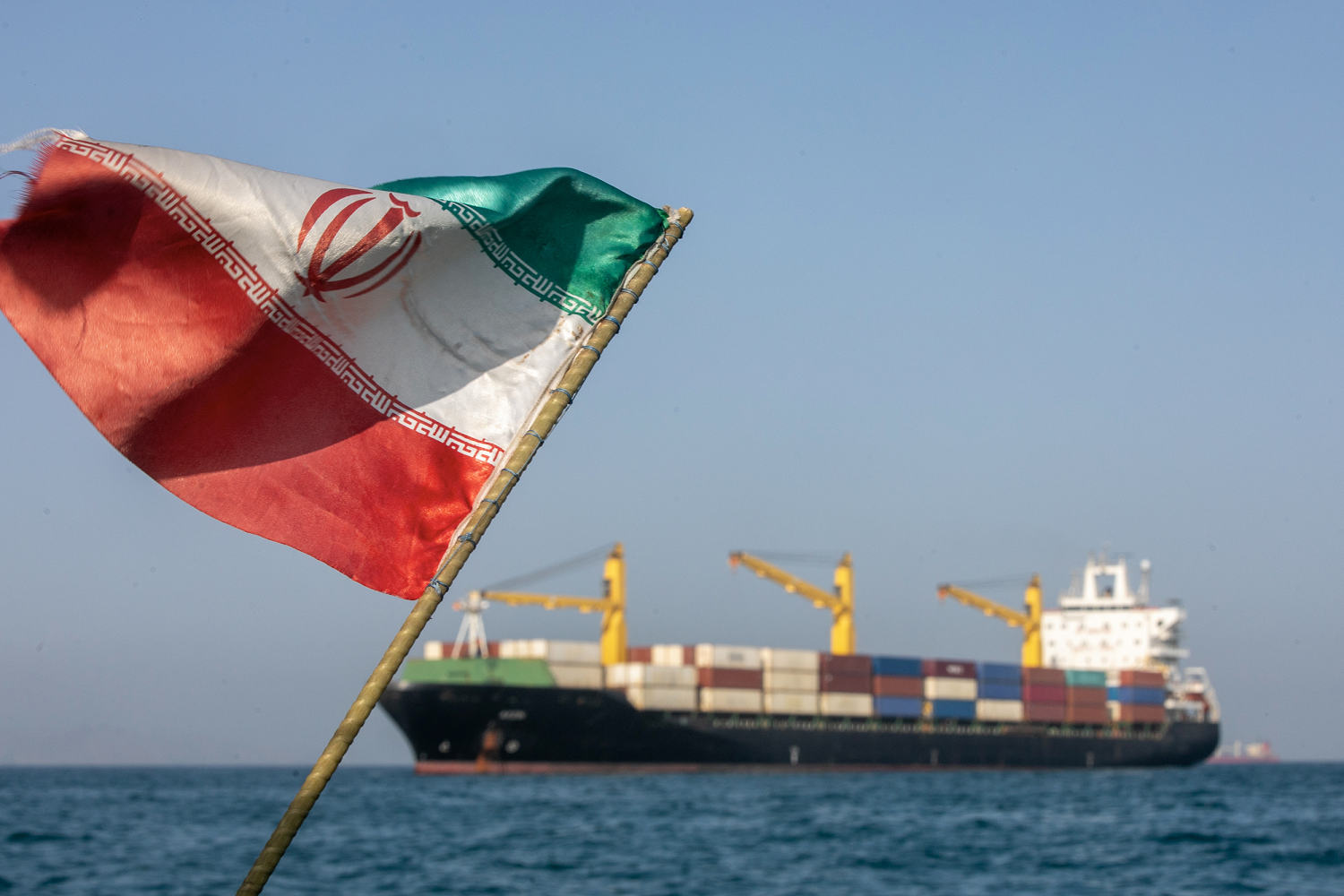
The Pentagon claims the strikes targeted Iranian boats attempting to emplace mines. To understand why this matters, one must look at the geography of the Strait of Hormuz. It is a narrow choke point. Nearly a fifth of the world’s petroleum passes through this corridor, and the economic shocks of its closure since March have already battered global markets, driving up inflation across Europe and Asia.
When the initial U.S. and Israeli waves killed Supreme Leader Ayatollah Ali Khamenei and disrupted the country's conventional military command, the remaining elements of the Islamic Revolutionary Guard Corps (IRGC) fell back on asymmetric doctrine. They did not try to match the U.S. Navy ship-for-ship. Instead, they relied on low-tech, high-impact denial tactics.
- Asymmetric Mine Laying: Utilizing fast-attack craft disguised as civilian fishing vessels to drop buoyant mines into commercial channels.
- Mobile Shore Batteries: Deploying truck-mounted anti-ship cruise missiles hidden in the rugged coastal terrain near Jask and Sirik, which can be fired and hidden within minutes.
- Swarm Operations: Using small, explosives-laden drones launched from inland positions to overwhelm the radar systems of guided-missile destroyers.
By targeting these specific assets, CENTCOM is trying to prevent Iran from completely locking down the Persian Gulf during the ongoing negotiations. However, every "self-defense" strike inside sovereign Iranian territory weakens the political leverage of the moderate negotiators in Tehran who are pushing for an end to the war. It hands a rhetorical victory to IRGC hardliners who argue that Washington can never be trusted to honor a truce.
The Abraham Accords Complication
While the bombs were falling in southern Iran, the political landscape shifted in Washington. President Donald Trump tied any potential peace agreement to a massive expansion of the Abraham Accords. He demanded that nations like Saudi Arabia, Pakistan, Turkey, Egypt, and Jordan simultaneously sign normalization agreements with Israel as a mandatory prerequisite for ending the war.
This demand introduces an entirely new layer of diplomatic gridlock.
Saudi Arabia has maintained for years that normalization requires a clear, irreversible path toward Palestinian statehood. Pakistan, which has been serving as an intermediary mediator in these fragile peace talks, does not even maintain diplomatic relations with Israel. Forcing these terms onto a delicate ceasefire negotiation is a high-stakes gamble. It threatens to alienate the very regional partners the United States needs to police a post-war Middle East.
The Cost of the Endless Stalemate
The financial and human costs of this conflict are mounting rapidly. By late March, the Pentagon had already spent an estimated $25 billion on combat operations, with requests for an additional $200 billion to sustain the massive naval and air buildup in the region. The presence of three U.S. aircraft carrier strike groups in the area—the largest concentration of American naval power since the 2003 invasion of Iraq—is burning through resources at an unsustainable rate.
For the soldiers and sailors stationed in the Gulf, the phrase "ceasefire" has become an dark joke. They remain locked in a cycle of intercepting unprovoked attacks and launching retaliatory strikes, all while politicians debate the grand architecture of a new regional order.
The reality on the ground is that there is no clean exit from this conflict. Every precision-guided bomb dropped on a missile site in Bandar Abbas might neutralize an immediate threat, but it also plants the seeds for the next round of retaliation. The United States cannot strike its way to a diplomatic breakthrough while simultaneously moving the goalposts of the peace deal. As long as the fiction of a peaceful ceasefire is maintained alongside active bombardment, the war in the shadows will continue to bleed into the open.