Optics matter in central banking, until they are deliberately smashed.
By choosing to host the swearing-in ceremony for incoming Federal Reserve Chair Kevin Warsh at the White House on Friday, President Donald Trump is not merely celebrating a personnel victory. He is signaling the end of an era. For nearly forty years, Fed chairs have taken their oaths within the austere, limestone walls of the Eccles Building, intentionally insulated from the theatricality of the Oval Office. The last time a president personally presided over this ritual at the White House was Ronald Reagan in 1987 for Alan Greenspan. You might also find this related coverage interesting: The Illusion of Resilience in the UK Jobs Market.
The move is a calculated exercise in power projection. By bringing the world’s most powerful economic lever back onto executive turf, the White House is making it visible that the traditional, sacred wall between monetary policy and presidential politics has been breached.
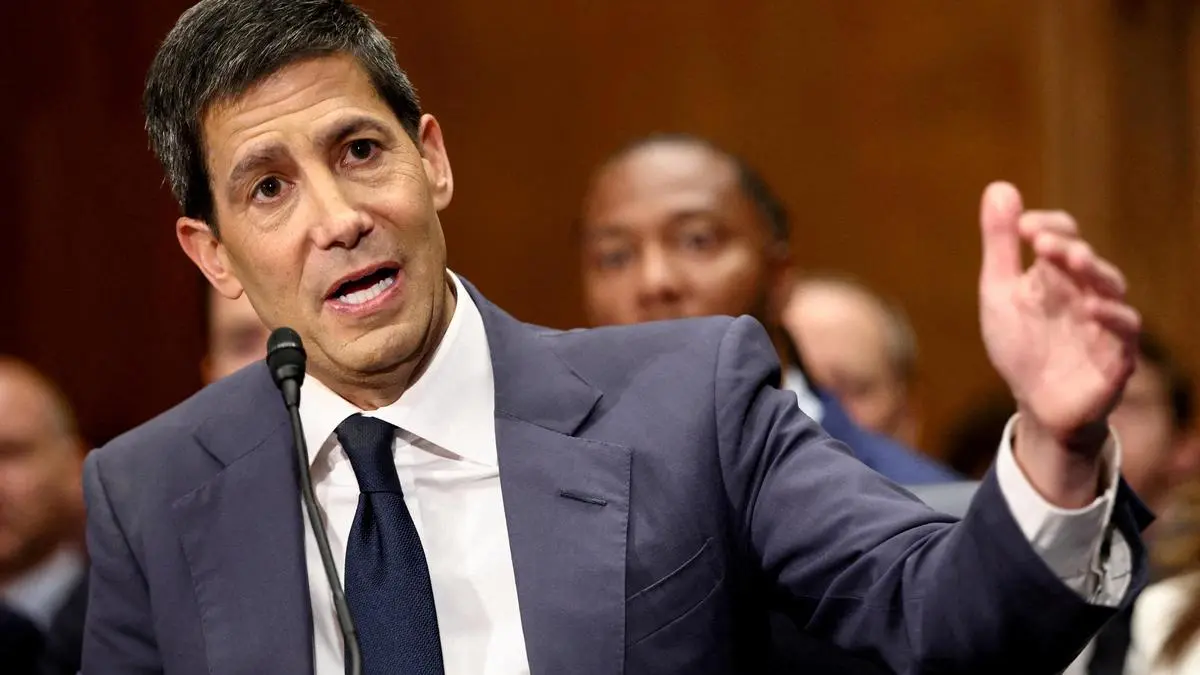
Warsh steps into the role following a razor-thin 54-45 Senate confirmation vote, the most partisan and divisive in the history of the central bank. He inherits an economy reeling from a resurgence in inflation, fueled by escalating geopolitical conflicts and a fractured Federal Open Market Committee (FOMC). Yet, the real story is not the ceremony itself. It is the structural remodeling of American macroeconomic policy that this ceremony formalizes. As highlighted in recent reports by Investopedia, the effects are significant.
The Symbolic Re-Anchoring of Monetary Power
Central bank independence has long relied on a delicate blend of legal framework and theatrical restraint. When Jerome Powell was sworn in for his first term in 2018, Trump stayed away, maintaining the standard protocol designed to show global markets that the Fed does not answer to the president.
Friday's event upends that dynamic. A ceremony at the White House transforms the Fed chair from an independent technocrat into an apparent extension of the administration’s economic team.
Institutional analysts argue that the venue choice is a profound unforced error at a time when the Fed desperately needs to convince global bond markets of its inflation-fighting credibility. A ceremony at Fed headquarters would have offered a quiet, necessary reassurance to investors wary of political interference. Choosing the White House instead suggests that neither the president nor the incoming chair views the appearance of subservience as a liability.
This shift comes after months of public broadsides from the executive branch, demanding drastic interest rate cuts despite stubborn inflation data. By physically placing Warsh next to the president during his oath, the administration explicitly ties the future direction of interest rates to the political fortunes of the White House.
The Dual-Power Dynamic Inside the Fed
Warsh will not find a unified front when he arrives at the Eccles Building. In a highly unusual move that breaks with modern precedent, outgoing Chair Jerome Powell is staying on. While his term as chair has expired, his tenure as a Federal Reserve Governor runs through early 2028.
This creates an unprecedented and volatile friction point at the top of the central bank.
- The Acting Precedent: Powell has been running the institution as acting chairman during the brief gap between his term expiration and Warsh's formal swearing-in.
- The Policy Cleavage: The FOMC is currently more fractured than it has been in decades. Recent policy meetings featured the highest number of formal dissents since 1992, with rate-setters openly breaking over whether to hold interest rates steady or signal future cuts.
- The Executive Shadow: Powell’s decision to remain a governor is widely seen as an institutional shield against further executive encroachment, especially after the Department of Justice faced political pressure regarding investigations into Fed operations.
Warsh will have to manage a committee where the ghost of the old regime sits at the voting table. Powell's presence will act as an anchor, potentially rallying institutionalists on the board who are skeptical of Warsh’s proposed structural revamps.
The AI Productivity Gamble
Throughout his career, Warsh has been viewed as an inflation hawk, famously warning against prolonged monetary easing during his previous stint as a Fed governor from 2006 to 2011. Yet, his recent intellectual alignment with the White House relies on a distinct economic theory: the productivity miracle of artificial intelligence.
Warsh has argued that massive technological shifts, specifically the rapid deployment of artificial intelligence across corporate America, can structurally boost productivity. In theory, higher productivity allows the economy to grow faster without triggering wage-price spirals, effectively raising the speed limit of the U.S. economy.
It is a convenient theory for an administration demanding lower interest rates amidst an inflation spike. If technology is actively suppressing structural costs, the Fed can afford to keep monetary policy looser than traditional economic models would dictate.
The danger is that this assumption is unproven in the near-term data. While technology changes long-term economic trajectories, its immediate impact on productivity metrics remains obscured. If the Fed cuts rates under the assumption that AI will neutralize inflation, but supply chains and energy costs remain elevated due to international conflicts, inflation could become deeply entrenched.
Wealth, Transparency, and Liquidation
Adding to the complexity of the transition is Warsh’s status as the wealthiest Fed chair in the history of the institution. With a net worth stretching north of $100 million—bolstered by his marriage to Jane Lauder and his years as a financier alongside billionaire investor Stanley Druckenmiller—Warsh's personal balance sheet has drawn intense scrutiny.
His portfolio includes private stakes in highly sensitive, politically connected enterprises like SpaceX and Polymarket. To satisfy ethics requirements and secure confirmation, Warsh has committed to a massive liquidation process, pledging to divest these assets within 90 days of taking office.
Selling off tens of millions of dollars in private equity is a complex financial maneuver. Any perceived delay or lack of transparency in how these assets are unspooled will provide immediate ammunition to congressional critics who view his appointment as the ultimate corporate capture of the regulatory apparatus.
The Reality of the New Regime
The White House ceremony is not just a celebration of Kevin Warsh; it is a funeral for the consensus model of central banking. For decades, the global financial system operated on the belief that American monetary policy was insulated from the immediate pressures of election cycles.
By shifting the swearing-in to the Oval Office, the administration is making it clear that economic policy will now be unified, aggressive, and highly political. Warsh will possess the title, but he will operate under the longest shadow ever cast by an American president over the central bank. The ultimate test will not be how the markets react to the ceremony on Friday, but how Warsh reacts the first time inflation ticks upward and the president demands another cut.