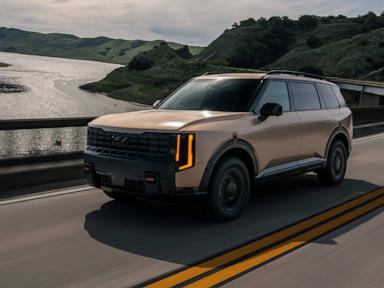
The modern automotive market thrives on a carefully manufactured theater of rivalry. Nowhere is this performance more finely orchestrated than in the multi-billion-dollar battleground of the family three-row crossover. For years, suburban driveways have been divided by two towering titans, the Hyundai Palisade and the Kia Telluride. Consumers agonize over spec sheets, debate styling cues on internet forums, and walk into dealerships convinced they are choosing between two bitter enemies.
It is a brilliant marketing illusion. Underneath the sheet metal, these two vehicles are not competitors at all. They are the same machine, conceived in the same corporate womb, built on the same global modular platform, and engineered by the same conglomerate to capture two distinct demographic wallets. Read more on a related topic: this related article.
To understand why these vehicles dominate the market requires looking past the glossy brochures. Buyers believe they are purchasing a family hauler based on logic, but the automotive industry operates on emotional positioning. By examining how the newly redesigned iterations of these corporate twins divide the spoils of the American suburbs, we can expose the subtle mechanisms that carmakers use to make identical hardware feel like a completely different lifestyle choice.
The Monolithic Shadow of Hyundai Motor Group
To dismantle the rivalry, one must first understand the corporate structure. Kia is not an independent entity fighting a rogue battle against Hyundai. Hyundai Motor Group owns a massive, controlling stake in Kia, and the two brands operate in a state of co-opetition. They share research and development centers, procurement pipelines, and powertrain engineering teams. Additional journalism by The Motley Fool delves into similar perspectives on this issue.
When a consumer chooses a Telluride over a Palisade, the exact same corporate ledger registers the profit.
This shared DNA has reached its zenith in the current product cycle. Both vehicles ride on an identical 116.9-inch wheelbase. They feature nearly identical hard points for suspension mounting, safety cages, and glasshouse structures. The real engineering achievement here is not mechanical diversity, but cosmetic segregation. The corporate parent assigns distinct design mandates to each studio to prevent the absolute sin of automotive manufacturing: product cannibalization.
The strategy works flawlessly. By offering two distinct flavors of the exact same vehicle, the Korean conglomerate effectively occupies twice the digital and physical shelf space of rivals like Ford, Honda, or Toyota. If you dislike the aesthetics of one, you are directed straight into the arms of the other, keeping your capital within the same corporate ecosystem.
Mechanical Divergence and the Illusion of Character
For the latest model year, the engineering team introduced the first major mechanical divergence in the history of these nameplates. It provides a fascinating case study in how minor tuning and powertrain allocation alter consumer perception.
The Standard Powertrain Divide
- The Hyundai Strategy: The Palisade retains a traditional approach, anchoring its base lineup with a 3.5-liter V6 engine producing 287 horsepower. It delivers power with a linear, predictable luxury-car sweep.
- The Kia Strategy: The Telluride pivots to a 2.5-liter turbocharged four-cylinder engine generating 274 horsepower. While it spots the V6 thirteen horsepower on paper, it delivers a massive 311 lb-ft of torque low in the rev range.
The real-world testing data reveals the irony of these choices. The four-cylinder Telluride is objectively quicker. It handles the sprint from zero to 60 mph in roughly 7.4 seconds, outstripping the heavier, V6-bound Palisade which requires a more relaxed 8.0 seconds. The turbocharger provides immediate, urgent passing power that feels energetic in heavy traffic.
The Palisade offers a different sensation. Its V6 is silky, quiet, and predictable. It does not surge; it flows. For drivers who equate luxury with the unbothered hum of a larger-displacement engine, the Hyundai feels superior, despite being slower on the stopwatch.
The Hybrid Compromise
Both brands now offer a flagship 329-horsepower turbocharged hybrid variant, answering the loud consumer demand for better fuel economy in a boxy profile. Here, the efficiency numbers sit within a decimal point of each other. The front-wheel-drive Telluride Hybrid achieves an EPA-estimated 35 mpg combined, while the Palisade Hybrid clocks in at 34 mpg.
In actual daily operation, the difference is completely unnoticeable. The hybrid systems switch between gasoline and electric propulsion using the exact same software algorithms. The acceleration curves are identical, dropping the zero-to-60 time to a crisp seven seconds flat for both vehicles. The choice here does not come down to engineering excellence, but rather which badge you prefer to see on your key fob.
Interior Architecture as Class Warfare
The truest separation between these two vehicles occurs inside the cabin. This is where the marketing teams earn their salaries, transforming identical volumes of interior space into two entirely different socio-economic environments.
The Telluride approaches the family cabin with an angular, linear utilitarianism. It draws heavy inspiration from the brand's electric flagship, the EV9. The dashboard layout is clean, flat, and ruggedized. Kia understands that its target audience fancies themselves outdoor enthusiasts, even if the furthest off-road they ever travel is a gravel overflow parking lot at a youth soccer tournament. The materials are durable, the buttons are tactile, and the dual wireless charging pads are positioned for maximum utility.
Hyundai takes the Palisade down a path of midcentury modern revivalism. The interior is characterized by soft curves, rounded edges, and an unashamed pursuit of premium comfort.
+-----------------------------------+-----------------------------------+
| Hyundai Palisade                  | Kia Telluride                     |
+-----------------------------------+-----------------------------------+
| Midcentury Modern Aesthetics      | Linear, Rugged Utilitarianism     |
| 44.2 Inches Front Legroom         | 41.4 Inches Front Legroom         |
| Optional Reclining Passenger Lounge| Fixed Front Passenger Footrest    |
| Power-Sliding Third Row Utility   | Fixed Third Row Seat Tracks       |
| Fingerprint Profile Scanner       | Standard Keyless Proximity Tech   |
+-----------------------------------+-----------------------------------+
The real differentiator is how the cabin space is physically apportioned. The Palisade stretches its front cockpit to offer 44.2 inches of front legroom, leaving the Telluride behind at 41.4 inches. Hyundai uses this real estate to offer an optional front passenger seat with deep reclining angles and an integrated leg rest. It feels like an international business-class cabin.
Furthermore, the Palisade remedies a long-standing complaint of three-row utility. While the Telluride boasts a slightly larger raw cargo figure behind its third row on paper (22 cubic feet versus 19), its fixed seat tracks mean bulky, hard-sided luggage can frequently impede the motorized liftgate. Hyundai counters this by installing an available power-sliding and reclining third row. By sliding the rear seats forward a mere two inches, the Palisade accommodates full-sized travel suitcases without sacrificing the ability to carry passengers. It is an intelligent deployment of interior packaging that trumps raw, unoptimized volume.
The Tech Ecosystem and Feature Gatekeeping
To prevent the vehicles from feeling like carbon copies, the product planners deliberately gatekeep specific technologies behind one badge or the other. It is a calculated strategy designed to force buyers into a corner based on their digital lifestyle.
The Palisade is positioned as the technological incubator. It features an integrated biometric fingerprint scanner on the dashboard. A simple touch of a finger loads a driver’s exact seating profile, radio presets, and climate preferences while simultaneously authorizing starting privileges without a physical key. It also retains a monopoly on Remote Smart Parking Assist, allowing the driver to stand outside the vehicle and guide it into a narrow garage using the key fob.
Kia skips the biometric gimmicks and focuses on structural utility for the adventurous buyer. The Telluride X-Pro trim receives a dedicated tow mode that recalibrates the transmission shift points, raising its ground clearance to a true 9.1 inches compared to the Palisade’s maximum of 8.4 inches. The Telluride also includes dual standard wireless phone chargers across more mid-tier trims, recognizing that a family vehicle needs to keep multiple devices alive simultaneously without a tangle of cords.
Both vehicles deploy a massive, contiguous housing that holds twin 12.3-inch screens for the gauge cluster and infotainment. The software underneath is identical, responding with the same latency and featuring the same menu structures. Yet, Kia wraps its interface in a modern, neon-accented skin, while Hyundai utilizes a understated, classic typography layout. It is the automotive equivalent of choosing a dark mode skin on a smartphone.
The Economics of a Manufactured Feud
The brilliant reality of this corporate strategy is that it completely insulates the manufacturer from external market forces. When a traditional automaker builds a segment-defining vehicle, it risks losing customers who simply dislike the styling language. By maintaining two distinct brands with completely opposing design philosophies, Hyundai Motor Group captures both sides of the aesthetic coin.
The Telluride is the rugged, boxy, Americanized truck-lite. The Palisade is the flowing, urban, tech-forward premium cruiser.
Dealers understand this dynamic intimately. Transaction prices for both vehicles remain remarkably close, often hovering within hundreds of dollars of each other for comparable trim lines. The long-term ownership costs, warranty structures, and residual values run on parallel tracks because the underlying mechanical reliability is identical. The consumer spends hours agonizing over a choice that has already been mathematically optimized to benefit a single corporate treasury in Seoul.
True analytical clarity requires looking past the sheets of pressed steel and the clever marketing copy. You are not choosing between two different automotive philosophies. You are choosing between two different outfits worn by the exact same machine. The victory belongs entirely to the parent company, which successfully turned a brutal market segment into a game where they own both teams on the field.