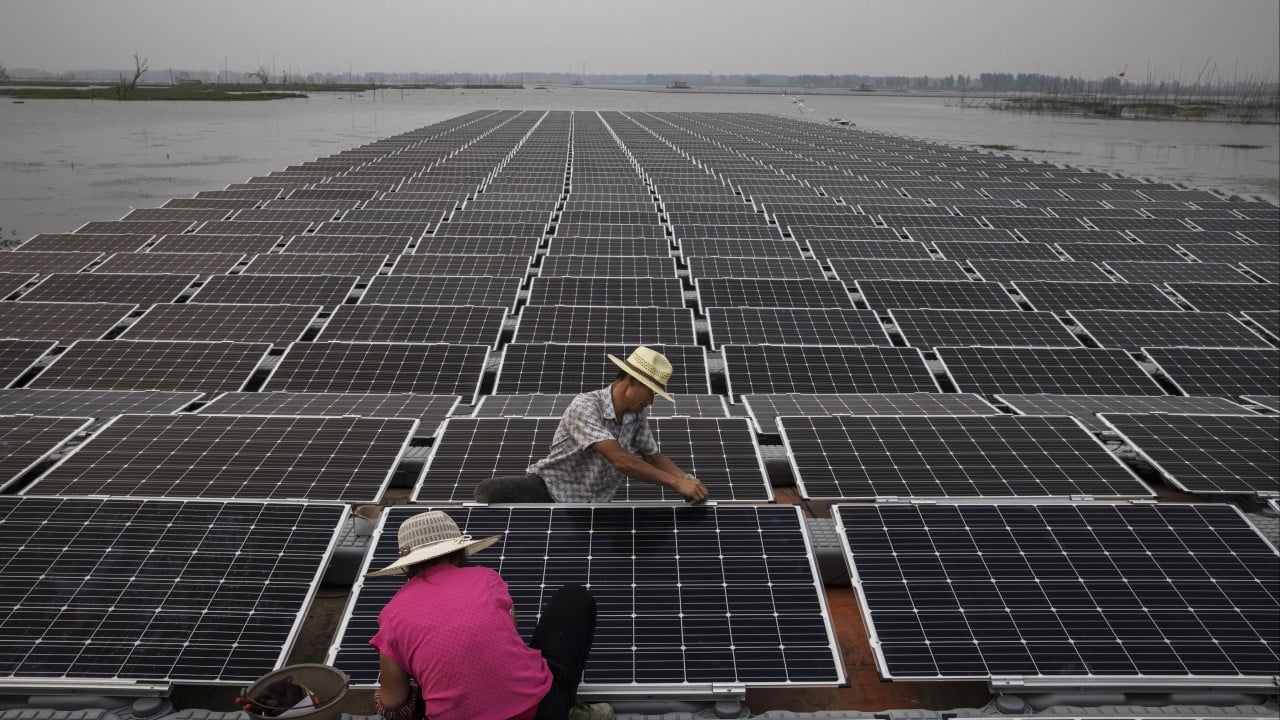
Beijing has convinced the world that its transition to clean energy is moving at a terminal velocity that will inevitably crush the global fossil fuel economy. The reality on the ground in 2026 is far messier and more dangerous for global climate targets than official pronouncements suggest. China is currently trapped in a structural paradox where it builds record-breaking amounts of wind and solar capacity while simultaneously increasing its coal generation and letting immense volumes of clean electricity go completely to waste. In the first quarter of 2026, China's carbon dioxide emissions actually grew by 2% year-on-year. The primary culprit was not a lack of green infrastructure, but the intentional, structural protection of the country's massive domestic coal apparatus.
The Statistical Sleight of Hand
To understand where Beijing is actually heading, one must look at the fine print of the newly minted 15th Five-Year Plan, which dictates national strategy from 2026 through 2030. On the surface, the State Council announced an aggressive-sounding target to slash carbon dioxide emissions per unit of gross domestic product by 17% by 2030.
Behind that headline number lies a significant quiet revision in how the state calculates its emissions data. Regulators quietly altered the baseline metric for carbon intensity. Previously, the formula focused strictly on the energy sector. The new framework wraps in industrial process emissions, such as those from cement plants and chemical manufacturing. Because real estate investment in China contracted by another 11% in early 2026, heavy industrial production like cement and crude steel has naturally plummeted.
By mixing these dying, structurally declining industrial sectors into the broader carbon intensity equation, Beijing has created an artificial cushion. Independent data tracking reveals that this methodological shift leaves a gaping loophole. It allows China's absolute carbon emissions to rise by an estimated 3% to 6% over the next four years while still technically allowing the government to claim it met its international intensity reduction targets. Under the old, transparent accounting rules, a 17% intensity reduction would have forced an absolute decline in national carbon output by 2030. The target was not tightened. It was re-engineered to accommodate more pollution.
The Ghost Fleet of Coal Grids
While global analysts marvel at the fact that China's installed renewable capacity has crossed well past the 2,300 gigawatt mark, the domestic reality is a dual-track energy economy. The country is building a parallel universe of fossil fuels.
In 2024, China commenced construction on 94.5 gigawatts of new coal-fired power capacity. In 2025, provincial governments pushed through and commissioned another 78 gigawatts of coal power, registering the single largest annual expansion of coal infrastructure seen in a decade. That momentum bled directly into 2026, with an additional 24 gigawatts added to the grid in the first three months of the year alone.
Why build a massive fleet of coal plants when wind and solar installations are already sufficient to cover new electricity demand? The standard defense issued by provincial planners is grid stability and peak-load backup. They argue that coal is required to keep the lights on when the sun sets and the wind stops blowing.
The math reveals a completely different motive. These new plants are not operating as emergency backups. China’s coal-fired plants operated at an average utilization rate of just around 50%. They are running half the time, a deeply inefficient and financially ruinous rate for any traditional utility market.
Local governments are not approving these multi-billion-dollar projects out of technical necessity. They are doing it because coal plant construction serves as a reliable, state-guaranteed mechanism to pump up short-term provincial GDP figures, support regional steel output, and protect jobs in traditional mining communities. The state-owned banking sector happily finances these projects because they are backed by the implicit guarantee of local government authorities. The outcome is a growing fleet of underutilized, polluting assets that the grid is forced to sustain.
The Institutional Sabotage of Green Electricity
The most damning piece of evidence that energy security still supersedes carbon reduction is the rapid rise of curtailed, or wasted, clean energy. In early 2026, wind capacity across China expanded by 23% and solar capacity jumped by 33% year-on-year. Yet, actual wind-power generation grew by a meager 1% over the same period.
The wind blew, and the solar panels worked, but the grid operators chose to turn them off.
Selected China Power Generation Metrics (Q1 2026 YoY Change)
-----------------------------------------------------------
Wind Capacity Installed:       +23%
Solar Capacity Installed:      +33%
Actual Wind Generation:        +1%
Coal & Gas Generation:         +4%
Overall Power Sector CO2:      +4%
This phenomenon is driven by systemic, institutional design. Grid management inside China remains heavily tilted in favor of the legacy coal industry. Power sector regulations frequently mandate that coal plants are guaranteed a set number of operating hours and a fixed, profitable tariff to ensure their financial survival.
When a region experiences a surge in solar or wind generation, grid dispatchers cannot easily throttle down local coal plants without violating these state-mandated financial protections. Consequently, dispatchers take the path of least institutional resistance. They disconnect the wind farms and solar arrays from the transmission lines.
Between 2022 and 2025, the average capacity factors—the measure of how much actual electricity a plant produces compared to its maximum potential—for Chinese solar and wind installations fell by 19% and 10% respectively. A massive portion of that decline is directly attributed to this deliberate grid-level curtailment. Green energy is being sacrificed on the altar of coal plant solvency.
Cleantech as an Economic Life Raft
The aggressive rollout of solar panels, lithium-ion batteries, and electric vehicles by Beijing is often viewed through an ideological lens as a dedicated fight against global warming. This misinterprets Chinese industrial policy. The green energy push is first and foremost an industrial salvation strategy.
With the domestic real estate sector facing a protracted, multi-year collapse, the central government desperately needed a new economic engine to sustain manufacturing employment and drive economic growth. Green technology became that engine. In 2025, the clean energy manufacturing sector contributed more than one-third of China's total GDP growth.
This economic reliance creates a highly volatile feedback loop. The central government heavily subsidizes the manufacture of solar wafers, wind turbines, and electric vehicles, forcing factories to run at maximum capacity regardless of whether the domestic grid can actually absorb the output. The factories overproduce, the domestic installation numbers look spectacular on a spreadsheet, but the physical power lines and regional grid operating systems are entirely unprepared to handle the erratic, fluctuating loads.
The National Energy Administration’s new 2030 guidelines reflect this systemic hesitation. The official plan targets a non-fossil generation share of 50% by 2030. Given the current rate of electricity demand growth, keeping the fossil fuel target at 50% means that absolute coal and gas consumption can easily continue to grow by more than 10% over the next four years while still allowing Beijing to claim victory. The state has explicitly left ample room for its traditional coal interests to thrive.
The Geopolitical Insurance Policy
Energy security for Beijing does not mean a peaceful transition to zero-carbon infrastructure. It means absolute self-reliance at any cost. The leadership remembers the severe domestic power shortages that crippled factories in 2021 and 2022, and they are acutely aware of growing maritime vulnerabilities in the Strait of Hormuz and the Malacca Strait, where the vast majority of China's imported oil and liquefied natural gas must pass.
In the eyes of the Central Committee, imported fuel is a critical strategic vulnerability. Domestic coal, no matter how dirty or carbon-heavy, is an un-interceptable resource that sits safely within sovereign borders.
This creates a strategy that operates on two tracks. Clean energy is deployed at a massive scale to slowly reduce long-term reliance on foreign oil and gas imports via electrification. Simultaneously, coal is expanded to ensure that if a geopolitical conflict cuts the country off from international energy markets, the domestic economy can run completely on its own steam.
This explains why the National Energy Administration’s new directives focus heavily on energy storage targets, calling for 300 gigawatts of new energy storage by 2030. The goal is not to create an open, market-driven clean grid, but to construct a heavily fortified, state-controlled fortress capable of enduring international isolation. Global climate advocates expecting China to rapidly phase out fossil fuels are misreading the defensive posture of a superpower preparing for a fractured world. Beijing will continue to build out the world's largest array of solar panels, but the coal furnaces alongside them are staying lit, fully fueled, and heavily guarded.