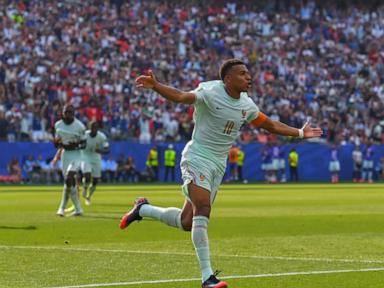
The corporate architects of the expanded 48-team tournament promised a global celebration of parity. They promised that expanding the field would elevate the small nations, giving minnows from Asia, Africa, and North America a true seat at the absolute pinnacle of international football. Instead, the tournament has concluded its Darwinian sorting process by yielding the most ruthlessly elite final four in modern history. Spain, France, Argentina, and England—the exact top four teams in the official world rankings—choked out the field to reach the final week. On July 14, 2026, Spain shattered France’s tournament favorite status with a clinical 2-0 victory in Arlington, punching their ticket to the final and proving that when the pressure increases, structural dominance always defeats romance.
The heavyweights did not just win. They consolidated power. Despite the logistical chaos of a tournament scattered across three massive nations, the old aristocracy completely institutionalized the semi-final bracket. While casual observers spent June celebrating the temporary joy of group-stage upsets, the institutional giants were simply pacing themselves for the grueling marathon of an extended knockout system.
The Mirage of Expansion Parity
The math behind a 48-team tournament always favored the elite, despite what romantic promotional campaigns suggested. When you add more games and an extra knockout round, you do not increase the chances of an underdog miracle. You systematically reduce them.
A smaller team can defend for 90 minutes, catch a lucky deflection, and steal a 1-0 win in a round-of-16 shootout. Doing that four consecutive times against the deepest squads on earth is a mathematical near-impossibility. The extra physical toll of the round of 32 exposed the structural flaw of smaller federations: a severe lack of elite squad depth.
While nations like Switzerland and Norway fought valiantly, their starting lineups were completely spent by the time they reached the later stages. Consider Switzerland's exhausting path. They dragged Argentina to the 112th minute in Kansas City before succumbing 3-1 to late goals from Julián Álvarez and Lautaro Martínez. The Swiss did not lose due to a lack of tactical organization or heart. They lost because Lionel Scaloni could afford to bring world-class forwards off his bench while the Swiss roster was completely depleted.
The same harsh reality ended Norway's dream against England. The Norwegians held a lead into the dying embers of the match, only for Jude Bellingham to strike twice and carry England to a 2-1 extra-time victory. Elite depth acts as an insurance policy. The deeper squads can survive poor individual performances, tactical mistakes, and early deficits simply by leaning on the sheer financial and athletic advantages of their bench.
The Tactical Blueprint of the Aristocracy
Spain’s 2-0 dismantling of Didier Deschamps’ France provided a masterclass in modern control. The French team arrived in Texas backed by massive prediction markets, with betting platforms branding them clear title favorites. Yet, Luis de la Fuente’s squad systematically picked them apart using a lethal combination of generational youth and flawless positional play.
The match turned in the 22nd minute when Lamine Yamal drew a definitive penalty inside the French box, allowing Mikel Oyarzabal to confidently slot home the opener. France, a machine built to punish teams on the counter-attack using Kylian Mbappé’s blistering pace, suddenly had to chase the game. This played directly into Spain's hands. Pedro Porro’s 58th-minute strike ended the argument, allowing the Spanish midfield to pass the French team into submission while Unai Simón secured a remarkably comfortable clean sheet.
+-------------------------------------------------------------+
|               2026 WORLD CUP SEMIFINAL SUMMARY              |
+---------------------+-------------------+-------------------+
| MATCHUP             | SCORE             | KEY PERFORMANCE   |
+---------------------+-------------------+-------------------+
| Spain vs. France    | 2 - 0             | Lamine Yamal      |
| England vs. Arg.    | July 15, 2026     | Pending           |
+---------------------+-------------------+-------------------+
Spain did not rely on emotional momentum or defensive low blocks. They relied on an institutional development system that produces players who do not panic when the stakes increase. They play the exact same way in a semifinal in Texas as they do in a domestic cup match in Madrid.
The Historic Weight of the Remaining Blockbuster
The second semifinal in Atlanta brings together two traditional adversaries defined by decades of bitter geopolitical and sporting history. This match will be the first time Lionel Messi faces England in a World Cup fixture. The narrative surrounding this individual milestone is immense, but the actual sporting subplots are far more practical.
Both Messi and Mbappé entered the semifinal stage deadlocked at the top of the scoring charts with eight goals each. With France eliminated, Messi now has a clear path to claim both the Golden Boot and his second consecutive world title. This would make Argentina the first nation to retain the trophy since Brazil accomplished the feat in 1962.
To achieve that immortality, Argentina must bypass an England side managed by Thomas Tuchel that has shown a stubborn, survivalist edge. England has not won this trophy since 1966. The English public's anxiety is a tangible tactical factor, but Tuchel has deliberately built a functional system designed to withstand that psychological weight. They rely on the physical presence of Harry Kane and the individual brilliance of Jude Bellingham to bail them out of tight spots.
The Monopolization of Modern Football
We must acknowledge the widening chasm at the heart of international football. The illusion of a wide-open global game has been thoroughly dismantled by the realities of modern sports science, scouting infrastructure, and economic centralization. The top four teams reached the final weekend because their players are thoroughly accustomed to the extreme physical demands of the UEFA Champions League and elite domestic divisions.
The 48-team expansion did not democratize the sport. It merely provided a grander, more profitable stage for the exact same elite cluster to showcase their absolute dominance. The underdogs provided the initial entertainment, but the aristocracy ultimately collected the prizes.