The Cheap Gotcha Games of Modern Journalism
Politicians stretch the truth. Media outlets weaponize the literal translation of hyperbole to score quick clicks.
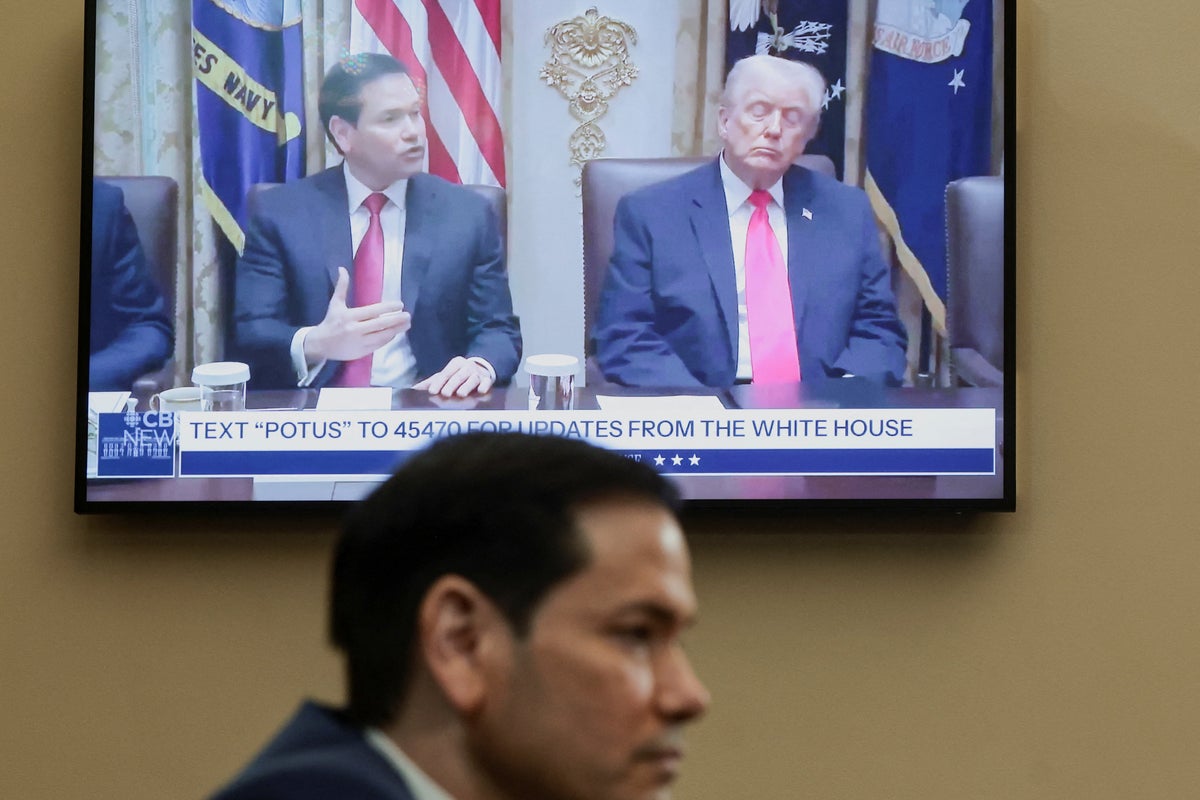
When Marco Rubio asserted that Donald Trump does not sleep, the media landscape did not engage with the underlying subtext of stamina, psychological pacing, or executive endurance. Instead, reporters scrambled for footage of a man closing his eyes for a few seconds during a trial, triumphantly shouting that they had uncovered a massive deception.
This is lazy journalism. It addresses a literal impossibility—human beings die without sleep—to avoid analyzing the actual mechanisms of high-stakes executive performance. We are obsessed with the "gotcha" moment, completely ignoring how elite operators manage cognitive load under extreme scrutiny.
The media wants you to believe this is a story about hypocrisy. It isn't. It is a story about the complete misunderstanding of endurance in modern leadership.
The "Sleepless CEO" Fallacy
For decades, corporate and political cultures have fetishized sleep deprivation. We have all heard the legends: Jack Dorsey waking up at 5:00 AM for ice baths, Elon Musk sleeping on the factory floor, or various presidents supposedly running the free world on three hours of rest a night.
I have spent years observing high-profile executives, founders, and political strategists in high-stress environments. I have seen organizations hemorrhage millions of dollars because a brilliant C-suite executive made a catastrophic, sleep-deprived decision at 2:00 AM just to prove they were "grinding."
The data on cognitive decline due to sleep deprivation is absolute. Researchers at the University of Pennsylvania and Washington State University found that restricting sleep to four hours a night for just two weeks degrades cognitive performance to the same level as being legally drunk.
When an ally claims a leader "never sleeps," they are trying to signal a relentless work ethic. When the opposition points out that the leader's eyes are closed, they are trying to signal cognitive decline or laziness. Both sides are operating on a flawed premise. Closing your eyes during a tedious, hours-long legal proceeding is not a sign of failure; it is a basic physiological response to cognitive saturation.
Micro-Naps, Sensory Deprivation, and Tactical Recovery
Let us dismantle the premise of the "eyes closed" gotcha. The assumption is that if an executive or politician has their eyes shut in public, they are failing at their job.
In high-stress fields, tactical recovery is a survival mechanism. Elite athletes, military operators, and seasoned executives utilize micro-naps and sensory deprivation to lower cortisol levels and restore cognitive sharpness during periods of prolonged stress.
The Physiology of High-Scrutiny Endurance
| State | Public Perception | Actual Cognitive Value |
|---|---|---|
| Eyes Closed / Static | Weakness, low stamina, disengagement | Sensory gating, lowering heart rate, cortisol reduction |
| Continuous Visible Restlessness | High energy, engagement, strength | Chronic adrenaline spikes, rapid decision fatigue, high error rates |
When you are under constant camera surveillance for twelve hours a day, the act of shutting out visual stimuli is a deliberate, often subconscious, method of preserving mental bandwidth. The brain processes an immense amount of data through visual inputs. By closing the eyes, an individual drastically reduces the sensory load on the prefrontal cortex.
Calling this "sleeping on the job" is scientifically illiterate. It ignores how the human brain actually manages sustained stress.
People Also Ask: Dismantling the Public Confusion
Why do politicians exaggerate the work habits of leaders?
Because voters reward the appearance of martyrdom over actual efficiency. We have been conditioned to believe that a leader who destroys their health for the job is inherently more trustworthy than one who manages their energy systematically. When Rubio says Trump doesn't sleep, he is speaking the language of political myth-making. It is a branding exercise, not a medical diagnosis.
Can someone actually function effectively on four hours of sleep?
A microscopic percentage of the population possesses a rare mutation in the DEC2 gene, allowing them to function fully on less sleep than the average human. The vast majority of people who claim they only need four hours are simply habituated to chronic impairment. They perform poorly, but they lack the self-awareness to realize their performance has degraded.
Is closing your eyes in a courtroom or meeting always a sign of sleep?
No. It is often a manifestation of intense listening, deep focus, or simple physical exhaustion without entering actual REM or slow-wave sleep states. In a highly adversarial environment, it can also function as a passive-aggressive display of disinterest or psychological withdrawal from the proceedings.
The Danger of the 24/7 Performative Work Ethic
The real damage of this discourse is that it reinforces a toxic framework for everyday professionals. Founders look at these headlines and think they need to push themselves to the brink of a medical emergency to be taken seriously.
Let us look at the reality of decision fatigue. The more choices you make in a day, the worse the quality of those choices becomes. The ultimate currency of leadership is not the number of hours you sit at a desk with your eyes wide open; it is the quality of the three or four critical decisions you make each day.
If a leader needs to close their eyes for ten minutes to clear the mental ledger before making a decision that impacts thousands of lives or millions of dollars, that is a net positive. The obsession with constant visual alertness is a relic of factory-era management, where physical presence equaled productivity. In the information age, it is a liability.
Stop Looking at the Eyes, Start Looking at the Output
The media’s fixation on whether a politician's eyelids fluttered during a afternoon session is a distraction from what actually matters: execution.
If you are evaluating a leader—whether it is a president, a CEO, or a department manager—stop analyzing their posture during boring meetings. Stop tracking their calendar to see if they sent an email at 4:00 AM.
Evaluate the strategic output. Look at the systemic stability of the organization. Measure the clarity of their directives.
The contrarian truth is uncomfortable for a media apparatus built on surface-level observation: a leader who appears completely checked out for an hour during a routine event may be managing their energy far more effectively than the hyper-reactive micromanager who prides themselves on being wide awake, highly visible, and consistently erratic.
The next time you see a clip of a high-profile figure with their eyes closed, understand that you are looking at a human biological system attempting to regulate itself under immense pressure. The real failure isn't that their eyes closed. The real failure is our collective inability to understand how sustainable human performance actually works.


