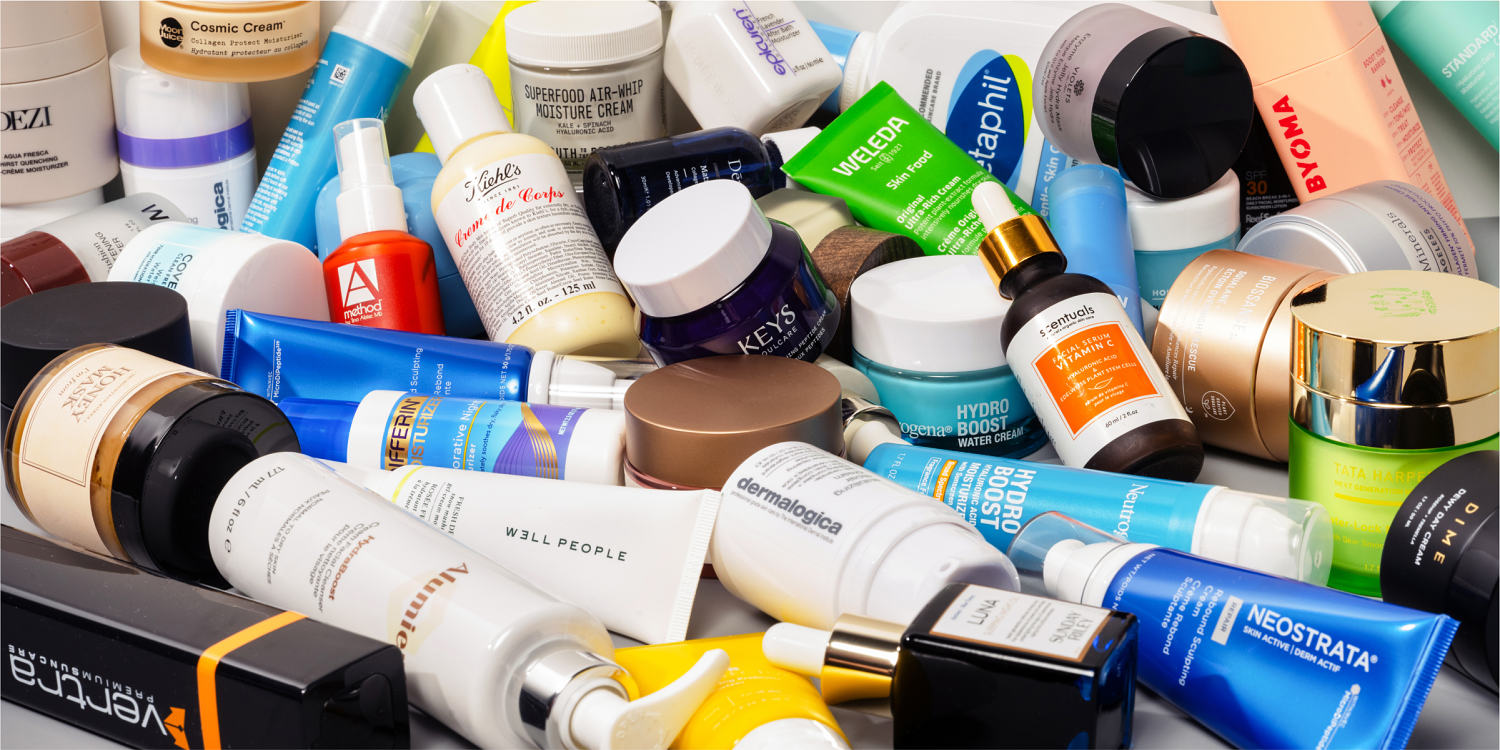
The beauty industry is running a massive, multi-billion-dollar shell game, and your bathroom counter is the crime scene.
Every year, glossy editorial boards publish exhaustive lists ranking the "100 best face moisturizers." They assemble panels of glowing editors, slap on a few dozen affiliate links, and tell you that the secret to perfect skin lies at the bottom of a $150 jar of cream infused with rare alpine botanicals or proprietary cellular complexes.
It is a comforting narrative. It is also biological nonsense.
I have spent over a decade analyzing cosmetic formulations, looking past the marketing copy to the actual ingredient decks. Here is the uncomfortable truth the beauty industry hides behind elegant packaging: skin cells are dead at the surface. They do not want to be "fed" exotic extracts. They do not care about luxury brands.
The entire premise of the 100-product megamist is flawed. You do not need a curated wardrobe of luxury creams. In fact, the vast majority of commercial moisturizers are doing something entirely different than what you think they are doing—and they are charging you a 1000% markup for the privilege.
The Three-Cent Reality of Skin Hydration
To understand why your luxury cream is a scam, you have to understand the basic physics of the skin barrier. The stratum corneum—the outermost layer of your skin—is essentially a brick-and-mortar structure. The bricks are dead skin cells (corneocytes), and the mortar is a matrix of lipids (ceramides, cholesterol, and fatty acids).
Moisturizers do not actually add water to your skin in any meaningful, permanent way. Instead, they do two things: they draw moisture from the deeper layers of your skin (or the air) using humectants, and they trap it there using occlusives.
There are only three classes of ingredients that matter in a moisturizer:
- Humectants: Ingredients like glycerin, hyaluronic acid, and urea that bind water molecules.
- Emollients: Ingredients like isopropyl palmitate or squalane that fill in the gaps between skin cells to smooth the surface.
- Occlusives: Ingredients like petrolatum, mineral oil, or dimethicone that form a hydrophobic barrier to prevent transepidermal water loss (TEWL).
Here is the kicker: the most effective occlusive known to dermatological science is petrolatum. Plain old Vaseline. It blocks more than 99% of transepidermal water loss. It costs pennies to manufacture.
When you buy a $120 cream, you are not buying a superior mechanism for hydration. You are buying a highly sophisticated emulsion of water, glycerin, and mineral oil or silicone, whipped to a specific texture, scented with synthetic fragrance, and poured into a heavy glass jar. The active mechanism keeping your skin hydrated costs the manufacturer about three cents. The rest of your money pays for the supermodel in the ad campaign and the shelf space at Sephora.
The Botanical Extract Fallacy
Flip over your favorite luxury moisturizer and look at the ingredient list. You will likely see an array of botanical extracts: green tea, orchid leaf, algae, or rare rose water. The editorial lists rave about these, claiming they deliver antioxidants and "revitalize" the skin.
This is a chemical impossibility for two reasons: stability and concentration.
First, most antioxidants are highly unstable. They degrade rapidly when exposed to light and air. Every time you open that luxurious, wide-mouth jar to scoop out your cream, you are introducing oxygen and light, neutralizing whatever fragile antioxidant properties those botanical extracts possessed within a few weeks.
Second, look at where those extracts sit on the ingredient list. Cosmetic labeling laws dictate that ingredients must be listed in descending order of concentration. Almost every exotic botanical sits below the 1% line—usually below phenoxyethanol (a common preservative capped at 1%). They are included at "fairy dust" percentages purely so the marketing department can print them on the front of the box.
Imagine a scenario where a chef makes a massive pot of tomato soup, adds a single drop of truffle oil, and sells it as "Luxury Truffle Bisque" for fifty times the price of regular soup. That is exactly what your favorite skincare brand is doing.
Why "Tested and Ranked" Lists Are Inherently Flawed
When a major publication claims their editors "tested" 100 moisturizers to find the best ones, they are using a methodology that violates basic scientific principles.
Skin compatibility is not subjective, yet these rankings are entirely based on how a product feels upon application. This feel is determined by cosmetic elegance—the slickness of silicones, the quick evaporation of denatured alcohol, the immediate plumping effect of high-molecular-weight hyaluronic acid sitting on top of the skin.
None of these things correlate to long-term skin health. In fact, many products that feel "light and refreshing" achieve that texture by using high amounts of alcohol, which temporarily tightens the skin but disrupts the lipid barrier over time, leading to chronic dehydration.
Furthermore, these tests ignore the concept of bio-individuality. A moisturizer that works beautifully for an editor with an oily skin profile and a robust barrier will cause a catastrophic breakout or contact dermatitis in someone with an impaired barrier or acne-prone skin. ranking moisturizers in a vacuum is like ranking prescription medications without knowing the patient's diagnosis.
Dismantling the Consumer Queries
Let us address the questions consumers constantly ask, stripped of the marketing spin.
Does expensive moisturizer actually work better?
No. Independent clinical studies consistently show that basic, clinical-grade drugstore moisturizers perform identically to, or better than, luxury creams in measuring transepidermal water loss and skin barrier repair. Brands like CeraVe, Vanicream, and Cetaphil use identical barrier-mimicking ingredients (like ceramides and fatty acids) without the irritating fragrances and unstable botanical extracts found in high-end alternatives. You are paying for the sensory experience, not the efficacy.
How do I choose the right moisturizer for my skin type?
Ignore the marketing labels like "anti-aging" or "brightening." Look at the ingredient structure.
If you have oily or acne-prone skin, you need a formulation high in humectants (glycerin, hyaluronic acid) and light emollients (squalane, caprylic/capric triglyceride), with minimal occlusives to avoid trapping sebum.
If you have dry or compromised skin, you need heavy occlusives (petrolatum, dimethicone, shea butter) to artificially replace the missing lipid barrier while it heals.
Why is my skin still dry even after applying moisturizer?
Because you are likely applying it to a completely dry face, or you are using a product that relies too heavily on humectants without enough occlusives. Humectants are greedy molecules; if the air around you is dry, and you do not seal the humectant in with an occlusive layer, it will pull water out of the deeper layers of your skin and evaporate it into the atmosphere. This leaves your skin drier than it was before.
The Downside of the Minimalist Approach
Before you throw away all your creams and buy a tub of pure petroleum jelly, there is a caveat to this contrarian view.
Pure occlusives like petrolatum or heavy mineral oils are cosmetically inelegant. They are greasy, they shiny, and they can feel suffocating on the skin. For individuals prone to retention hyperkeratosis—where dead skin cells do not shed properly—heavy occlusives can trap those cells in the pores, leading to closed comedones and acne.
The value of a well-formulated, mid-tier moisturizer is not its "magic" ingredients, but its balance. A good product achieves the optimal ratio of humectants, emollients, and occlusives to support your specific barrier without causing secondary issues like cosmetic acne or sensory discomfort. But achieving that balance does not cost $100. It costs $15.
Stop Buying the Illusion
The beauty media wants you to believe that skin health is a luxury pursuit. They want you to believe that if your skin isn't improving, you simply haven't spent enough money or found the right cult-status product yet.
It is a brilliant business model built on perpetual dissatisfaction.
Your skin is a self-regulating organ. Its primary function is to keep the outside world out and the inside world in. It does not need to be pampered, it does not need to be fed luxury botanicals, and it certainly does not need a rotating wardrobe of 100 different editors' choices.
Fire your luxury skincare brand. Stop reading the affiliate-funded rankings. Buy a basic, fragrance-free, clinically boring cream from the drugstore, apply it to damp skin, and spend the hundreds of dollars you save on things that actually impact your systemic health—like real food, clean water, and a gym membership. Your skin barrier will thank you.