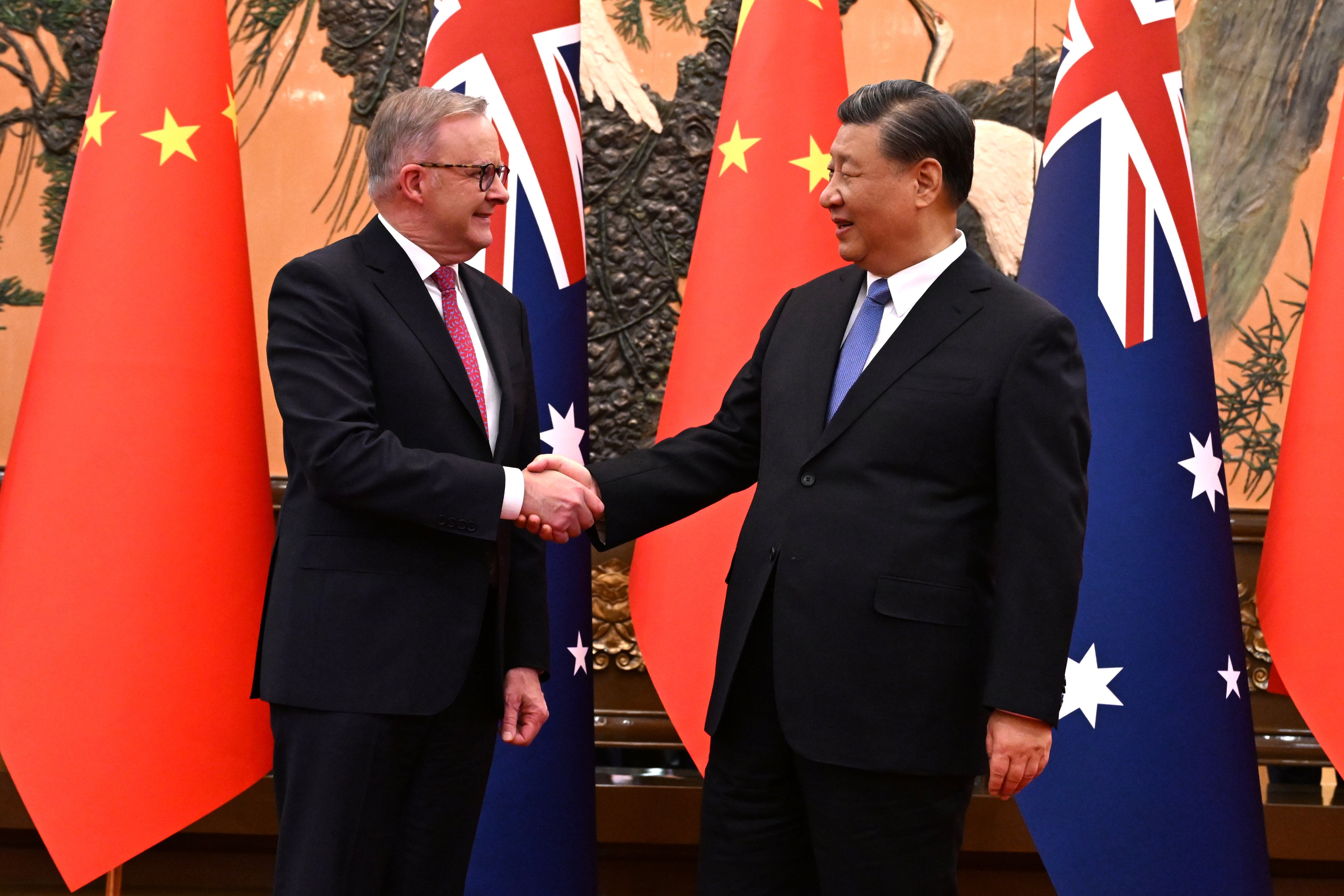
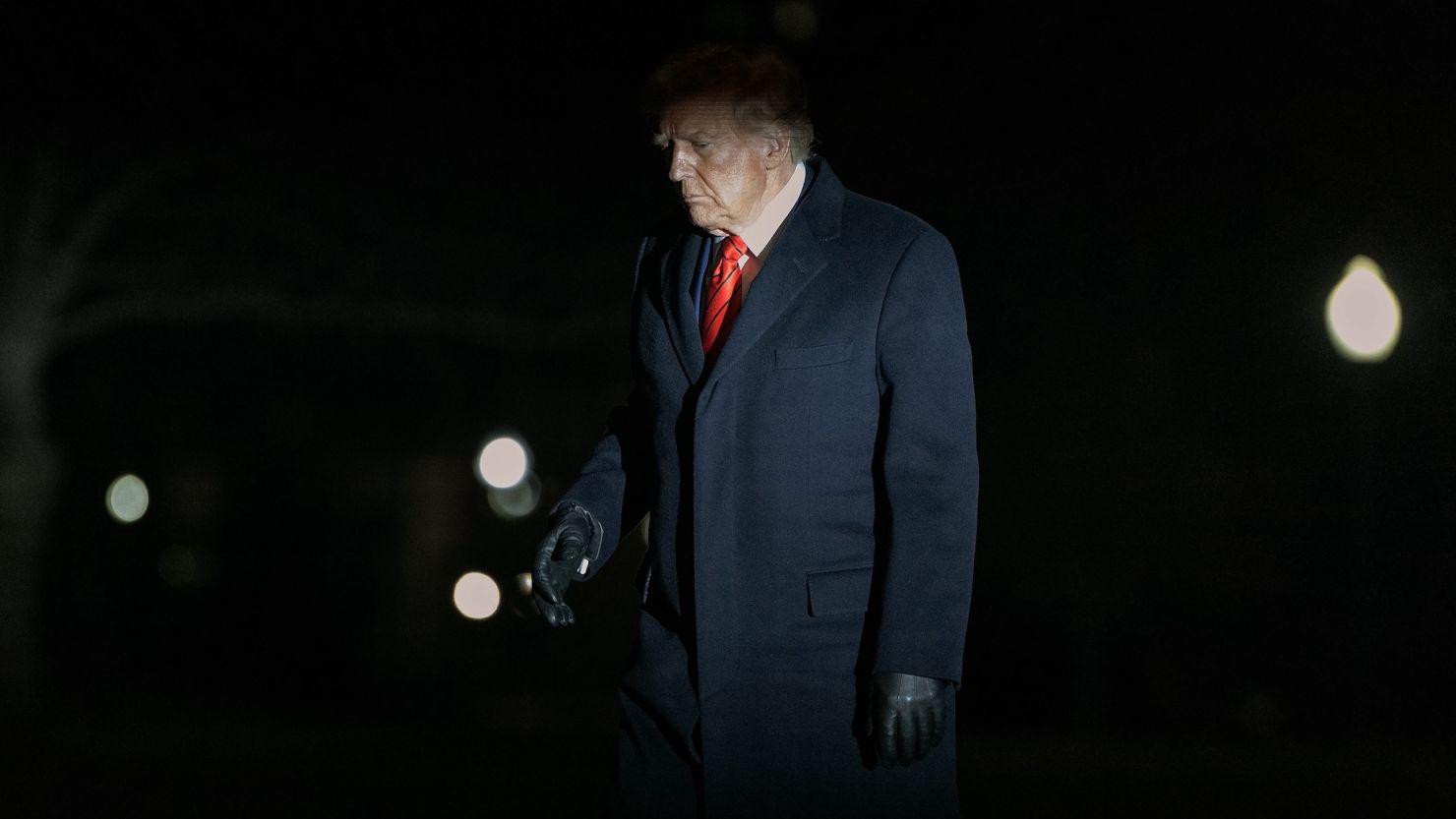
The global energy market just lost its last shred of predictability. On Sunday, the Trump administration shattered the status quo by ordering a full naval blockade of the Strait of Hormuz, transforming a 21-mile-wide geographic chokepoint into the front line of a potential Third World War. By moving to intercept every vessel entering or exiting the Persian Gulf, the United States is no longer just "protecting" shipping lanes; it is actively weaponizing them to starve the Iranian economy and, by extension, test the limits of Chinese patience.
This is a direct confrontation with Beijing. China depends on this narrow strip of water for nearly half of its crude oil imports. For years, the strategic community has debated the "Malacca Dilemma," but the "Hormuz Trap" has proven to be the more immediate threat. By cutting off the flow of energy, Washington is betting that China will blink first and force Tehran back to the negotiating table. It is a high-stakes play that ignores a decade of Chinese military modernization designed for exactly this moment.
The Toll Road to Total War
The immediate trigger for the blockade was a breakdown in ceasefire negotiations in Islamabad, but the underlying mechanics are far more cynical. Iran had begun treating the Strait of Hormuz like a private toll road, demanding payments in rials from any vessel wishing to pass. This was "World Extortion," according to the White House. The U.S. response—to interdict any ship that has paid such a toll—effectively forces every commercial tanker in the region to choose a side.
There is no middle ground left. If a Chinese state-owned tanker pays the Iranian toll to secure passage, it becomes a target for the U.S. Navy. If it refuses to pay, it risks being seized or struck by Iranian Revolutionary Guard Corps (IRGC) fast-attack craft or mines. This creates a binary world where global commerce is no longer governed by international law, but by the kinetic reality of which navy is closest to the hull.
Energy as a Blunt Force Instrument
The economic math is brutal. Since the conflict began in late February, Brent Crude has surged past $120 per barrel. The International Energy Agency has already labeled this the largest supply disruption in history, dwarfing the shocks of the 1970s. But the administration sees this volatility as a feature, not a bug. The logic is simple: if the world is short on Persian Gulf oil, it must buy American.
The United States is now the world’s largest oil and gas producer. By pairing the blockade with a sales pitch for American LNG and crude, the administration is attempting a forced market pivot. They want Beijing to swap its dependence on Iranian and Emirati oil for shipments from the Gulf of Mexico. It is a plan that looks good on a spreadsheet but fails to account for the physical reality of global infrastructure. Refineries in eastern China are tuned for the heavy sour crudes of the Middle East, not the light sweet shale coming out of West Texas.
The Silent Dragon Stirs
Beijing’s response has moved from diplomatic concern to military preparation. For the last 48 hours, satellite imagery has shown increased activity at China’s naval base in Djibouti and reports are surfacing of advanced missile systems being readied for shipment to Tehran. This is the "why" that most analysts are missing: China cannot afford to let the U.S. successfully execute a blockade because it sets a precedent for the South China Sea.
If the U.S. Navy can unilaterally close the Strait of Hormuz to "enforce" a negotiation, what stops them from doing the same to the Taiwan Strait? China isn't just defending its oil supply; it is defending the principle of "guaranteed access" to international waterways. The arrival of Chinese destroyers in the Arabian Sea wouldn't be for a skirmish with Iran; it would be to escort their own tankers through the U.S. blockade line.
A Logistics Chain in Flames
The sheer scale of the disruption is difficult to overstate. We are talking about 20 million barrels of oil per day and 20% of the world’s liquefied natural gas. QatarEnergy has already declared force majeure on all exports. In Europe, the European Central Bank has postponed interest rate cuts, bracing for a period of stagflation that could last years.
The Cost of the Long Way Around
For those ships lucky enough to be outside the Gulf, the alternative is the Cape of Good Hope. This isn't just a minor detour.
- Transit Time: Adds 25 to 30 days to a standard voyage to Asia.
- Fuel Costs: An additional $1.25 million to $2.25 million per Supertanker (VLCC).
- Insurance: Premiums for any vessel even approaching the "War Risk" zone have increased by 400% in the last week.
These costs are being passed directly to the pump and the power grid. In Germany, petrol prices have doubled since early March. In India, which gets 40% of its crude through the Strait, the government is dipping into strategic reserves that are expected to run dry by June.
The Kinetic Reality of Mine Sweeping
While the politicians talk about "freedom of navigation," the sailors are worried about "Operation Epic Fury." The U.S. Navy has been tasked with clearing the mines Iran has scattered throughout the shipping lanes. This is not a clean or quick process. Modern naval mines are "smart"—they can lie dormant on the sea floor and activate only when they detect the specific acoustic signature of a target vessel.
The IRGC has spent decades preparing for this specific asymmetric fight. They don't need a blue-water navy to win. They only need to make the cost of staying in the Strait higher than the U.S. public is willing to pay. Every time a U.S. destroyer fires on an Iranian site, the risk of a retaliatory strike on Saudi or Emirati infrastructure increases. We saw this in March when Iran struck Qatar’s Ras Laffan LNG complex, knocking out 17% of their production capacity in a single afternoon. Repairs there will take five years.
The Illusion of Control
The administration’s rhetoric suggests a controlled escalation—a "squeeze" meant to produce a deal. But history shows that maritime blockades are rarely surgical. They are messy, prone to miscalculation, and almost always result in unintended casualties. When the U.S. Navy begins "interdicting" tankers in international waters, they aren't just stopping ships; they are boarding sovereign territory.
If a Chinese-flagged tanker is boarded by U.S. SEALs 50 miles off the coast of Oman, the "clash" with China isn't a future risk; it's a present reality. The U.S. is betting that its naval superiority remains an absolute deterrent. However, in the narrow, congested waters of the Gulf, that superiority is neutralized by geography. A billion-dollar destroyer is just as vulnerable to a $50,000 suicide drone or a bottom-dwelling mine as a commercial tanker is.
The world is currently watching a superpower try to rewrite the rules of global trade in real-time using a carrier strike group as a pen. It is a gamble that assumes the rest of the world will eventually fall in line to keep the lights on. But for China, the choice isn't just about the price of oil. It is about whether they are willing to live in a world where the U.S. Navy holds the master key to their economy.
The blockade hasn't just stopped the flow of oil; it has accelerated the end of the post-war maritime order. Ships are no longer "peaceful vessels" or "neutral parties." They are now assets in a global game of chicken where the first one to flinch loses their energy security, and the last one to flinch starts a war. Secure your supply chains now; the era of cheap, safe passage is over.