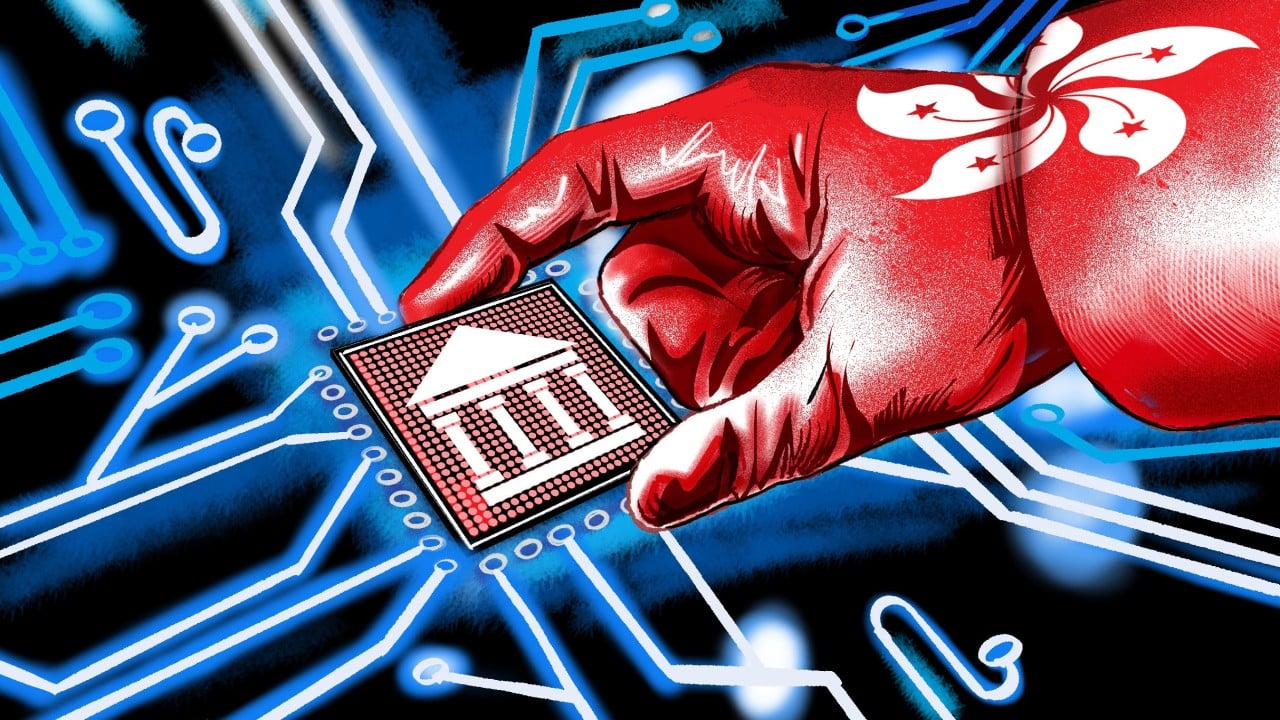
Washington and Beijing are locked in a struggle over silicon and software. It's easy to assume Hong Kong is just caught in the crossfire. That's a mistake. While the trade wars and chip bans dominate the headlines, they actually create a unique opening for a city that has spent a century playing both sides of the fence. Hong Kong isn't just a spectator. It's the only place on earth where Western capital and legal frameworks meet China’s massive data sets and manufacturing power.
You hear a lot of noise about how export controls will kill the local tech scene. I don't buy it. Restrictions on high-end GPUs like the H100s suck, sure. But constraints usually lead to better engineering. When you can’t just throw more hardware at a problem, you start looking at algorithmic efficiency. You start looking at specialized local applications that the giants in Silicon Valley or Beijing aren't focused on.
Hong Kong can bridge the gap in artificial intelligence because it's still the world’s most efficient "translator" between two different systems. It’s about more than just moving money. It’s about moving ideas and data in a way that satisfies both the risk-averse compliance officers in the West and the strategic goals of the Mainland.
Why the Tech Cold War Actually Helps Hong Kong
Geopolitical friction creates friction in the market. Friction creates value for middlemen. In the AI world, that "middleman" role involves data governance, ethical standards, and specialized financial tech.
Think about the current state of LLMs. You’ve got the US pushing one set of values and China pushing another. Most of the world doesn't want to choose. They want systems that work within their own local laws and cultural norms. Hong Kong’s legal system, based on English Common Law, provides a level of predictability that you just don't find elsewhere in the region. That’s a massive asset for AI companies that need to protect their IP while still accessing the Chinese market.
I've seen this play out in the fintech space. Companies want to use Chinese facial recognition or consumer data patterns, but they need to store that data in a jurisdiction where the rules of the game are clear and enforceable. Hong Kong is that neutral ground. It's the "Switzerland of AI" if we play our cards right.
Computing Power Is Not the Only Metric That Matters
Everyone is obsessed with who has the most chips. It's the new arms race. But AI isn't just a hardware game. It’s a data and application game.
China has the best data for training AI in logistics, manufacturing, and healthcare. We're talking about billions of data points from the most complex supply chains in the world. Hong Kong has the world-class universities—HKU, HKUST, CUHK—that are churning out the researchers who know how to use that data.
We often see a disconnect between the lab and the factory floor. Hong Kong sits right in the middle. We have the researchers who can design the next generation of neural networks and we’re a 15-minute train ride away from the factories in Shenzhen that can implement them. This proximity allows for a feedback loop that Silicon Valley can’t replicate. You can build, test, and iterate on hardware-integrated AI faster here than anywhere else.
Building an Ethical Bridge for Global AI Standards
One of the biggest hurdles for AI today is trust. Western regulators are terrified of "black box" algorithms. China is focused on social stability and alignment. There’s a massive gap in how we define "safe" AI.
Hong Kong can lead here by developing a regional framework for AI ethics. We don't need to reinvent the wheel. We just need to create a "best of both worlds" standard.
- Transparency Protocols: Developing open-source audit trails for how models are trained.
- Data Privacy Sandboxes: Creating secure environments where Western firms can train models on Chinese data without violating their home country’s privacy laws.
- Cross-Border Certification: Building a stamp of approval that tells the world a piece of software is both technically sound and ethically compliant.
If a model is certified in Hong Kong, it should be trusted globally. That's the goal. It's about building a brand of "Neutral AI."
Solving the Talent Crisis Without Relying on the US
The US is making it harder for Chinese scientists to work in American labs. That’s a tragedy for science, but a windfall for Hong Kong. We are seeing a "reverse brain drain." Brilliant researchers who were educated at MIT or Stanford are looking for a place where they can work on high-level problems without feeling like a political pawn.
Hong Kong offers high salaries, low taxes, and a lifestyle that appeals to global elites. But we need to do more than just offer a paycheck. We need to build the infrastructure that makes them stay. This means more than just office space in Cyberport or Science Park. It means deep integration with the Greater Bay Area.
It's not just about attracting big names. It’s about the PhD students and the mid-level engineers who actually do the work. We need to make it incredibly easy for them to move between Hong Kong and the Mainland. The more we integrate the talent pool, the harder it is for outside pressure to slow us down.
Specialized AI over General Intelligence
Forget about beating OpenAI at their own game. Building another GPT-5 is a waste of resources for a city of our size. The real money and the real impact are in "Vertical AI."
Vertical AI is about being the best in the world at one specific thing.
- Legal AI: Using our unique position to build models that understand both Common Law and Chinese Law. This is a goldmine for international trade.
- Maritime AI: Hong Kong is still a global shipping hub. We should be leading the world in AI-driven port logistics and autonomous shipping.
- Medical AI: Combining the high standards of Hong Kong’s healthcare system with the massive data sets from the Mainland to solve problems in oncology or genomics.
These aren't just "nice to have" projects. They are essential industries where we already have a competitive edge. AI just makes that edge sharper.
The Hardware Workaround
The chip bans are real. We can't ignore them. But we can outmaneuver them.
First, we need to lean into specialized chips. While the US focuses on general-purpose GPUs, there’s a whole world of ASICs (Application-Specific Integrated Circuits) being developed in China. These chips are designed for one task—like image recognition or natural language processing—and they do it more efficiently than a general GPU.
Second, we need to focus on edge computing. Not everything needs to happen in a massive data center. Hong Kong’s dense urban environment is the perfect playground for edge AI. Think smart traffic lights, autonomous delivery drones, and building management systems that run on low-power chips right where the data is collected.
We also need to look at "model slimming." Research into making large models smaller and more efficient is just as important as building bigger ones. If we can run a powerful LLM on a device that doesn't require a banned Nvidia chip, we've won.
Moving Past the Hype
A lot of the conversation around AI in Hong Kong is just fluff. We hear "innovation" and "hub" so often they’ve lost all meaning. We need to get practical.
Stop waiting for a government grant to save the day. The private sector needs to lead. We need more local venture capital that understands the technology, not just the real estate market. We need founders who are willing to fail. In Hong Kong, failure is often seen as a permanent stain. In AI, failure is just a data point.
We also need to stop being so modest about our advantages. Hong Kong’s infrastructure is incredible. Our internet speeds are among the fastest in the world. Our power grid is rock solid. These are the boring but essential foundations that AI needs to thrive.
What You Should Do Right Now
If you're a business leader or a policy maker in Hong Kong, the "wait and see" approach is a death sentence. The world is moving too fast.
Start by identifying the specific data you have that nobody else has. That’s your moat. Then, look for ways to apply AI to that data that solve a boring, expensive problem. Don't try to build a chatbot that writes poems. Build a model that predicts when a shipping container will arrive or one that automates the compliance checks for a cross-border trade deal.
Invest in training. Not just for your IT team, but for your lawyers, your accountants, and your managers. They need to understand what AI can and cannot do. The biggest barrier to AI adoption isn't technology; it's the lack of imagination in the C-suite.
Hong Kong has always thrived by being the place where different worlds meet. The AI era doesn't change that. It just gives us a new set of tools to do what we've always done best. Don't get distracted by the geopolitical noise. Focus on the code, the data, and the massive opportunity sitting right in front of us.
Push for local AI infrastructure that doesn't rely on a single source of hardware. Diversify your tech stack. Hire talent from everywhere. Build for the global market, but use the unique resources of the Greater Bay Area. The path is clear. It’s time to stop talking about "potential" and start shipping products.