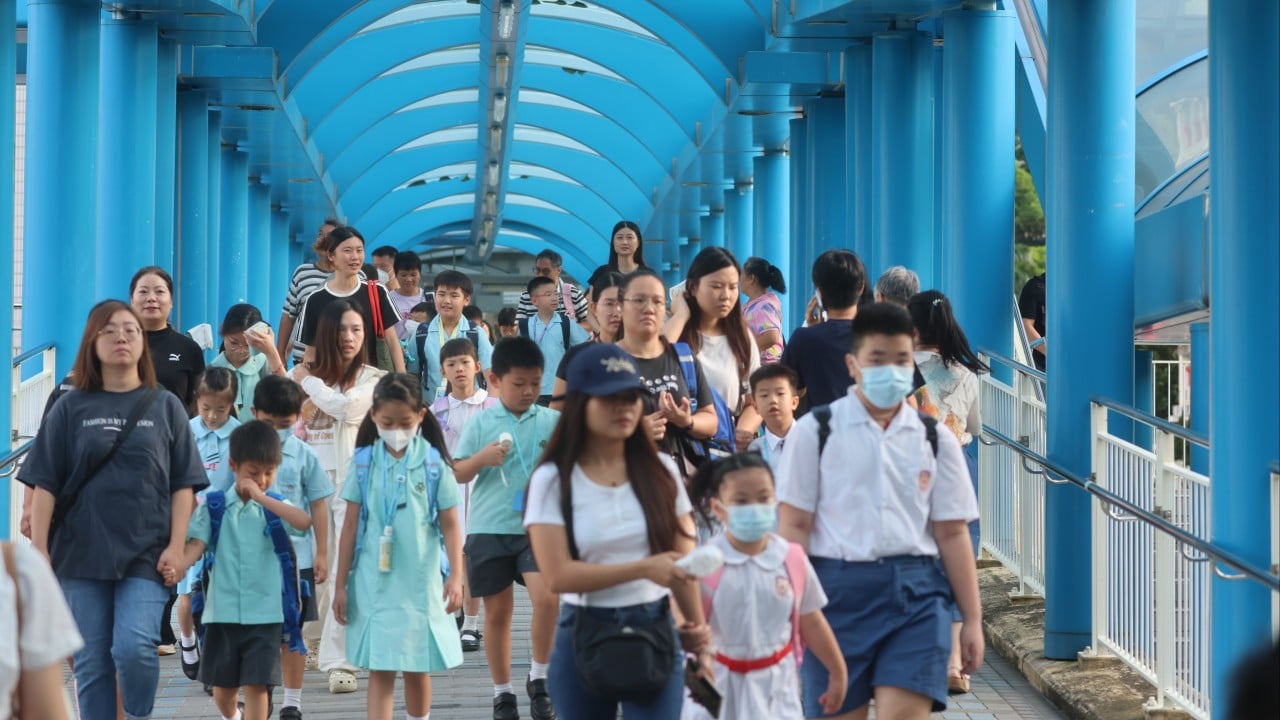
Everyone is looking at the headlines and drawing the exact wrong conclusion. The narrative is comforting in its simplicity. Local student populations are shrinking because of demographic shifts and emigration waves, yet international and private schools in Hong Kong are reporting swelling waitlists and growing enrolment numbers. The lazy consensus says this proves the unstoppable resilience of elite education. It proves wealthy parents will always pay top dollar for prestige, no matter the macroeconomic weather.
That interpretation is lazy, dangerous, and fundamentally backwards.
I have watched operators pour millions into expansion projects based on this exact illusion, only to watch their cash flow evaporate the moment the underlying asset class shifts. The growth in private school enrolment is not a sign of health. It is a symptom of flight. It is a market distortion driven by parents abandoning a public system they no longer trust, locking themselves into high-fixed-cost alternatives that leave them financially overextended.
Let us break down why this boom is actually a warning sign.
The Decoupling Fallacy
The fundamental flaw in the standard analysis is treating the private and public education sectors as if they operate in the same ecosystem. They do not.
When overall student numbers drop, the rational assumption is that demand contracts across the board. But education is a positional good. As the general population contracts, middle-class families stretch their balance sheets to the absolute breaking point to secure an international or private school seat, viewing it as an insurance policy against perceived institutional decline.
You are not looking at organic growth. You are looking at panic migration.
Private school operators see full cohorts and assume structural demand is infinite. It is not. It is cannibalizing the middle market. Families are draining savings accounts, leveraging property, and cutting discretionary spending elsewhere just to pay twenty thousand dollars a year in tuition for a primary student.
The Economics of Fixed Vanity
Ask any CFO managing an independent school in Kowloon or the New Territories about their margin stability. They will talk about waitlists with a straight face while ignoring the ballooning debt service on campus upgrades designed to impress prospective parents rather than improve educational outcomes.
Private schools operate on a high-fixed-cost model. They need a continuous influx of affluent expatriate families or hyper-wealthy local elites to sustain their fee structures. But the traditional expat pipeline has fundamentally changed. Multinational corporations are localizing packages. They are no longer handing out full tuition allowances as a standard-issue perk for mid-level managers.
So who is filling those seats?
Local families stepping down from public options or upgrading from lower-tier direct subsidy scheme schools. These families are paying out of pocket, out of after-tax income, without corporate backing.
Imagine a scenario where corporate relocations drop by another ten percent while local economic growth flatlines. The schools relying on local cash-flow-strapped families to fill seats priced for corporate packages will face a sudden liquidity cliff. When a family is funding private tuition purely through personal disposable income, tuition is the first thing that gets cut when a business stumbles or investment portfolios dip. The waitlists vanish overnight.
Dismantling the Elite Safeguard Myth
People ask: "Why shouldn't parents invest in private education if it guarantees a better outcome?"
That question contains a false premise. It assumes causation where there is only strong correlation with parental income. Elite private schools do not magically manufacture academic genius; they simply select for students who already possess immense socioeconomic advantages, stable home environments, and access to private tutoring outside of school hours.
When you pump your life savings into a private school secondary education while neglecting your broader liquidity, you are buying a brand label, not an educational monopoly on success. I have seen graduates from boutique private institutions struggle just as hard in global university admissions as their public school peers if their foundational critical thinking skills were neglected in favor of brand-name school pedigree.
The smart money is not expanding capacity right now. The smart money is auditing cost structures, freezing tuition hikes, and preparing for the inevitable correction when over-leveraged local families hit a wall.
Stop reading the enrolment numbers as a victory lap for Hong Kong education. They are a monument to anxiety.
The next time a school board brags about a two-year waitlist, ask them what percentage of those families are paying out of pocket without corporate assistance, and how many missed mortgage payments it took to secure that deposit.
The music is playing, but everyone is dancing on a very thin sheet of ice.