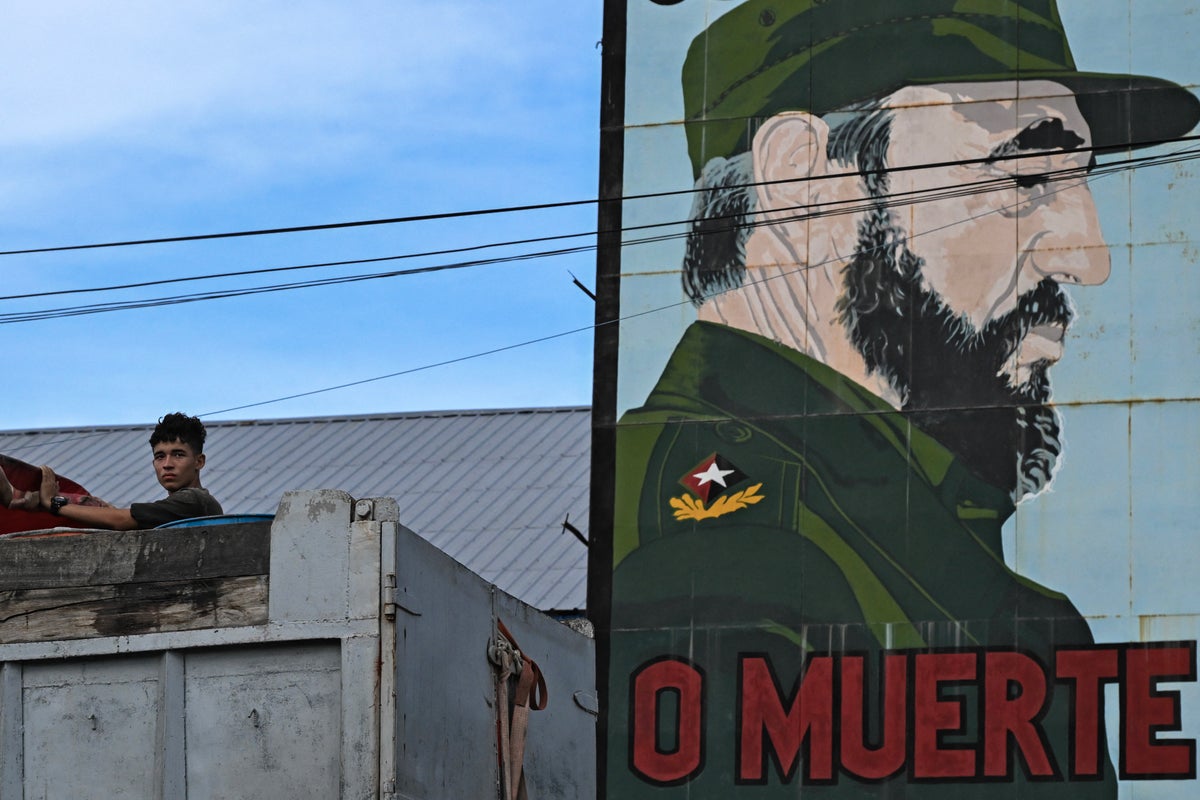
On August 13, 2026, the Cuban government gathered thousands of international delegates and domestic loyalists to mark the hundredth anniversary of Fidel Castro’s birth. The state-run pageantry, a polished display of revolutionary fervor, attempted to invoke the ghost of a leader who defined the twentieth century. Yet, the reality on the streets of Havana tells a different story. Outside the conference halls, millions of citizens contend with twenty-hour daily power outages, empty pharmacy shelves, and a crumbling social contract that has left the island on the brink of total institutional failure.
The discrepancy between the official state narrative and the daily struggle of the Cuban people represents a chasm that no amount of rhetoric can bridge. For decades, the revolution traded absolute political control for a baseline of social stability. That stability has vanished. Today, the nation faces its most severe crisis since the collapse of the Soviet Union. As the grid experiences rolling failures and fuel shortages reach a point of absolute scarcity, the question is no longer about the ideological purity of the Castro era. It is about whether the current administration possesses the capacity to stop a total collapse.
The primary catalyst for this acceleration is the extreme pressure campaign initiated by the United States earlier this year. Following a fundamental shift in regional dynamics—most notably the ouster of the Maduro government in Venezuela and the subsequent termination of oil shipments—the Trump administration implemented a comprehensive fuel blockade. For an island nation that relies almost exclusively on imported petroleum to sustain its aging power plants, this is a strategic strangulation.
Consider a hypothetical household in Santiago de Cuba. Without electricity for nearly an entire day, refrigeration fails, destroying meager food supplies. Without fuel for state-run transport, workers cannot reach their jobs, and distribution networks for basic medicines break down. This is not merely an economic slump. It is a systematic regression of basic human survival metrics. Infrastructure is not just showing strain; it is physically disintegrating.
The Cuban government responded in June with a package of 176 measures, ostensibly designed to pivot toward private and foreign investment. This shift represents a jarring departure from the socialist doctrine that dominated the island under Castro. However, these changes arrive in a vacuum. A country requires a functional base—reliable power, navigable roads, and a healthy workforce—to attract capital. Cuba currently possesses none of these. Distrust in the administration runs high, and the departure of the younger, productive population has drained the human capital necessary to implement such structural overhauls.
Observers who cling to the nostalgia of the revolution often cite the survival of the state through previous challenges as evidence of its durability. They point to the "Special Period" of the 1990s as a blueprint for recovery. This comparison ignores the demographic reality of 2026. The population is older, the infrastructure is far more degraded than it was thirty years ago, and the global appetite for subsidizing a state-controlled economy in the Caribbean has effectively evaporated.
The strategy of the current administration appears to be a reactive cycle: implement limited reforms during the peak of a crisis, then pull back when the immediate pressure subsides. This pattern prevents any genuine integration into the modern global market. Meanwhile, the U.S. sanctions remain a formidable barrier. The Helms-Burton Act continues to threaten foreign entities with litigation, effectively keeping the island’s economy in a state of suspended animation. Any investor considering a move into the Cuban market faces the choice of navigating a bureaucratic nightmare or risking a protracted legal war with the United States.
Historians who examine the legacy of the revolution often argue about whether Castro was a visionary or a tyrant. That debate is increasingly irrelevant to the average citizen in Havana. The legacy today is visible in the carcasses of abandoned buses lining the streets and the literal darkness that descends on the capital every night. The state’s reliance on the imagery of the past has become a form of political insurance, a way to project strength while the internal mechanism of the state continues to erode.
There is a grim irony in the centenary celebrations. The government attempts to frame the revolutionary past as a solution to current challenges, yet it is the rigid application of those historical dogmas that prevents the flexible, immediate action required to stave off starvation and societal breakdown. The administration finds itself trapped in a logic loop: it cannot afford to liberalize enough to save the economy, but it cannot afford to maintain the status quo any longer.
External observers often wonder why the social fabric has not completely shredded, given the severity of the deprivation. The answer lies in a combination of profound exhaustion and the absence of a viable alternative. People are not waiting for a new movement; they are waiting for the next meal, the next bucket of water, or a few hours of light to charge a communication device.
The state has pinned its survival on the hope that these 176 reforms will eventually yield capital. But capital requires predictability. When a nation is defined by systemic blackouts, an unserviceable debt load, and the threat of further U.S. intervention, there is no predictability. The government is essentially trying to perform heart surgery on a patient who has been without water for a week.
As the commemorative posters for the centenary are peeled off the walls in the coming weeks, the reality of the crisis will remain unchanged. The government faces a brutal selection of outcomes. It can move toward genuine, high-speed economic normalization—which would require abandoning the remnants of the current political structure—or it can continue to blame external forces while the final remnants of its national utility grid drift toward permanent failure.
The history of the last hundred years in Cuba was written by men who believed they could ignore the laws of economics if they possessed enough political will. The next chapter is being written by those who are discovering that reality, eventually, comes to collect.