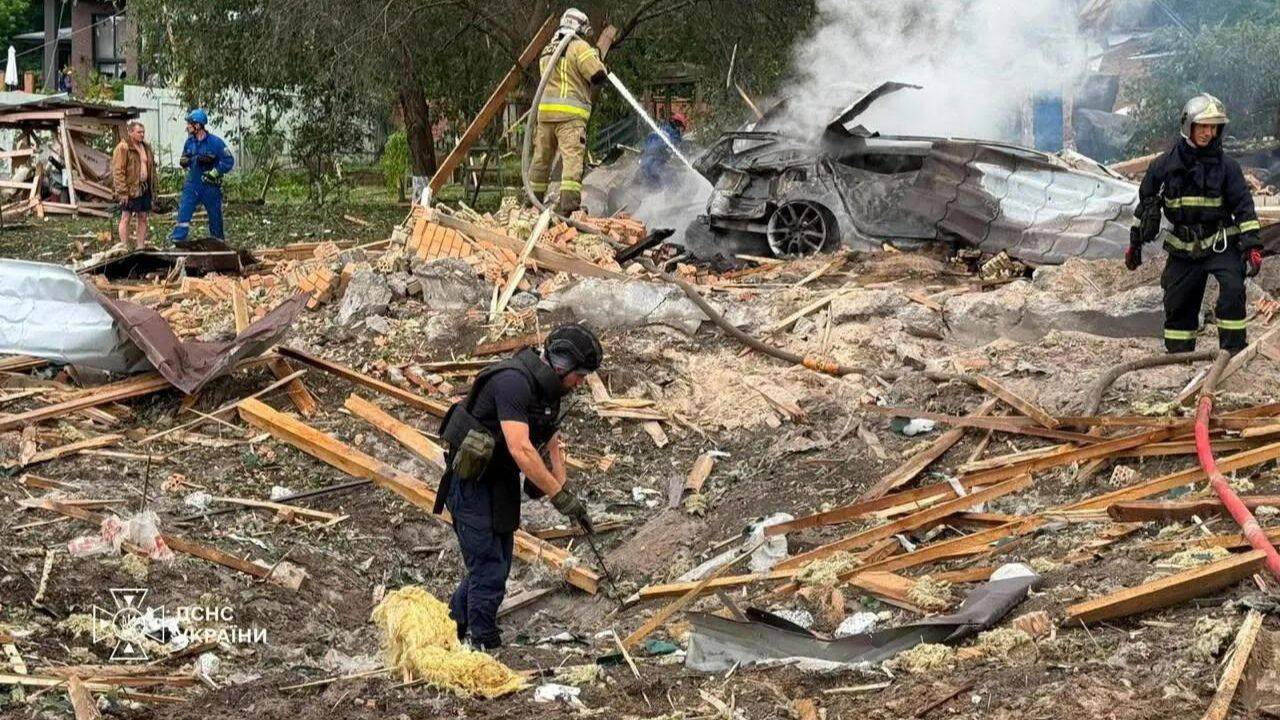
Ten people are dead and nearly a hundred are wounded because someone thought it was fine to host a defense industry gathering near Kyiv while a war is raging. A Russian ballistic missile smashed straight into a training ground in the Bucha district hosting a drone and arms exhibition, leaving residential homes wrecked and emergency crews sifting through piles of rubble.
President Volodymyr Zelenskyy didn't mince words after the strike. While he rightly blamed Russian terror for the bloodshed, he also called out the obvious absurdity of organizing public military expos with large crowds right out in the open during wartime. You cannot host high-profile defense events near civilian populations and expect an aggressive enemy to ignore the coordinates.
The Accountability Gap
Prosecutor General Ruslan Kravchenko opened a dual investigation immediately. Investigators aren't just looking at the war crime committed by Russia; they are digging into potential negligence by the organizers who approved the venue, timing, and format of the gathering.
Invitations circulated through closed industry channels to keep the location secret, according to the Ukrainian Council of Defense Industry. But secrecy on a messaging app doesn't stop ballistic missiles once intelligence leaks or electronic signatures are tracked. When hundreds of defense engineers, drone makers, and military tech specialists congregate in one spot, that spot becomes a primary target.
Valerii Borovyk, who runs the Ukrainian drone firm First Contact, noted that industry acquaintances were right in the middle of the blast zone. The physical destruction extends far beyond the immediate training grounds, damaging nearly thirty homes and dozens of vehicles in the surrounding neighborhood.
The Broader Strategic Fallout
This tragedy didn't happen in a vacuum. Just a day prior, Zelenskyy sat down with a delegation from US defense contractor Raytheon to talk about jointly producing Patriot air defense systems. Ukraine desperately needs those interceptors to stop incoming ballistic threats. Yet setting up local production lines takes years, leaving cities vulnerable to daytime terror right now.
At the same time, Ukraine is expanding its own long-range retaliation strategy. Drones hit targets deep inside Russian territory, including an aircraft and missile component plant in the Kirov region and oil facilities across multiple administrative districts. Those strikes aim to make the Kremlin feel the economic and logistical pain of its ongoing invasion.
Yet local security lapses at home undermine those defensive gains. Bringing domestic innovators together is necessary to sustain the tech edge against Russian forces, but doing so without maximum physical dispersal and hardened bunkers invites disaster.
Local authorities in the Kyiv region declared a day of mourning for the victims. Going forward, defense organizers need strict military oversight rather than loose private coordination. If security protocols don't change, the cost of these administrative blind spots will be measured in more lives lost.