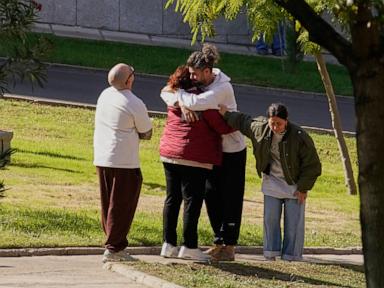
Hope is not a strategy. After a catastrophic rail crash, it is often a distraction.
When a train derails with fatalities and people are unaccounted for, the standard media script writes itself. Families stand near cordoned-off perimeters. Cameras zoom in on handwritten notes and phone screens. Headlines frame the tragedy around endurance and faith, as if sheer willpower could bend physical reality or override institutional friction. You might also find this similar story insightful: The Quiet Aftermath on the Tracks Where Time Stopped in Spain.
That framing feels compassionate. It is also lazy.
Calling "holding out hope" the central story of a rail disaster misdiagnoses what families actually face in the first hours and days after a wreck. Hope can steady a person for ten minutes while they wait for news. Treated as a substitute for hard information, verified passenger lists, rapid forensic coordination, and clear accountability, hope leaves families stranded in limbo while systems move at their own pace. As reported in recent articles by BBC News, the results are worth noting.
I have watched crisis rooms and public information desks after major transport failures long enough to know the pattern. Well-meaning officials offer warm platitudes about "doing everything possible" while basic logistics stall. Relatives are left refreshing feeds, calling hospitals one by one, or traveling hours without knowing whether a name belongs to an unidentified survivor in intensive care, a passenger who walked away dazed and unrecorded, or someone who did not survive the impact.
Calling that waiting game "hope" lets the machinery off the hook.
Why the "Hope" Narrative Misses the Real Crisis
Traditional coverage treats grief and uncertainty as a single emotional arc. Someone is missing after a deadly train crash; the family holds onto hope; time passes.
That arc confuses emotion with operational reality. A missing person after a high-speed or heavy-rail collision is rarely a single mystery with one neat answer. Early on, "missing" is an administrative category as much as a human one.
Consider the distinct ways a traveler ends up on an informal missing list after a severe derailment:
- Unmatched manifests and last-minute tickets: Rail ticketing systems track bookings far better than real-time seat occupancy. Passengers swap seats, travel on unvalidated passes, buy tickets on behalf of someone else, or board at stops without clean reconciliation when cars are crushed or scattered.
- Triage and transfer lag: In a major crash, emergency responders prioritize immediate life-saving extraction and stabilization over leisurely clerical intake. A severely injured passenger moved from an initial staging point to a regional trauma center may enter hospital records under a temporary identifier or before family notifications catch up.
- Delayed identification: High-energy impacts, fires, or structural collapse can make visual identification impossible and complicate rapid matching. Forensic teams have to work methodically so they do not make a devastating mistake.
- Communication breakdowns: Dead batteries, shattered phones, shock, and crowded emergency lines sever contact even among people who are physically safe.
When coverage centers on families "holding out hope," it turns a failure of speed, transparency, and coordination into a test of personal grit. Families do not need a medal for enduring chaos. They need accurate status updates, honest timelines, and straight answers about what is known versus what is still being verified.
The Questions People Ask Instead of the Ones That Matter
Search behavior after a major rail accident follows a predictable script. People type questions looking for comfort or quick certainty: How long can someone survive after a train crash? Why haven't families been told who is missing? What should relatives do when a loved one doesn't answer?
Most of those questions start from a flawed premise.
Asking "how long can someone survive" treats a rail disaster like a wilderness survival story where the main variable is exposure or rationing. A train wreck is a kinetic event involving massive structural forces, confined spaces, potential hazardous materials, and complex rescue operations. Survival in the immediate aftermath depends on the physics of the impact, where the person was seated, how quickly heavy rescue equipment can safely stabilize wreckage, and how fast trauma care arrives. Speculating on generic survival timelines from afar gives false precision where none exists.
Asking "why haven't families been told" usually assumes bad faith or secrecy when the real culprit is often fragmentation. Multiple agencies touch an incident immediately: rail operators, infrastructure managers, local police, emergency medical services, hospital networks, civil protection teams, and forensic authorities. Unless a single unified command shares verified data cleanly, rumors outrun facts every single time.
And asking what families "should do" often produces vague advice to "stay strong" or "wait for official updates." Waiting passively in an information vacuum is exhausting and unnatural. People need practical ways to reduce friction without getting pulled into misinformation.
Imagine a Scenario Where Information Moves Faster Than Rumor
Imagine a scenario where a rail operator and emergency authorities publish a structured, plain-language status hub within two hours of a major crash. Instead of vague assurances, it lists exact numbers: how many tickets were issued for the service, how many passengers are accounted for at hospitals or reception centers, how many remain unverified, and when the next verified update will drop—even if the answer is "no new confirmations yet."
Families would still feel terror and heartbreak. Nothing erases grief. Yet knowing the exact mechanics of verification—and knowing that silence means "still checking," not "forgotten"—replaces guesswork with clarity. Most crisis responses fall short of that standard because institutions fear admitting uncertainty early. In practice, vague silence breeds far worse distress than honest limits.
Rail Safety Principles That Don't Care About Headlines
Public debate after a rail crash often swings between two extremes: treating the tragedy as a freak act of fate, or demanding instant sweeping blame before investigators finish basic measurements.
Rail engineering and accident investigation work differently. Modern rail networks are generally among the safest modes of overland transport per passenger-kilometer, precisely because they rely on layered engineered safeguards—signaling, speed control, track inspection, rolling stock crashworthiness, and strict operating rules. When a fatal crash happens, investigators look for where multiple defenses failed or interacted under stress.
A few core principles separate serious rail analysis from commentary:
- Crashworthiness is about managing energy, not preventing all force. Modern passenger cars are designed with crumple zones, controlled deformation, and interior retention features to absorb kinetic energy and reduce lethal secondary impacts. Even strong designs have limits when speeds are high or obstructions are severe.
- Investigations take weeks and months for a reason. Event recorders, signaling logs, track geometry data, metallurgical checks, and human-factors reviews require methodical cross-checking. Early theories floated in the first 24 hours are frequently revised or overturned once physical evidence is analyzed.
- Emergency response is a relay, not a sprint. Scene safety—de-energizing overhead lines, stabilizing tilted carriages, managing hazardous leaks—must happen before rescuers can safely enter certain zones. Rushing blindly creates more victims.
If you want to understand how a disaster unfolded, ignore the loudest hot takes on day one. Watch the technical findings from independent rail accident investigators once the data is reconstructed.
Where This Contrarian Take Can Go Wrong
Pushing back against "holding out hope" carries a real risk of sounding cold. Grief is not a spreadsheet, and human beings cling to hope because losing it all at once is unbearable.
If a writer or commentator dismisses hope entirely, they can sound tone-deaf to people in shock. A mother waiting outside a hospital or a brother staring at an unanswered phone is not writing a policy memo; they are living through the worst day of their lives. Pointing out flaws in media framing or crisis communications should never mean lecturing grieving families on how to feel.
There is also a risk of overcorrecting toward cynicism. Not every delay in releasing names is incompetence or cover-up. Forensic verification has strict legal and ethical thresholds; releasing an unconfirmed name to satisfy public impatience can compound trauma tenfold if it turns out to be wrong.
The contrarian point is not that hope is evil. It is that hope is not accountability. Comforting words from afar do not fix slow notification pipelines, unclear family assistance centers, or opaque institutional communication.
Practical Moves When Someone Is Unaccounted For After a Crash
When news breaks of a serious train crash and someone you care about may have been on board, emotions spike and useful action gets drowned out by noise. A few disciplined steps help cut through confusion:
- Anchor to official family hotlines and designated centers first. Social media threads and unverified lists multiply errors fast. Log exact details—full name, approximate boarding station, ticket details if known, physical description, and recent clothing—so you can give clean facts when speaking to official liaisons.
- Check regional hospitals systematically, not just the closest one. Patients are often distributed across multiple facilities based on trauma level and bed capacity. Keep a simple log of every facility called, the time, and who you spoke with so you aren't repeating the same calls in circles.
- Designate one point person to track updates. Having five relatives calling different numbers and chasing conflicting rumors creates duplicate effort and burnout. One person can track official bulletins while others handle travel, childcare, or immediate logistics.
- Protect battery and verification channels. Keep your phone charged, avoid spreading unconfirmed casualty claims, and document any official reference numbers you are given.
Institutions owe families speed, candor, and competence—not poetic slogans about endurance. Stop romanticizing the wait, and start demanding answers that actually match the gravity of the loss.