Sarah spent three weeks convincing herself that the pain was just a tight ponytail.
Every time she brushed her hair, a sharp, localized sting flared near the crown of her head. It wasn't the dull ache of a tension headache. It was pointed. Angry. Eventually, her fingers went searching. Expecting a minor scratch or a stray bobby pin, she found instead a cluster of hard, throbbing bumps hidden deep beneath her waves.
When she leaned closer to the bathroom mirror, parting her hair under the harsh vanity lights, she felt a familiar wave of teenage panic. Acne. But it wasn't on her chin, and it wasn't on her nose. It was colonizing her scalp.
For millions of adults, breakouts are supposed to be a ghost of the past, or at least confined to the visible canvas of the face. When bumps migrate north into the hairline and onto the scalp, the psychological toll shifts. It feels like a betrayal. You can't put concealer on a scalp breakout without turning your roots into a sticky, matted disaster. You can't ignore it because every brush stroke is a minefield.
We treat the skin on our heads as if it belongs to a different entity entirely, isolating it under the category of "hair care." But beneath the strands lies the exact same organ that covers your face. It breathes, it secretes oil, and when pushed to its limit, it rebels.
The Microscopic Battlefield
To understand why a scalp breaks out, we have to look at what is actually happening in the dark, dense forest of your hair.
Hypothetically, let's look at two different people: an avid weightlifter named Marcus, and a corporate executive named Elena. Both suffer from scalp bumps, but their battlefields are entirely different.
Marcus gets true acne vulgaris along his hairline. His forehead produces heavy sebum, the natural oil meant to lubricate the skin. When that sebum mixes with dead skin cells and the daily grime of heavy gym sessions, it forms a plug. Bacteria—specifically Cutibacterium acnes—feast on this trapped oil, causing inflammation. The result is a classic, painful pimple, trapped right where his snapback hat rubs against his skin.
Elena’s bumps look similar, but they represent a different condition altogether: folliculitis. This is an inflammation or infection of the hair follicle itself, often caused by yeast or bacteria like Staphylococcus aureus. Elena loves heavy styling creams and frequently uses dry shampoo to stretch her blowouts through a grueling travel schedule. The heavy products build up around the base of her hair follicles, suffocating them. When she scratches her head during a stressful meeting, she introduces bacteria into those weakened follicles.
The symptoms overlap, but the root causes require entirely different strategies. Treating a yeast-driven folliculitis with standard acne creams can sometimes make the problem worse, destabilizing the scalp’s delicate microbiome.
The Double-Edged Sword of Hair Products
The cruelest irony of hairline and scalp acne is that our hygiene routines often trigger it.
Think about how you wash your face. You likely use a gentle cleanser, rinse thoroughly, and apply non-comedogenic moisturizers. Now think about how you wash your hair. You lather up with a shampoo packed with heavy sulfates to strip away oil, then coat your strands in a thick, velvety conditioner rich in oils, silicones, and waxes.
As you rinse that conditioner, it cascades down your forehead, over your temples, and down your back. It leaves behind a invisible film. Silicones like dimethicone are brilliant for making hair look sleek and shiny, but they act like plastic wrap on the skin. They lock in moisture, but they also lock in sweat, bacteria, and dead skin cells.
If you are prone to breakouts along the perimeter of your face, look closely at your shower routine.
Changing the order of operations can shift the entire ecosystem of your skin. Wash and condition your hair first. Clip your hair up, out of the way. Only then should you wash your face and body. By using your facial cleanser last, you wash away the residue left behind by your hair products, clearing the runway before the pores can clog.
Chemical Warfare for Your Scalp
When a breakout takes hold, the instinct is to scrub. We want to purge the dirt, to feel the friction, to clean our way out of the problem.
This is a mistake. Aggressive physical scrubbing with sharp plastic beads or harsh salt scrubs tear at inflamed follicles. It spreads bacteria across the scalp, turning an isolated bump into an active colony. The scalp is highly vascular; it bleeds easily and heals slowly when constantly irritated.
Instead, the solution lies in liquid exfoliation. The same active ingredients that saved your skin in high school can be deployed to the scalp, provided they are formulated correctly.
- Salicylic Acid (BHA): The oil-hunter. Salicylic acid is oil-soluble, meaning it can slice through the grease on your scalp and penetrate deep inside the pore to dissolve the plug of dead skin cells. Look for targeted scalp serums or shampoos containing 2% salicylic acid.
- Benzoyl Peroxide: The bacterial assassin. It introduces oxygen into the pore, killing anaerobic acne bacteria on contact. However, it comes with a massive caveat: it bleaches fabric. If you apply a benzoyl peroxide wash to your hairline, rinse it with absolute precision, or accept that your favorite bath towels will soon feature mysterious white spots.
- Ketoconazole or Tea Tree Oil: The fungal regulators. If your scalp bumps are itchy, uniform, and look more like tiny red blisters than whiteheads, yeast might be the culprit. Anti-dandruff shampoos containing ketoconazole help restore equilibrium to the fungal populations living on your head.
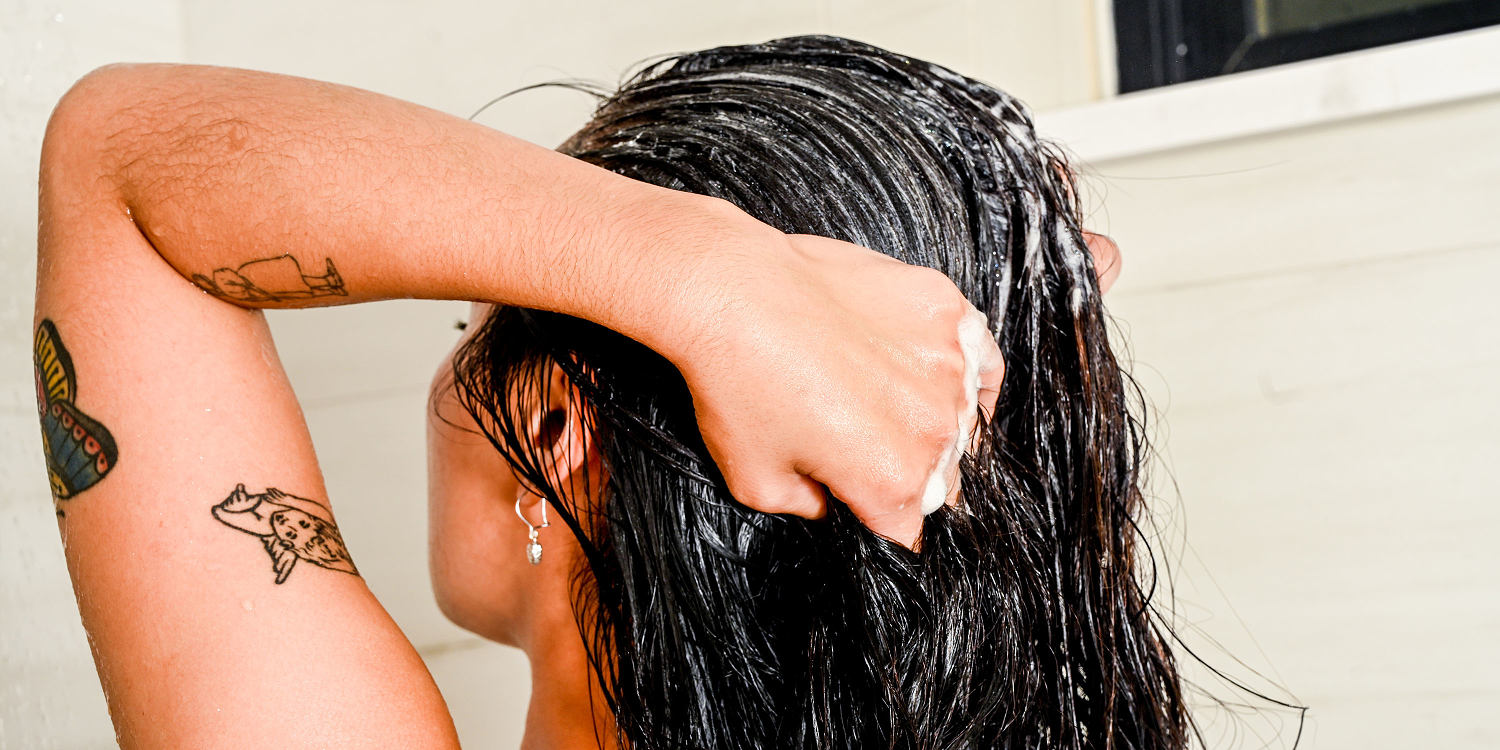
The application matters just as much as the ingredient. Do not just slap a medicated shampoo onto your hair, lather for five seconds, and rinse. The active ingredients need time to work. Massage the product directly into the scalp using the pads of your fingers—never your nails. Let it sit for three to five full minutes. Sing a song. Shave your legs. Let the chemistry happen before you wash it away.
The Invisible Habits Feeding the Flare-ups
Sometimes, the enemy isn't in your shower. It is sitting on your nightstand, or hanging by the front door.
Consider the pillowcase. You rest your head on it for eight hours a night. During that time, it absorbs oil from your hair, drool, sweat, and residual night creams. By night three, you are pressing your face and hairline into a fabric sponge saturated with bacteria. Switching to a fresh, breathable cotton or silk pillowcase every few days can dramatically reduce friction and bacterial transfer.
Then there is the gear we wear. Hats, helmets, and headbands create a microclimate. They trap heat and moisture against the skin, creating a literal greenhouse for acne. If you wear a helmet for cycling or a cap for running, wash it. The sweat dried into the rim of last week's hat is a primary trigger for hairline breakouts.
Even the way you dry your hair plays a role. Leaving your scalp damp for hours creates a warm, humid environment where yeast thrives. If you are prone to scalp folliculitis, blow-drying your roots on a cool or medium setting immediately after a shower removes that excess moisture, denying fungi the swampy environment they need to multiply.
When to Seek a Higher Authority
It is easy to get caught in a cycle of self-treatment, buying bottle after bottle of clarifying shampoos, hoping the next one will be the magic cure. But there is a line where cosmetic frustration becomes a medical issue.
If your scalp bumps are deeply painful, if they ooze, or if you notice hair loss occurring around the breakouts, it is time to see a dermatologist. Conditions like acne necrotica or dissecting cellulitis of the scalp are severe inflammatory issues that can cause permanent scarring and destroy hair follicles, leading to irreversible bald spots.
A doctor can prescribe oral antibiotics, topical steroid solutions to calm raging inflammation, or targeted antifungal treatments that over-the-counter products simply cannot match. There is no shame in needing a prescription for a systemic issue.
The skin on your head is an extension of yourself. It reacts to your stress, your diet, your environment, and your touch. When it flares up, it isn't an attack; it is a signal that the delicate balance has shifted. Listen to it. Treat it with the same kindness and precision you would give to the rest of your face.
The relief of a clear, pain-free scalp changes how you carry yourself. You stop checking your fingers for blood or oil after casually scratching your head. You stop worrying about someone standing behind you in an elevator. You simply live, comfortable in your own skin, from the forehead up.