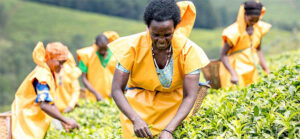
Smallholder agriculture drives the African continent, yet it operates under a structural chokehold. While mainstream development narratives correctly identify women farmers as the backbone of food production, they routinely misdiagnose why these farmers cannot bridge the continent’s food security gap. The primary obstacle is not a lack of willingness or farming knowledge. It is a systemic denial of legal land rights, financial capital, and institutional representation. Resolving Africa's food insecurity requires dismantling the legal and financial frameworks that keep female farmers under-resourced. Without this structural shift, agricultural yields will remain stagnant.
For decades, international aid agencies have treated agricultural development as a technical problem. They pour billions of dollars into high-yield seeds, synthetic fertilizers, and climate-smart training programs. Yet, the macroeconomic indicators refuse to budge. Sub-Saharan Africa remains a net importer of food, spending billions annually to buy what its own soil should produce.
The gap between investment and output lies in a stark institutional blind spot. Women make up roughly half of the agricultural workforce across the continent, performing the bulk of manual labor, weeding, harvesting, and processing. Despite this, they hold a fraction of formal land titles. This single disparity triggers a domino effect that cripples productivity across entire economies.
The Asset Gap That Hardens Poverty
Land is more than dirt. In modern economics, land is the foundational collateral required to access formal credit.
When a farmer lacks a formal title deed in her name, local banks view her as a high-risk borrower. She cannot secure a line of credit to purchase mechanized equipment, install irrigation systems, or buy inputs at wholesale prices. This forces her to rely on informal moneylenders who charge extortionate interest rates, or to continue using manual tools that limit her output to subsistence levels.
Consider the mechanics of a standard agricultural loan. A commercial bank requires a verifiable asset to offset the risk of default. A male landowner can present a title deed, secure the capital, invest in a tractor, and scale his operations. A female farmer working an adjacent plot of customary land—frequently held in the name of a male relative or community chief—cannot do the same. She is locked into a cycle of low-yield, labor-intensive farming, regardless of her skills or work ethic.
This credit starvation affects more than just individual households. It depresses aggregate national crop yields. When half of the farming population is legally and financially constrained, agricultural growth caps out early. The food security crisis is, at its core, a property rights crisis.
Customary Law Versus Constitutional Reality
Many African nations boast progressive constitutions that explicitly guarantee gender equality, including the right to own and inherit property. On paper, the legal frameworks look pristine. In practice, daily life in rural communities is governed by customary law, which frequently supersedes statutory law at the village level.
Under many customary systems, women gain access to land only through male intermediaries—fathers, husbands, or sons. If a husband passes away, the land often reverts to his lineage, leaving the widow vulnerable to eviction. This systemic insecurity fundamentally alters how a farmer manages her land.
A farmer with insecure tenure operates with a short horizon. She is unlikely to plant perennial crops, invest in agroforestry, or dig permanent irrigation channels if she fears the land could be stripped from her next season. Instead, she opts for short-term, low-value annual crops that offer immediate returns but fail to build long-term economic resilience or improve soil health.
National governments routinely look the other way. Enforcing statutory land rights in rural areas requires political capital, administrative infrastructure, and a willingness to challenge traditional power structures. For many administrations, it is simpler to accept foreign aid for fertilizer subsidies than to reform the foundational property laws that dictate who owns the soil.
The Flaw in the Microfinance Illusion
To circumvent the commercial banking roadblock, the development sector has spent twenty years championing microfinance as the ultimate remedy for rural women. The narrative is comforting. A small loan allows a woman to buy a few goats or a bag of fertilizer, gradually lifting her family out of poverty.
The math tells a different story. Microfinance institutions operate on high operational costs, translating into steep interest rates that eat into slim agricultural margins. Furthermore, the loan amounts are intentionally small and require rapid repayment cycles, often beginning just weeks after dispersal.
Agriculture does not move on a weekly cycle. Crops take months to mature. A farmer cannot repay a loan until she harvests and sells her produce. The structural mismatch between microfinance repayment schedules and biological crop cycles forces many borrowers to take out secondary loans just to service the first, leading to severe debt traps rather than wealth accumulation.
Microloans can sustain survival, but they cannot fund structural transformation. They do not buy combine harvesters, build cold-storage facilities, or finance deep-well drilling. By substituting microcredit for systemic financial reform, policymakers settle for managing poverty rather than eliminating it.
Market Exclusion and the Middleman Problem
Production is only half the battle; the real profit happens at the point of sale. Here too, structural barriers systematically disadvantage female smallholders.
Rural infrastructure across sub-Saharan Africa remains notoriously poor. Farms are isolated from urban centers by unpaved roads that become impassable during the rainy season. Because female farmers generally lack access to transport vehicles or regional farmer cooperatives—which are frequently dominated by male leaders—they cannot bring their goods to high-value urban markets directly.
Instead, they must sell to independent middlemen who travel to the farm gate. These buyers exploit the farmers' lack of storage options and real-time market pricing information. Because crops like tomatoes, leafy greens, and mangoes rot quickly without cold storage, the farmer has zero bargaining leverage. She must accept whatever rock-bottom price the buyer dictates.
[Isolated Farm Gate] ---> (High Perishability / No Storage) ---> [Dependent on Middlemen] ---> [Depressed Farm-Gate Prices]
When female farmers do attempt to access regional markets, they encounter physical and financial harassment. Informal roadblocks, arbitrary marketplace fees, and discriminatory trade associations present constant hazards. These hidden costs deplete the thin margins of small-scale traders, ensuring that the wealth generated by agriculture accumulates in the hands of logistics providers and urban wholesalers rather than the primary producers.
Rebuilding the Agricultural Pipeline
Fixing a broken system requires moving past superficial aid interventions. The solutions must be as structural as the problems.
First, governments must implement mandatory joint-titling programs for land registration. When land registries record both husbands and wives as co-owners, women gain the legal protection needed to secure credit and make long-term land investments. Countries that have experimented with low-cost community land certification have seen immediate increases in soil-conservation investments and agricultural productivity.
Second, the financial sector must design specialized agricultural credit instruments. These loans must feature flexible repayment schedules tied directly to harvest timelines, lower interest rates backed by state-guaranteed risk pools, and alternative collateral requirements that accept future crop yields or warehouse receipts instead of land deeds.
Finally, investments must shift toward community-owned infrastructure. Local solar-powered cold hubs allow farmers to store perishable goods for days or weeks, breaking the leverage of predatory middlemen. When farmers can wait out market gluts, they capture fair value for their labor.
The current approach treats African hunger as an aggregate production failure, demanding more seed and more fertilizer. In reality, it is a distribution failure of rights, capital, and power. Until the woman holding the hoe possesses the legal title to the soil beneath her feet and the financial tools to scale her output, the continent's agricultural potential will remain buried.