Silence.
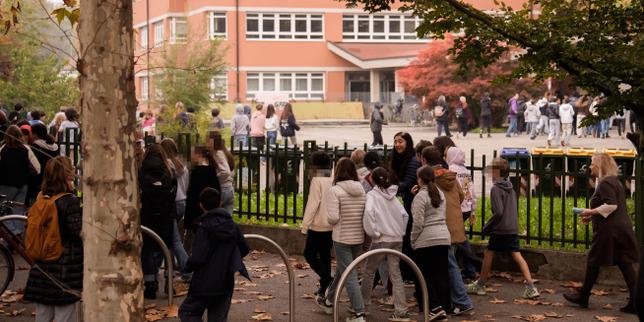
A single bell rings down a stone corridor in Milan, or Naples, or a quiet village in Piedmont, and instead of the usual shuffle of sneakers and half-whispered jokes, twenty-four hundred schools across Italy begin to empty into cold November air.
On November 11, more than 2,400 Italian schools were evacuated after false bomb alerts. On paper, that line reads like a cold logistics entry: a spike in hoax threats, a strain on municipal police, a disrupted morning. Yet I have stood in a hallway when an alarm goes off for a reason nobody can verify, and I know what happens in the three seconds before anyone moves. You watch a twelve-year-old's eyes dart to the exit sign. You hear a teacher's voice steady itself by half an octave so the room does not tip into panic. Even when the threat turns out to be fake, the adrenaline in a child's bloodstream is real.
I do not pretend to know every hidden motive behind a coordinated wave of bomb hoaxes across a nation of sixty million people, and anyone who claims absolute certainty on day one is selling comfort rather than truth. What I do know is how fragile ordinary trust becomes when an anonymous message can clear two thousand four hundred buildings before lunch.
When a Hoax Moves Faster Than the Truth
Picture a hypothetical morning—let us call her Giulia, a ten-year-old sitting near a radiator in a school outside Bologna, her geography notebook open to a map of the Po Valley. She is not thinking about geopolitical instability or cyber-anonymity. She is thinking about whether she forgot her gym shoes and whether her friend Marco will share his panino at break.
Then the principal's voice comes over the intercom, calm and clipped, asking everyone to leave their bags and walk briskly to the assembly courtyard. No sirens. No dramatic speeches. Just coats pulled half-on over sweaters, zippers catching in haste, and hundreds of small footsteps descending stairs that were meant to hold laughter.
If that sounds like a scene from a thriller, step back and look at the mechanics of a mass hoax. A single threat does not need to be credible to be expensive. It only needs to cross a threshold where ignoring it feels reckless. School administrators and local authorities face an agonizing asymmetry: if they evacuate for a fake bomb, they lose hours of instruction, tie up emergency responders, and rattle families; if they stay put and a threat is real, the failure is unthinkable.
That asymmetry is why fake bomb alerts are so effective at bending public life. They hijack our best instincts—our duty to protect children, our habit of taking warnings seriously—and turn them into a lever. One anonymous sender can pull two thousand four hundred cords at once, turning scattered neighborhoods into a chorus of caution.
The Invisible Ledger Behind Every Evacuation
Count the cost of a single evacuated school and the numbers look tidy. Count it across more than 2,400 schools on November 11, and the ledger grows complicated in ways a headline rarely captures.
Consider what happens next: police units and bomb squads are finite. Every callout to a gymnasium or courtyard draws attention and hours away from other urgent work across towns and provinces. Parents leave workplaces mid-shift or scramble between jobs, phones lighting up with group chats full of rumors and unverified screenshots. Teachers try to keep order on a damp pavement while wondering what their own children are doing across town.
Let us use a clear metaphor here: think of a school system like a bell made of thin brass. Tap it lightly with a false alarm, and it rings out across the street; tap two thousand four hundred bells in one morning, and the vibration travels straight through the floorboards of daily life. Even after officials declare the buildings safe and the alerts false, the metal keeps humming.
Why do waves like this hit schools in particular? Schools are open, visible, and deeply woven into family routines. Threatening a school hits the nerve that connects every household to the state: the promise that when you send your child out the door at eight in the morning, the world outside is orderly enough to hold them safely.
What Fear Teaches Young Minds
There is a quiet psychological toll that arrives days after the pavement dries. Adults tend to measure disruption in lost hours or administrative headaches. Children often measure it in atmosphere.
When a routine safety drill happens, everyone knows the script. Everyone knows the whistle, the line, the joke at the end when you go back inside. When an unscheduled evacuation happens because of a bomb alert—even one later proven false—the script tears. A classroom stops being merely a place for verbs and fractions; it briefly becomes a place where something bad might happen.
Some students shrug it off by afternoon, turning the morning into a story for dinner. Others go quiet. A child who already worries at night may start watching the door a little closer, or feel a knot in their stomach every time a phone buzzes during class. And teachers, already carrying heavy emotional weight, end up acting as part-time counselors without a manual for sudden, phantom danger.
If you have ever had to reassure a scared kid while your own pulse was still racing, you know how exhausting pretending calm can be. You cannot fake steady breathing forever without feeling the strain.
The Quiet Resolve That Keeps the Doors Open
Still, there is another side to November 11 that deserves just as much ink as the alarm bells. Across those more than 2,400 schools, evacuation did not turn into chaos. Students walked out. Staff guided them. Families showed up. Authorities checked what needed checking.
Order held because thousands of ordinary people chose discipline over rumor. In a moment designed to make a country feel jumpy and fractured, the most defiant thing a community can do is stay calm, follow protocol, verify facts, and return to the work of teaching and learning once the all-clear is given.
False alerts try to make us live as if every shadow hides a fuse. They want us suspicious of every message, impatient with every delay, and tired of caring. We do not have to hand them that victory.
Tomorrow morning, somewhere in Italy, a bell will ring again, a notebook will fall open to a map or a poem, and a child will sit down in a chair that felt far too big only a day before, proving that a hoax can clear a building for an hour without ever owning the room.