Silence.
That is what greets a professional football player at six in the morning when the alarm chimes against a cold nightstand, long before the stadium lights blink awake and long before the first tailgater cracks a beer in the parking lot. In that quiet, fluorescent-lit bedroom, there are no roaring crowds, no slow-motion replay angles, and no fantasy football managers refreshing their lineups with frantic thumbs. There is only the dull, rhythmic throb of a joint that refuses to bend the way it did in August, and a mirror reflecting a body that has been asked to absorb the equivalent of a minor car crash every seven days since summer camp. Expanding on this idea, you can also read: When Your Childhood Heroes Rewrite the Rules.
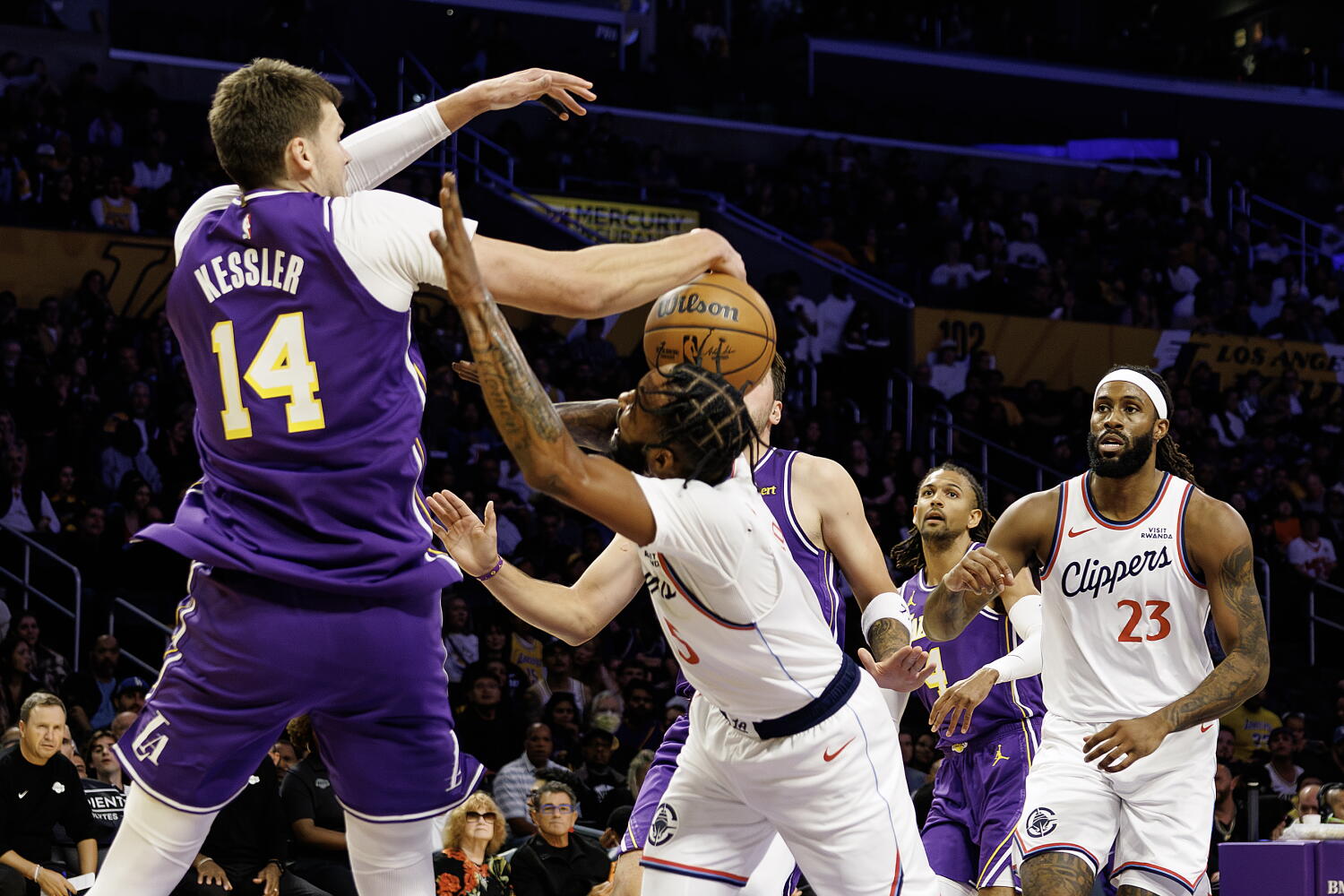
When the official injury report drops on a Friday afternoon, it reads like a sterile grocery receipt. Puka Nacua is listed as questionable for the Los Angeles Rams ahead of their clash with the Las Vegas Raiders. Nate Landman is officially ruled out. Two lines of text. Ten words. Millions of dollars in betting lines shift instantly, while fans scroll past to check the weather forecast or debate quarterback ratings.
We have trained ourselves to consume human fragility as a transaction. We look at a designation like "questionable" and treat it like a coin flip, forgetting entirely about the quiet, agonizing negotiation happening inside a training room in Thousand Oaks or a rehab facility in Atlanta. To understand what is really at stake when the Rams line up against the Raiders without certainty on their brightest young star, and while another team absorbs the definite absence of a defensive anchor like Landman, you have to step away from the box score and smell the wintergreen ointment. Observers at ESPN have also weighed in on this trend.
The Architecture of a Question Mark
Imagine—purely as a window into the routine—a twenty-three-year-old wide receiver sitting on a stainless-steel table at 7:15 AM on a Sunday. Let’s call him the prototype of modern NFL stardom, though his name is currently etched into the NFL record books. He wears a gray hoodie with the sleeves cut off. Across from him stands an athletic trainer holding a roll of white zinc-oxide tape and a pair of blunt-nosed shears.
The trainer doesn't ask, Are you hurt? Everyone in this building is hurt by November. The trainer asks a much more terrifying question: Can you protect yourself?
That single distinction governs the entire economy of professional football. When the Rams stamped the "questionable" tag beside Puka Nacua’s name ahead of the Raiders matchup, they weren't offering a medical diagnosis to satisfy the curiosity of beat writers. They were buying time. Under league rules, "questionable" means a player has roughly a fifty-fifty chance of taking the field, a gray zone introduced after the NFL quietly retired the "probable" designation years ago to stop coaches from gaming the system. Instead of clarity, the rule created theater.
Nacua’s entire career has been built on a violent disregard for his own preservation. Watch his rookie tape from 2023—when a fifth-round pick out of BYU shattered a sixty-three-year-old league record with 105 receptions and 1,486 yards—and you don't see a finesse artist tiptoeing out of bounds. You see a human battering ram lowering his shoulder into 220-pound safeties to squeeze out two extra yards on a second-and-six. He plays football like a man trying to pay off a debt he never actually owed.
Now, ahead of a cross-conference collision with Las Vegas, that debt has come due. Whether it is a lingering knee issue, a bruised rib, or the cumulative toll of crossing the middle of the field while linebackers hunt for ribs, Nacua sits on the razor's edge of availability.
Think of an elite wide receiver’s body like a high-performance Formula 1 chassis during the final laps of a rain-slicked Grand Prix. The engine still roars. The telemetry looks fine on the pit wall. Yet one hairline fracture in the suspension means that taking a corner at 180 miles per hour doesn't just cost you the race—it sends you into the wall. For Sean McVay and the Rams' medical staff, the calculus against the Raiders isn't simply about whether Nacua can run a crisp fifteen-yard dig route. It is about what happens when Raiders defensive end Maxx Crosby collapses the pocket, forces Matthew Stafford to improvise, and leaves Nacua hanging defenseless in the air while a defensive back closes at twenty miles per hour.
If Nacua cannot explode out of his breaks, he isn't just less effective; he is in danger.
The Empty Chair in the Film Room
While Los Angeles holds its breath over a maybe, the reality on the other side of the injury ledger is absolute. Nate Landman is out.
There is no pregame workout to test the ankle or the hamstring. There is no last-minute miracle in the tunnel ninety minutes before kickoff. "Out" is the coldest word in the NFL lexicon because it strips a player of his identity for seven full days.
I remember sitting in a locker room years ago beside a veteran middle linebacker who had just been ruled out for a prime-time game with a torn muscle in his hip. He didn't cry, and he didn't throw his helmet. He just stared at his clean uniform hanging untouched in his stall, immaculate while everyone else's jerseys were stained with turf pellets and blood. "You feel like a ghost," he told me quietly, peeling tape off his wrists that he had put on out of sheer muscle memory before the trainer stopped him. "You're standing on the sideline wearing a baseball cap, screaming plays you can't make, watching somebody else stand in your spot."
Landman knows that ghost intimately. As an undrafted free agent out of Colorado who clawed his way onto an NFL roster through sheer stubbornness and special teams violence, Landman never had the luxury of coasting on draft pedigree. He earned his snaps by diagnosing run schemes a half-second faster than the guy next to him and arriving at the ball carrier with bad intentions. Linebackers like Landman are the central nervous system of a defense. They relay the calls from the defensive coordinator’s headset, align the defensive tackles, and plug the microscopic gaps where running backs turn four-yard gains into forty-yard touchdowns.
When a player of that mold is ruled out, the damage doesn't show up in one dramatic explosion. It leaks out slowly, like air from a punctured tire.
Suddenly, a rookie or a career backup steps into the huddle. The communication slows down by a fraction of a second. A safety has to cheat closer to the line of scrimmage to compensate for the missing thump in the middle, leaving a cornerback isolated on an island against a receiver who runs a 4.3 forty-yard dash. Fans blame the cornerback when the deep ball connects, never realizing the play was lost three seconds earlier because the guy who usually screams the coverage adjustment was standing on the sideline in sweatpants.
The Invisible Chessboard Between Los Angeles and Las Vegas
So what actually happens when the Rams take the field against the Raiders if Nacua stays in street clothes, or if he suits up as a compromised decoy?
To understand the tactical earthquake, you have to look at how Sean McVay designs an offense. McVay doesn't just draw up plays; he creates illusions. He lines up three receivers in tight formations, motions a wideout across the formation before the snap, and forces the defense to declare its intentions before the ball is even touched. Nacua is the ultimate stress test for that system because he blocks like a tight end and catches like a Pro Bowler. When he lines up near the offensive tackle, the Raiders cannot tell if the Rams are about to run an outside zone stretch or launch a play-action deep shot.
Remove Nacua from that equation—or reduce him to seventy percent speed—and the illusion evaporates.
Las Vegas defensive coordinators aren't foolish. Without Nacua commanding double coverage or forcing safeties to respect the intermediate middle of the field, the Raiders can crowd the box to suffocate the Rams' ground game and tee off on Matthew Stafford. Stafford, a thirty-eight-year-old warrior whose own medical chart reads like a medieval torture manual, suddenly loses his favorite safety valve on third-and-seven. Every third down becomes a high-wire act without a net.
Consider what happens next in the stadium:
- The Compression Effect: Without Nacua stretching the horizontal boundaries of the field, the Raiders' defensive backs can play aggressive press-man coverage, shrinking the throwing windows for Cooper Kupp and the secondary receivers.
- The Red Zone Squeeze: Inside the twenty-yard line, where space disappears and bodies collide in tight quarters, Nacua’s physicality at the catch point is irreplaceable. Without him, touchdowns turn into field goals.
- The Psychological Toll: Players read body language better than fans read injury reports. When a team’s emotional spark plug watches from the bench, the margin for error shrinks in the fourth quarter.
Yet, there is an equally dangerous trap in letting Nacua play hurt. History is littered with stars who talked their way past the medical staff on Sunday morning, only to limp off the turf in the first quarter, wasting an active roster spot and turning a two-week recovery into a season-ending surgery. The ego that makes a receiver great—the refusal to admit weakness, the obsession with proving toughness—is the exact trait that can destroy his career if a coach doesn't step in and take the keys away.
What We Refused to See
It is easy to get angry at the ambiguity. Every Friday, the internet erupts with frustration over vague injury updates, coaches offering non-answers at podiums, and players jogging lightly on a side field during the twenty-minute media viewing window while trainers watch with clipboards. We want certainty. We want a green light or a red light so we can set our lineups, place our wagers, and predict the Sunday afternoon script.
I used to feel that exact same impatience. Sitting in press boxes early in my career, I treated injury reports like puzzles to be decoded for a competitive edge, annoyed when a coach wouldn't confirm whether a star wideout would play until ninety minutes before kickoff. It took watching a twenty-four-year-old running back collapse in a hallway after a game—so exhausted and battered from playing through a "questionable" ankle sprain that he couldn't unlace his own cleats—to cure me of that entitlement.
The ambiguity isn't a conspiracy to annoy the public. It is the honest reflection of human biology under extreme stress. A swollen knee on Friday afternoon might respond brilliantly to blood-flow restriction therapy, ice baths, and anti-inflammatories by Sunday at ten in the morning. Or it might stiffen up overnight on a team flight, locking tight like a rusted hinge. Even the doctors don't know until the player plants his foot at full speed on grass and feels whether the joint holds or gives way.
Meanwhile, Nate Landman already has his answer, and it is a bitter one. While Nacua tests his limits in pregame warmups under the watchful eyes of Rams executives and Raiders scouts, Landman will be enduring the quietest kind of Sunday—watching a violent symphony from the outside, desperate to jump into the noise.
The Final Mile Before Kickoff
Ninety minutes before the whistle blows, the stadium is still mostly empty, save for the groundskeeper painting the final white chalk lines and a handful of early-arriving kids leaning over the railing near the tunnel.
That is when the real game happens.
A receiver walks onto the turf wearing shorts, cleats, and a compression sleeve. A position coach stands twenty yards away with a football tucked under his arm. No helmets. No pads. No Raiders defenders waiting to hit him. He runs a slant. He plants his left foot, cuts sharply to the right, and snatches a pass out of the crisp autumn air. He jogs back, nods once to the trainer, and runs it again—faster this time, harder on the plant foot, testing the quiet terror of whether the body will betray him when the lights come on.
Somewhere across the league, a linebacker sits in a cold tub, watching the pregame broadcast on a wall-mounted television, already counting the hours until Monday morning rehab begins.
When the official inactive list is handed to the referee an hour before kickoff, the world will finally get its definitive answer on Puka Nacua, just as it already has its verdict on Nate Landman. Millions of people will nod, adjust their expectations, and settle onto their couches as the network theme music swells.
They will never hear the rip of the white tape in the training room, or see the slight hesitation in a stride that used to be effortless, or feel the heavy, silent weight of a uniform hanging untouched in a locker.