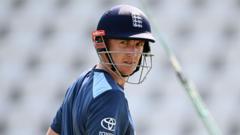
Harry Brook wants to captain England. He has said as much, calling the prospect an honor he could not turn down. But wanting the most scrutinized job in British sport and surviving it are two entirely different matters. As the England and Wales Cricket Board begins the silent, inevitable process of planning for life after Ben Stokes, Brook has emerged as the default heir. It is a choice born of necessity rather than deep tactical deliberation, and it exposes a structural flaw in how England develops its leaders.
The modern England cricket captaincy ruins almost everyone it touches. Joe Root scored runs by the bucketful but cut a hollowed-out figure by the end of his tenure, trapped in a cycle of tactical inertia and red-ball defeats. Alastair Cook aged a decade in five years. Even Mike Atherton, a man of fierce intellect, found himself ground down by the relentless off-field politics and media obligations. Recently making headlines lately: The Crushing Weight of English Grass.
Ben Stokes changed the template. Alongside coach Brendon McCullum, he injected life into a dying format through sheer force of personality. But Stokes is an anomaly, a generational talisman whose leadership is rooted in personal charisma and a willingness to break traditional tactical frameworks. You cannot easily replicate a cult of personality.
By positioning Harry Brook as the next in line, England is reverting to an old, dangerous habit. They are picking their best young batsman and assuming leadership qualities will naturally follow. Additional insights into this topic are detailed by FOX Sports.
The Succession Vacuum in the County Game
England has a leadership crisis because the domestic game no longer breeds captains.
In past decades, the County Championship was populated by grizzled veterans who guided young players through the nuances of field placements, bowling changes, and psychological warfare. Today, the domestic calendar is a fragmented mess. The best players are rarely there. They are playing in the Indian Premier League, the SA20, or international formats.
Consequently, county captaincy has lost its prestige. It is often handed to dependable journeymen or overseas professionals rather than young, aspiring international leaders. When Brook takes the field for Yorkshire or England, he does so under tactical systems designed by others. He has not had the opportunity to make mistakes away from the television cameras.
Managing a bowling attack requires intuitive knowledge. A captain must understand when a fast bowler is flagging, how to comfort a spinner who has just been hit for two consecutive sixes, and when a pitch demands an unorthodox field. These instincts are developed through hundreds of hours of trial and error on the field. Brook, through no fault of his own, has been too busy scoring international runs to learn that trade.
The Backroom Shifts Shaping the Decision
Behind the scenes at Lord's, the calculation to elevate Brook is driven by the performance department's desire for continuity.
The ECB is terrified of a return to the post-2021 era, where the Test team won one match in seventeen. The "Bazball" philosophy is not just a style of play; it is a commercial brand that sells out grounds and secures lucrative broadcast deals. The governing body needs a successor who will not dismantle the entertaining, aggressive ecosystem that Stokes built.
Brook fits the aesthetic profile perfectly. He plays with freedom, possesses immense natural talent, and exudes a relaxed composure at the crease. To the decision-makers, he looks like the natural continuation of the current regime.
However, sources within the county circuit suggest that this view conflates batting style with leadership capability. Playing aggressively does not mean you possess the tactical acumen to outwit a stubborn fourth-innings partnership on a flat pitch in Ahmedabad or Brisbane.
The Psychological Toll of the Dual Role
The biggest risk is the potential damage to Brook's primary asset, his batting.
History shows that the captaincy changes a player's relationship with the game. When you are a pure batsman, your failures are personal. You get out, you suffer in silence, and you fix it in the nets. When you are the captain, your failures are public property, and they are inextricably linked to the team's performance.
Consider the burden Brook already carries. He is the engine room of the middle order, expected to score quickly and turn matches in a single session. Add the responsibility of reviewing every DRS decision, managing media press conferences, placating selectors, and dealing with dressing-room dynamics, and the mental load doubles.
We have seen glimpses of how Brook handles pressure. He is remarkably resilient, but international captaincy is a slow-burning fire. It chips away at a player's patience over months of touring. The danger is that England might gain an average captain at the expense of a world-class batsman.
Alternatives the Selectors are Ignoring
The rush to designate Brook as the golden boy ignores other viable, short-term options that could shield him.
Ollie Pope has filled the role in Stokes's absence, demonstrating a conventional, tidy approach to leadership. While Pope faces his own battles with form and consistency, utilizing him or another senior figure as a transitional captain would allow Brook to reach his peak years without the off-field noise.
Another option is looking toward an experienced bowler, though England historically shies away from appointing fast bowlers due to injury risks. Yet, Pat Cummins has proved for Australia that a bowler can manage the workload while maintaining tactical clarity. England's stubborn adherence to the "batsman-as-leader" orthodoxy feels outdated in a sport that has become highly specialized.
The Test captaincy should not be treated as an honorary title or a reward for good behavior. It is a distinct discipline that requires a specific skillset, separate from athletic ability. If the ECB thrusts Harry Brook into the role too early, they risk repeating the mistakes that ruined previous generations of talent. The crown is heavy, and right now, Brook's shoulders are better used for hitting boundaries.