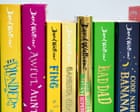
Look at almost any UK family bookshelf from the last fifteen years and you'll spot the bright, unmistakable spines of Gangsta Granny, The Boy in the Dress, or Billionaire Boy. For over a decade, David Walliams wasn't just a bestselling children's author; he was the default gift from grandparents, the centerpiece of World Book Day, and the bedtime staple in millions of living rooms.
Then the headlines hit. When sexual offence allegations surface around a public figure whose entire brand is built on talking to children, the reaction inside family homes isn't abstract or theoretical. It's immediate. Parents start pulling books off shelves, dropping stacks at charity shops, or quietly stuffing them into recycling bins before bedtime.
If you're a parent staring at a stack of colourful paperbacks right now, you're probably wrestling with a messy mix of disgust, confusion, and practical questions. Do you throw them out? Do you explain why to an eight-year-old? What happens when the local charity shop doesn't want them either?
Let's be honest about what's happening here and how families are actually handling it.
Why This Feels Different From Other Celebrity Scandals
We've all watched the "separate the art from the artist" debate play out a hundred times with musicians, actors, and directors. Usually, that conversation stays in adult spaces. You can decide for yourself whether to skip a song on Spotify or stop watching an old movie without having to justify your moral calculus to a third-grader.
Children's books change the rules entirely.
A bedtime story is an intimate experience. You're sitting on the edge of your kid's bed, doing the voices, laughing at the jokes together, and implicitly telling your child that the person who wrote these words is safe, funny, and trustworthy. When serious allegations—especially involving sexual offences—attach themselves to an author's name, that trust shatters overnight. You can't un-know what you've read in the news while you're trying to do a silly voice for Raj the newsagent.
There's also the sheer physical presence of the books. Unlike a streaming show that quietly disappears from a "Continue Watching" row, hardcovers take up real estate in a child's bedroom. Seeing that name embossed on the cover every single night becomes a constant reminder of something deeply uncomfortable. For a lot of parents, clearing the shelf isn't about making a grand political statement on social media—it's simply about getting something that feels tainted out of their kid's sleeping space.
The Charity Shop Bottleneck Nobody Mentions
When families decide to clear out David Walliams books, their first instinct is almost always to bag them up and head to the local high street charity shop. It feels responsible. You're decluttering, you're not wasting paper, and someone else gets cheap books.
Here's the problem. Everyone else had the exact same idea on the exact same weekend.
Even before controversy enters the picture, high-volume children's authors create massive supply gluts in second-hand markets. Organizations like Oxfam, Barnardo's, and the British Heart Foundation routinely deal with shelves buckling under the weight of multiple copies of Awful Auntie and Demon Dentist. When a scandal breaks and thousands of households purge their collections simultaneously, charity shop backrooms hit capacity within days.
Worse still, retail managers at charity shops face an awkward ethical dilemma. Putting a controversial author's books front and center in the children's window display invites complaints from shoppers and volunteers alike. Many branches quietly box them up, send them to bulk paper recyclers, or decline further donations altogether.
If you're planning to donate a stack, call ahead first. Don't dump a heavy tote bag at a volunteer's feet assuming they'll be grateful—you might just be handing them an uncomfortable disposal problem they already have twenty boxes of in the back.
How to Talk to Your Kids Without Over-Explaining
The hardest part of clearing out David Walliams books isn't the physical sorting. It's the conversation that happens the next night when your child asks where Ratburger went.
Kids notice when their favourite things vanish. If you sweep the shelf clean in secret and pretend the books never existed, you risk turning a straightforward boundary into a weird mystery. At the same time, handing a seven-year-old a detailed breakdown of criminal allegations is wildly inappropriate and terrifying for them.
The right approach depends entirely on how old your kid is, and honestly, less is almost always more.
For Younger Readers (Ages 5 to 8)
Younger kids don't need news updates. They need reassurance that their world is safe and that they didn't do anything wrong. Sometimes kids assume books disappear because they misbehaved or forgot to put them away.
Keep it simple and matter-of-fact. You might say something like, "We're making room for some new stories on your shelf, and we're taking a break from these ones right now." If they push back and ask why, you can add, "Sometimes grown-ups make bad choices that hurt people, and when that happens, we decide not to support their work anymore."
Then immediately pivot to what's replacing them. Hand them a new book that very same night so the shelf doesn't feel empty.
For Older Kids and Tweens (Ages 9 to 12)
Older kids hear things on the playground. They see headlines on tablets, overhear older siblings, and pick up on adult tension instantly. Trying to shield a ten-year-old with vague excuses usually backfires because they'll fill in the blanks with rumours from school.
Be direct without being graphic. Acknowledge that serious allegations have been made against the author regarding inappropriate and harmful behaviour, and explain that investigations take time. Frame it around your family's values rather than issuing a rigid ban that makes the books forbidden fruit. Ask them how they feel about keeping or removing the books. Giving a tween some ownership over what stays in their room teaches them how to think critically about the media they consume—a skill they're going to need constantly as they grow up.
What Schools and Libraries Are Dealing With
Parents at home can make a unilateral decision over breakfast and have the shelves cleared by lunch. School librarians and public library systems don't have that luxury.
Across the UK, primary school reading corners have leaned heavily on Walliams for years, largely because his books reliably hook reluctant readers—especially boys—who otherwise struggle to finish chapter books. Suddenly pulling every copy out of a school library leaves massive gaps in reading schemes, Accelerated Reader quizzes, and classroom book boxes.
Most schools and local councils follow strict collection development and safeguarding policies. Typically, institutions wait for formal charges, convictions, or guidance from library associations like CILIP (the Chartered Institute of Library and Information Professionals) before permanently withdrawing titles from public circulation. However, individual teachers and school librarians often quietly rotate controversial titles off prominent display tables long before any official policy memo arrives.
If you're concerned about what's on your child's classroom shelf, send a calm, polite email to the headteacher or school librarian asking how they're handling the situation. Remember that teachers are navigating parental pressure from both sides—some parents demanding immediate removal, others arguing against censorship before legal outcomes are settled.
Better Alternatives That Actually Hook Reluctant Readers
One of the biggest reasons families hesitated to clear out David Walliams books in the first place is practical. Love him or hate him, his writing style—short chapters, slapstick humour, grotesque villains, and plenty of illustrations—worked magic on kids who claimed they hated reading.
If you pull those books off the shelf without a strong replacement ready, your kid might just stop reading altogether and go back to YouTube. You need authors who bring that same anarchic energy, visual punch, and fast pacing without the baggage.
Here are the best swaps that consistently win over the exact same demographic:
- Roald Dahl – The obvious blueprint. Walliams built his entire career echoing Dahl's dark humour and eccentric adults, though Dahl's estate comes with its own well-documented historical controversies to weigh up.
- Andy Griffiths (The Treehouse Series) – If your kid loves absurd, laugh-out-loud nonsense paired with frantic illustrations, The 13-Storey Treehouse and its sequels are unstoppable. Reluctant readers tear through them in days.
- Liz Pichon (Tom Gates) – Doodle-packed pages, relatable school disasters, and effortless comedy. These bridge the gap brilliantly for kids aged seven to eleven.
- Pamela Butchart (Baby Aliens Got My Teacher) – Pure chaotic energy aimed squarely at primary school kids, packed with playground logic and absurd plot twists.
- Philip Ardagh (The Grunts or Eddie Dickens) – Quirky, offbeat British humour with eccentric characters that hit the exact same comedic frequency as Walliams' early books.
- Jeff Kinney (Diary of a Wimpy Kid) – An obvious classic for a reason, especially for kids who need visual breaks on every page to stay engaged.
Making Peace With Your Own Bookshelf
There's no official rulebook for how a household should respond when a beloved children's author is accused of sexual offences. Some families box everything up the minute the news breaks and drop it at the recycling centre. Others tuck the books into the loft until legal proceedings play out, not wanting to jump the gun before facts are tested in court. A few decide to keep the stories they already paid for while refusing to buy anything new.
None of those choices makes you a bad parent. What matters is being intentional rather than pretending nothing happened.
If you're clearing the shelves today, don't stress over whether to recycle or donate—just check with your local charity shop before turning up with three heavy bags, keep your explanation to your kids grounded in their age level, and have two or three fresh, funny books waiting on the pillow tonight so storytime doesn't miss a beat.