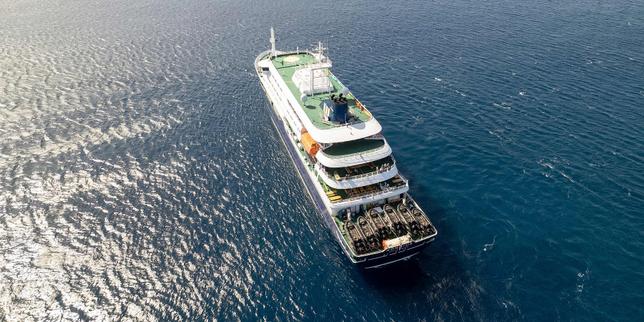
Fear sells faster than facts. The recent spectacle of a cruise ship being bounced from port to port—shunned by Cape Verde and "under consideration" by the Canary Islands due to a suspected Hantavirus outbreak—is not a health crisis. It is a logistical and psychological failure. While the media obsesses over the "ghost ship" narrative, they ignore the biological reality of the virus and the catastrophic precedent being set by port authorities.
Hantavirus is not the next plague. It is not even a likely candidate for a shipboard epidemic. By treating a cruise ship like a floating leper colony, officials are choosing optics over science and gutting the maritime industry's stability in the process.
The Biological Fallacy of the Floating Quarantine
The "lazy consensus" among port officials and frantic headline-writers is that Hantavirus on a ship requires total isolation of the vessel. This is scientifically illiterate.
Unlike Norovirus or COVID-19, Hantavirus is not generally known for person-to-person transmission. The pathogens—specifically those in the Orthohantavirus genus—are typically contracted through contact with the urine, feces, or saliva of infected rodents. You breathe in contaminated dust, you get sick.
The Math of Infection
If a passenger is sick with Hantavirus, they are a dead end for the virus. Unless we are talking about the rare Andean strain found in South America, the risk to the other 3,000 people on board from that single patient is effectively zero.
- Transmission Type: Zoonotic (Animal-to-human)
- Human-to-Human Risk: Negligible to non-existent for most strains.
- The Real Danger: A localized rodent infestation in the galley or HVAC system.
By refusing docking rights, Cape Verde didn't "protect" its citizens from a contagious outbreak; it merely delayed the professional sanitization and pest control measures required to actually solve the problem. If there is a nest of infected mice in the engine room, keeping the ship at sea ensures more people get exposed to the source. You don't fix a fire by refusing to let the fire truck into the neighborhood.
Cape Verde and the Cowardice of Modern Borders
Cape Verde’s refusal to allow the ship to dock is a classic example of "Not In My Backyard" (NIMBY) politics masquerading as public health policy. It is easier to say "no" and let a ship drift than it is to coordinate a sterile transfer to a high-containment medical facility.
I have seen this play out in various industries for decades. When the risk is low but the "scare factor" is high, leaders prioritize their careers over their mandates. Docking the ship would have required a controlled environment, a few ambulances, and a team of epidemiologists. Instead, they forced a vessel full of healthy people to remain in a closed loop with a potential environmental hazard.
The Canary Islands are now "considering" the arrival. This hesitation is equally damning. Every hour of "consideration" is an hour where the cruise line’s liability skyrockets and passenger mental health craters.
The Industry’s Self-Inflicted Wound
The cruise industry is its own worst enemy here. They have spent billions on "seamless" luxury branding while spending pennies on explaining the gritty realities of maritime health to the public.
When a ship is denied entry, the cruise line usually issues a sterile press release about "prioritizing guest safety." This is a lie. You cannot prioritize safety while being held hostage by a mid-tier port authority. The industry needs to stop begging for permission and start enforcing maritime law regarding "Force Majeure" and the duty to assist vessels in distress.
If a passenger has a suspected hemorrhagic fever, that vessel is in distress. Period.
The Cost of Compliance
- Fuel Burn: Dragging a massive vessel between archipelagos at high speed to find a friendly port costs hundreds of thousands in extra bunkers.
- Brand Erosion: Every "suspected" headline is a 5% drop in future bookings for that season.
- Legal Precedent: By accepting these rejections quietly, the industry gives every small port the right to rewrite international health regulations on a whim.
Stop Asking the Wrong Questions
The media is asking: "Where will they land?"
The public is asking: "Am I going to catch it if I book a cruise?"
The real question is: "Why are we allowing local politicians to override the World Health Organization’s (WHO) International Health Regulations?"
The WHO has clear frameworks for managing shipboard illnesses. These frameworks do not involve turning ships into 100,000-ton petri dishes. When we treat a non-contagious (or minimally contagious) virus as a reason for a blockade, we break the system.
Imagine a scenario where a cargo ship carrying 40% of a nation's grain supply has one crew member with a "suspected" rare infection. If we follow the Cape Verde model, that nation starves because the port is too scared to handle a single medical transport. It is a logical dead end.
The Brutal Truth About Hygiene
Let's address the rodent in the room. If Hantavirus is present, there is a vector.
Modern cruise ships are marvels of engineering, but they are still steel boxes moving through humid environments with tons of food. Pest control is a constant battle. The "contrarian" take here isn't that the ship is dirty; it’s that every ship has a vulnerability.
The mistake isn't having a mouse on board. The mistake is the industry's refusal to be transparent about the mitigation. We treat a single infection like a moral failing of the brand rather than a biological reality of global travel. This secrecy is what fuels the panic that leads to ports closing their doors.
If the cruise line had come out on day one and said, "We have one sick passenger, it’s likely a rodent-borne strain with zero risk of a ship-wide outbreak, and we are docking for a deep-clean of Section 4B," the Canary Islands wouldn't be "considering" anything. They would be ready.
The Playbook for the Next Panic
If you are a traveler or an investor, ignore the "Hantavirus" keyword. Look at the "Response" keyword.
- Demand Port Guarantees: Stop sailing to regions that have a history of arbitrary border closures during minor health events.
- Verify HVAC Specs: If you're worried about Hantavirus, ask about HEPA filtration and moisture control, not hand sanitizer.
- Pressure the IMO: The International Maritime Organization needs to penalize ports that refuse docking to vessels with manageable medical needs.
The Canary Islands should stop "considering" and start acting. Not out of charity, but because the alternative is a lawless ocean where the loudest panic defines the route.
The ship isn't the danger. The panicked bureaucrats on the shore are.
Stop looking for a "ghost ship" and start looking for a spine in the local ministry of health.