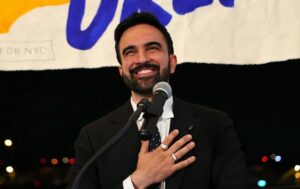
British police recently confirmed they are taking no further action against French filmmaker and polemicist Yannick Polanski over a social media post depicting Nigel Farage alongside a guillotine. The decision closes a standard criminal inquiry into digital communications, yet it opens a much larger fracture within the architecture of public expression, online safety laws, and political accountability in the United Kingdom.
For months, the incident fueled a predictable cycle of media outrage, partisan posturing, and heated debates over where legitimate political satire ends and violent incitement begins. When authorities decline to prosecute, observers tend to view the outcome as either a victory for civil liberties or a failure of the justice system. The reality sits in a far more uncomfortable gray area. Police forces are operating under legislative frameworks that were never designed to handle the velocity, volume, and visual savagery of modern social media discourse.
Investigating the mechanics of this decision requires looking past the immediate political theater. The core issue is not simply about one inflammatory image or two polarizing public figures. It is about an institutional machinery struggling to police digital speech without entirely abandoning the principles of democratic tolerance.
The Anatomy of a Digital Provocation
Visual rhetoric carries a specific weight in modern political warfare. Text can be argued, parsed, and dismissed as hyperbole. An image cuts straight through cognitive filters. By juxtaposing a prominent populist politician with a historical instrument of mass execution, the post crossed an intentional threshold of shock value.
Yannick Polanski understood the assignment. In the attention economy, outrage functions as currency. Whether the goal was ideological provocation or algorithmic elevation, the strategy worked. Mainstream outlets picked up the story, social media feeds amplified the outrage, and the state was forced to intervene because a member of the public reported a potential offense under communications legislation.
This is where the modern policing crisis begins. Police agencies do not choose every battle they fight. They respond to public complaints, statutory guidance, and Crown Prosecution Service thresholds. When a high-profile figure like Nigel Farage is involved, the pressure multiplies exponentially. Officers must weigh freedom of political expression against laws governing malicious communications and incitement.
Yet, the legal threshold for criminal prosecution in the United Kingdom requires proving that a communication is grossly offensive, indecent, obscene, or menacing, with a credible intent to cause distress or harm. Historically, political cartoons have utilized grotesque, violent, and highly offensive imagery for centuries. Think of the 18th-century satires of James Gillray, where politicians were routinely drawn being hanged, disembowelled, or guillotined.
The transition from ink on paper to digital pixels has not changed the historical tradition of political caricature, but it has drastically altered the audience and the perceived proximity of threat.
The Statutory Trap
British policing faces an impossible burden regarding online speech. Legislation like the Communications Act and subsequent updates through the Online Safety Act attempt to codify digital behavior. They try to establish clear boundaries for what citizens can say, share, or generate online.
Theory and practice remain permanently at odds.
Consider the sheer volume of content generated every second across platforms like X, Facebook, and Instagram. Tens of thousands of pieces of media feature violent metaphors, dark humor, and extreme political hostility daily. When authorities single out high-profile cases involving recognizable names like Farage or Polanski, accusations of selective enforcement inevitably follow.
If the police prosecute, critics cry authoritarian censorship and political policing. If the police drop the case, critics scream about a two-tiered justice system that permits threats against conservative figures while cracking down aggressively on online speech from other political factions.
The decision to take no further action in the Polanski case reflects this institutional paralysis. Investigators looked at the image, reviewed the context of political satire, consulted legal thresholds regarding incitement to violence, and determined that the standard of proof for a criminal conviction could not be met.
That determination is legally sound. It is also politically toxic.
The Erosion of Deterrence and the Rise of Impunity
When outrageous digital behavior yields no legal consequences, a secondary cultural shift occurs. The boundaries of acceptable discourse expand outward, dragging the Overton window into territories previously reserved for the fringes.
Political figures across the ideological spectrum now operate in an environment where physical threats are normalized as standard operational hazards. While public figures accept a higher degree of criticism and insult than private citizens, the normalization of execution imagery signals a decay in civic norms.
It is easy to dismiss this as mere online blustery. Words are just words. Pixels are just pixels. But the digital world bleeds into the physical world with terrifying frequency. When security details for politicians must be constantly upgraded because online threats morph into real-world stalkers or attackers, the distinction between virtual expression and physical danger evaporates.
The police decision highlights the impotence of traditional criminal law when applied to digital symptoms rather than root causes. Arresting a provocative poster does not fix the toxic ecosystem that rewards them. Conversely, ignoring the post risks validating a standard where political violence is treated as a petty misdemeanor until someone actually gets hurt.
The Algorithmic Incentive Structure
To understand why figures like Polanski post guillotine imagery, we must look past politics and examine the code. Social media platforms are engineered to maximize engagement. Anger, fear, and outrage are the most potent fuel for engagement algorithms.
Moderate, nuanced political debate generates silence. Extreme, visceral, antagonistic imagery generates clicks, shares, quote-tweets, and ad revenue.
The legal system acts as a blunt instrument trying to solve a systemic architectural problem. Prosecuting individuals for bad behavior online treats the symptom while leaving the disease untouched. Tech platforms escape accountability for designing the environments that make such behavior profitable and culturally pervasive.
Until lawmakers address the commercial incentives driving digital hostility, police forces will remain trapped in an endless loop of investigating inflammatory posts, facing public fury regardless of their decision, and managing the fallout of a digitized public square designed to tear itself apart for profit.
The decision on the Polanski case is closed. The underlying rot is just getting started.