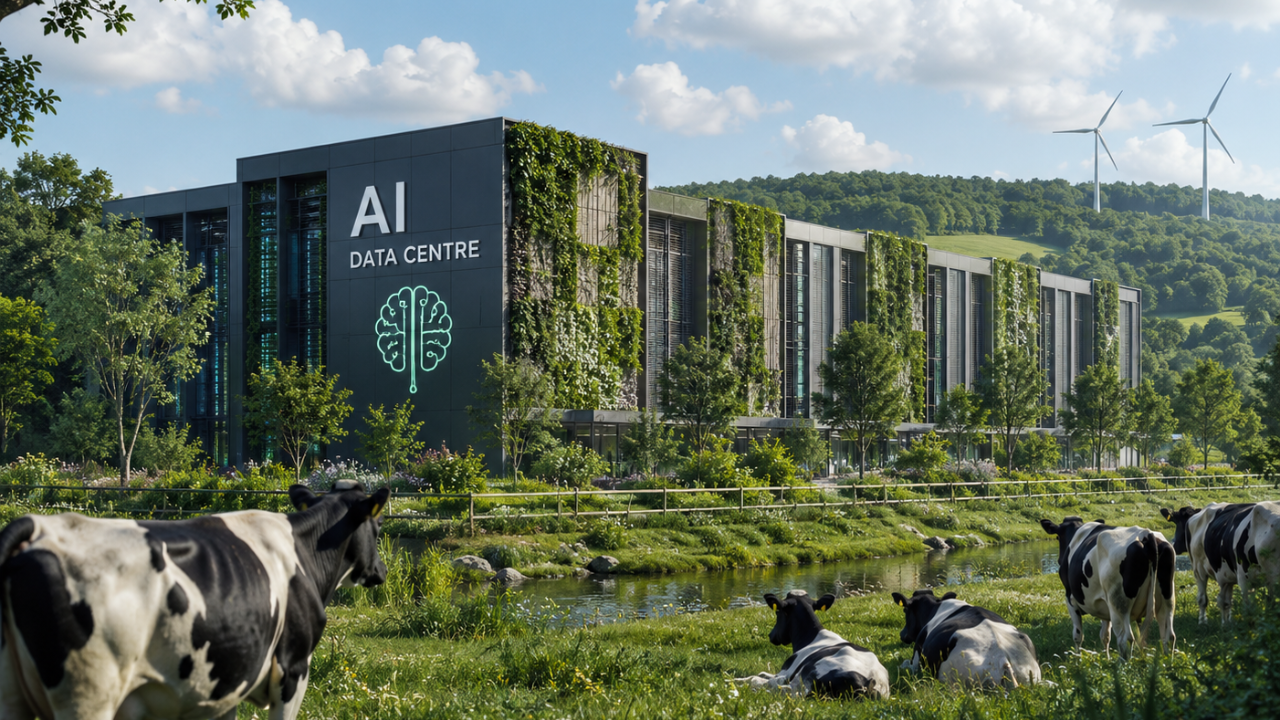
Big Tech has a power hunger that green energy grids cannot satisfy, forcing data center operators to look toward an unlikely savior: industrial dairy farms. As artificial intelligence clusters demand unprecedented amounts of baseload power, tech giants are signing agreements to utilize electricity generated from cow dung via anaerobic digesters. This practice satisfies immediate energy needs while allowing companies to claim progress toward carbon-neutral goals. However, stripping agricultural waste to fuel server farms is not a silver bullet. It is a desperate stopgap that exposes the severe limitations of our modern energy infrastructure.
The arithmetic of modern computing is brutal. High-density server racks packed with specialized chips require massive amounts of continuous electricity. Solar and wind power are intermittent, leaving gaps when the sun sets or the wind dies down. Tech firms cannot afford a microsecond of downtime. They need baseload power—electricity that runs 24/7 without interruption.
The Mechanics of Agricultural Megawatts
Converting livestock waste into digital power relies on a relatively straightforward chemical process. On large-scale industrial farms, manure is flushed into massive, airtight tanks known as anaerobic digesters. Inside these oxygen-depleted environments, bacteria break down the organic matter. This process releases biogas, which is primarily composed of methane and carbon dioxide.
Instead of allowing this methane to escape into the atmosphere—where it acts as a greenhouse gas far more potent than carbon dioxide—the gas is captured. It is then scrubbed of impurities and burned in on-site combustion engines to generate electricity, or injected into pipelines as renewable natural gas (RNG).
For a data center developer, an anaerobic digester acts like a small, decentralized power plant. Unlike solar panels, a digester produces gas continuously because livestock produce waste continuously. The power output is predictable, measurable, and highly localized.
The Subsidized Economics of Manure
The sudden rush toward agricultural energy is not driven solely by environmental altruism. It is a calculated financial maneuver heavily incentivized by state and federal policy frameworks.
Programs like California’s Low Carbon Fuel Standard (LCFS) and federal production tax credits have turned agricultural methane into a highly lucrative commodity. Under these systems, projects that capture and use methane are awarded valuable carbon credits. Because methane avoidance is weighted heavily in carbon accounting models, the economic yield from the energy generated by a cow can sometimes rival the revenue from her milk production.
Data center operators purchase these environmental attributes to offset their massive carbon footprints. By funding or buying power from these projects, a corporation can log into its annual sustainability report and claim that its local operations are running on clean, renewable energy.
The Scale Problem Nobody Wants to Discuss
The math behind this agricultural energy boom breaks down quickly when forced to scale.
Consider the sheer volume of waste required to keep the lights on in a modern facility. A single, mid-sized data center campus can easily require 100 megawatts of constant power. To generate just one megawatt of electricity continuously via anaerobic digestion, you need the daily waste output of roughly 2,500 to 3,000 dairy cows.
To power a modest 100-megawatt cluster, a tech company would need to capture the energy from approximately 250,000 to 300,000 cows.
[100 MW Data Center]
       ▲
       │ Requires constant baseload
       │
[300,000 Dairy Cows] ──► [Anaerobic Digesters] ──► [Biogas Combustion]
There are very few regions where that many animals are concentrated close enough to transmit power efficiently without massive transmission losses. The physical reality of logistics places a hard ceiling on how much digital infrastructure can actually be sustained by farming. It is a boutique solution masquerading as a systemic cure.
The Unintended Ecological Backlash
When a financial system places an immense premium on the byproducts of industrial farming, it inadvertently incentivizes the expansion of that very system.
Environmental advocates point out that subsidizing methane capture rewards the most polluting forms of agriculture. Concentrated Animal Feeding Operations (CAFOs) produce the massive, liquefied manure lagoons necessary for anaerobic digesters to function efficiently. Smaller, pasture-based farms that allow cattle to graze naturally cannot capture waste this way.
By tying the survival of data centers to the outputs of mega-dairies, tech companies are tethering their green initiatives to an industry criticized for localized water pollution, intense ammonia emissions, and heavy land use. It creates a perverse economic loop. To keep the algorithms running, the factory farms must keep growing.
Infrastructure Friction and Grid Realities
Even if the supply of organic waste were limitless, moving this energy to where servers actually live presents a massive engineering challenge.
Data centers are traditionally built near major internet exchange points, fiber-optic hubs, and cooling water sources—often near major metropolitan areas or specific corporate tax havens. Industrial dairy farms are located where land is cheap and zoning laws are permissive. Bridging the geographic divide requires billions of dollars in new physical infrastructure.
- Pipeline Injection: If the biogas is cleaned and turned into renewable natural gas, it must be pumped into existing utility pipelines, mixed with fossil-fuel natural gas, and burned at a power plant miles away. This dilutes the direct environmental claim.
- Direct Wire: Building a data center directly adjacent to a massive dairy farm avoids utility friction, but it isolates the facility from urban workforce pools and introduces severe logistical headaches regarding fiber connectivity.
- Grid Bottlenecks: Local rural electrical grids are rarely equipped to handle the massive, high-voltage imports or exports required by modern high-performance computing clusters.
The Combustion Compromise
Burning biogas is not entirely clean. While capturing methane prevents it from entering the atmosphere raw, burning it in an engine still produces carbon dioxide, nitrogen oxides (NOx), and particulate matter.
For communities living near these agricultural power plants, the reality is more localized air pollution, not less. Tech companies may successfully scrub their corporate balance sheets of carbon equivalents, but the physical chimneys in rural areas still emit exhaust. This localized impact complicates the narrative of a pristine, cloud-based digital future powered by harmless pastoral waste.
The Structural Realities Ahead
Relying on livestock waste to run computing infrastructure highlights a deeper, systemic failure in utility planning. The tech sector has expanded its power demands far faster than utilities can build traditional clean energy generation or transmission lines.
Using agricultural waste provides a localized patch for a broken system, but it cannot support the long-term trajectory of global computing. True stability will require harder choices, including massive investments in next-generation nuclear energy, deep-geothermal systems, and fundamental overhauls of how regional grids distribute power. Until those macro-level transformations occur, tech companies will continue to scour the countryside for any available megawatt, turning agricultural waste into a high-priced commodity while the underlying energy crisis deepens.