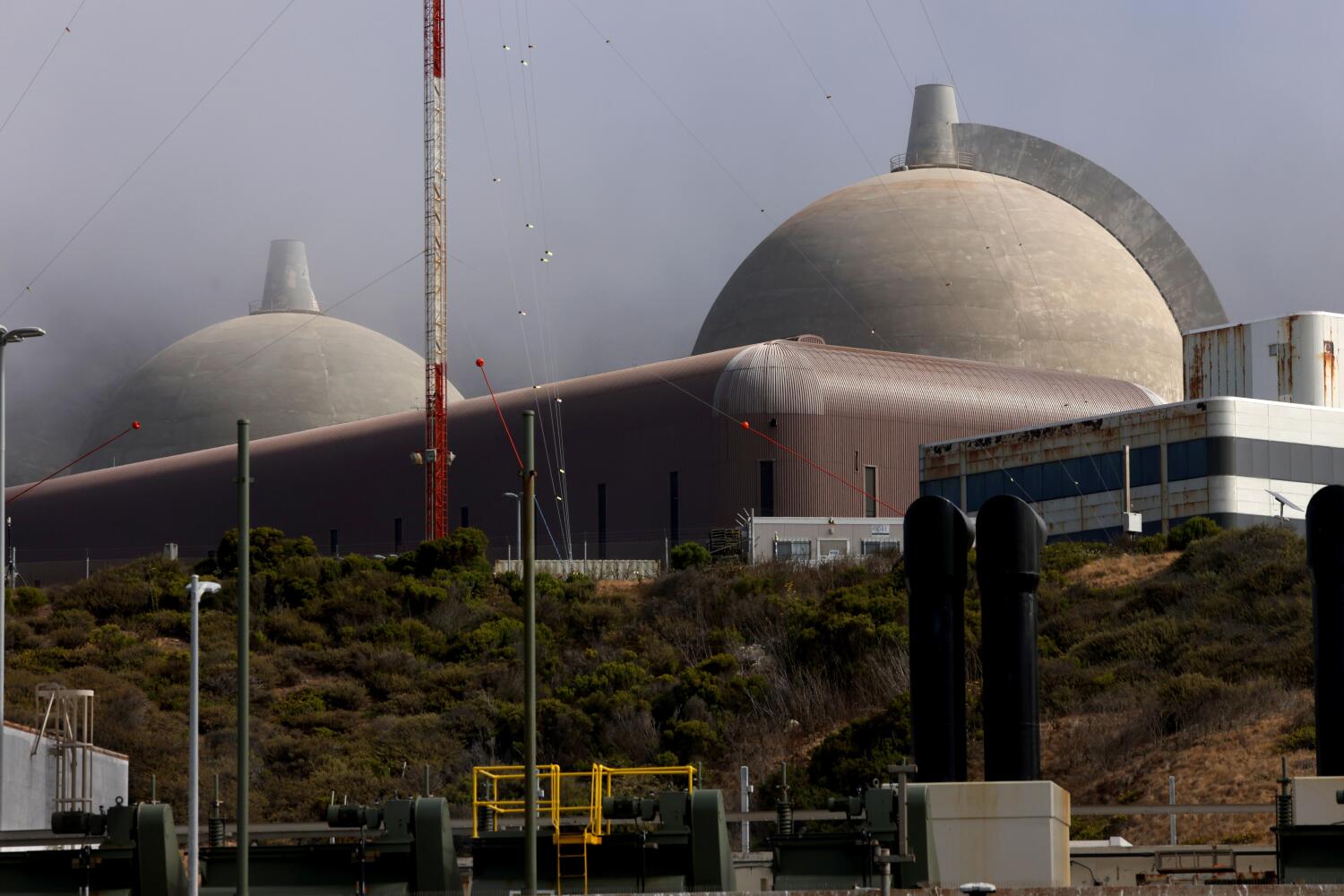
The decision to extend the operational life of the Diablo Canyon Power Plant through 2030 represents a fundamental shift from ideological decarbonization toward pragmatic grid reliability. California’s energy policy faces a trilemma: aggressive emissions reduction targets, the pursuit of social equity in utility pricing, and the physical requirement for a 24/7 load-following energy supply. The five-year extension granted by federal and state regulators is not merely a postponement of decommissioning; it is a tactical bridge designed to prevent a systemic collapse of the California Independent System Operator (CAISO) grid during the high-stress transition to a high-penetration renewable portfolio.
Diablo Canyon produces approximately 2.2 gigawatts (GW) of carbon-free electricity, accounting for nearly 9% of California’s total generation and 17% of its zero-carbon energy. Removing this volume of firm capacity without equivalent, dispatchable replacements creates a structural deficit that intermittent solar and wind cannot currently fill. The logic behind the extension rests on three pillars of energy security: baseload reliability, resource adequacy during "net load" peaks, and the economic mitigation of fossil fuel price volatility.
The Physics of the Net Load Ramp
The primary driver for maintaining Diablo Canyon is the "Duck Curve" phenomenon, which describes the timing imbalance between peak solar production and peak electricity demand. As solar penetration increases, the grid experiences a surplus of energy during midday, followed by a precipitous ramp-up in demand as the sun sets.
During this evening ramp, the grid requires "firm" power—resources that can be dispatched immediately regardless of weather conditions. The current battery storage fleet, while growing rapidly, lacks the multi-day duration required to buffer against seasonal lulls or extended heatwaves. Diablo Canyon provides a constant pressure of electrons that stabilizes the frequency of the grid. Without this baseload, the CAISO must rely on gas-fired "peaker" plants. The extension of Diablo Canyon essentially displaces the need for approximately 15 to 20 million metric tons of carbon emissions that would have been generated by gas alternatives over the next five years.
The Cost Function of Deferred Decommissioning
Analyzing the extension requires a breakdown of the capital and operational expenditures involved. The California Department of Water Resources and Pacific Gas and Electric (PG&E) are managing a complex financial structure supported by a $1.1 billion grant from the U.S. Department of Energy’s Civil Nuclear Credit program.
The economic justification follows a specific cost-benefit calculus:
- Avoided Capacity Procurement: The cost of rapidly procuring 2.2 GW of new, reliable capacity (likely through a mix of lithium-ion storage and offshore wind) would exceed the operational costs of maintaining an existing, paid-for asset.
- Safety and Compliance Upgrades: Extending the life of a 1980s-era facility necessitates immediate investment in cooling system intake structures and seismic monitoring. These are sunk costs that must be amortized over the five-year window.
- Market Price Suppression: By maintaining a high volume of low-marginal-cost supply, Diablo Canyon exerts downward pressure on wholesale energy prices during periods of high demand.
The risk in this financial model is the "uncertainty premium." The $6 billion loan authorized by Senate Bill 846 serves as a backstop, but if the plant requires unexpected major repairs—such as steam generator replacements—the cost-per-megawatt-hour could spike, rendering the "bridge" more expensive than a localized blackout mitigation strategy.
Structural Bottlenecks in the Renewable Transition
The five-year extension exposes a critical failure in the speed of the renewable build-out. To replace Diablo Canyon's 18,000 gigawatt-hours of annual production, California must accelerate three specific sectors that are currently stalled by permitting and interconnection queues:
- Long-Duration Energy Storage (LDES): Current four-hour lithium-ion batteries are insufficient for the "Dunkelflaute"—periods of low wind and solar. Technologies such as pumped hydro, compressed air, or iron-air batteries must reach commercial scale by 2030.
- Offshore Wind Development: The Central Coast of California has significant wind potential, but the infrastructure to bring that power inland does not exist. The Diablo Canyon site itself is a prime candidate for a transmission hub, as the existing 500kV lines could theoretically be repurposed to land offshore wind energy.
- Grid Interconnectivity: The "Queued Capacity" problem remains a bottleneck. There are hundreds of solar and storage projects waiting for approval to plug into the grid. The Diablo Canyon extension buys the time necessary for the CAISO to process these applications and for utilities to harden the distribution network.
The Seismic and Environmental Trade-offs
Opposition to the extension centers on the seismic vulnerability of the Diablo Cove site, which sits near the Shoreline and Hosgri fault lines. While the Nuclear Regulatory Commission (NRC) has maintained that the plant's design basis is sufficient to withstand a major event, the extension forces a re-evaluation of the aging infrastructure.
Thermal pollution also remains a constant variable. The plant’s "once-through cooling" system draws billions of gallons of seawater daily, discharging it at higher temperatures, which affects local marine ecosystems. The extension requires California to waive certain Clean Water Act provisions temporarily. This creates a policy precedent: the state is explicitly prioritizing atmospheric carbon reduction and grid stability over localized aquatic biodiversity. It is a ruthless but calculated exchange of environmental priorities.
The Operational Reality of Nuclear Life Extensions
Extending a nuclear plant is not as simple as flipping a switch to "on" for another few years. It involves a "Long-Term Operation" (LTO) framework used globally but rarely in a political environment as volatile as California’s.
Operational requirements for the 2024-2030 period include:
- Fuel Cycle Management: Procurement of enriched uranium must happen years in advance. The extension required immediate entry into a global supply chain already constrained by geopolitical tensions.
- Workforce Retention: The specialized labor force required to run a nuclear plant—engineers, health physicists, and reactor operators—often begin looking for new roles 5–10 years before a scheduled decommissioning. PG&E must offer significant retention incentives to prevent a "brain drain" that would compromise safety.
- Spent Fuel Management: The Dry Cask Storage capacity at the site must be expanded. The federal government's failure to provide a permanent geologic repository means Diablo Canyon will remain a de facto nuclear waste site long after the turbines stop spinning in 2030.
Strategic Implications for the 2030 Hard Stop
The 2030 deadline is described as "final," yet the logic that led to the current extension—reliability gaps and high gas prices—may still be present in six years. If offshore wind and LDES are not online by 2028, the state will face the exact same dilemma.
The strategic play for California energy regulators involves a two-track approach. First, treat the Diablo Canyon site as a future "Energy Hub" rather than a retirement project. This means planning the conversion of its transmission infrastructure for hydrogen production or offshore wind integration now. Second, the state must transition from a "volumetric" energy market to a "reliability" market, where the grid pays for the availability of power, not just the electrons delivered.
The Diablo Canyon extension is a confession that the current pace of the green transition is physically incompatible with the demand of the world's fifth-largest economy. It serves as a laboratory for other nations watching the decommissioning of firm, zero-carbon assets. The success of this bridge depends on whether the state uses this 72-month reprieve to fix its interconnection bottlenecks or simply uses it as a cushion to delay the inevitable friction of a fluctuating power supply.
The final strategic move for stakeholders is to monitor the 2028 "Assessment of Need." If the CAISO’s projected reserve margins fall below 15% for the 2030 summer peak, a second extension will move from a political impossibility to a mathematical necessity. Organizations must align their long-term capital investments with the reality that "baseload" is not a relic of the past, but a requirement for a functional digital economy.