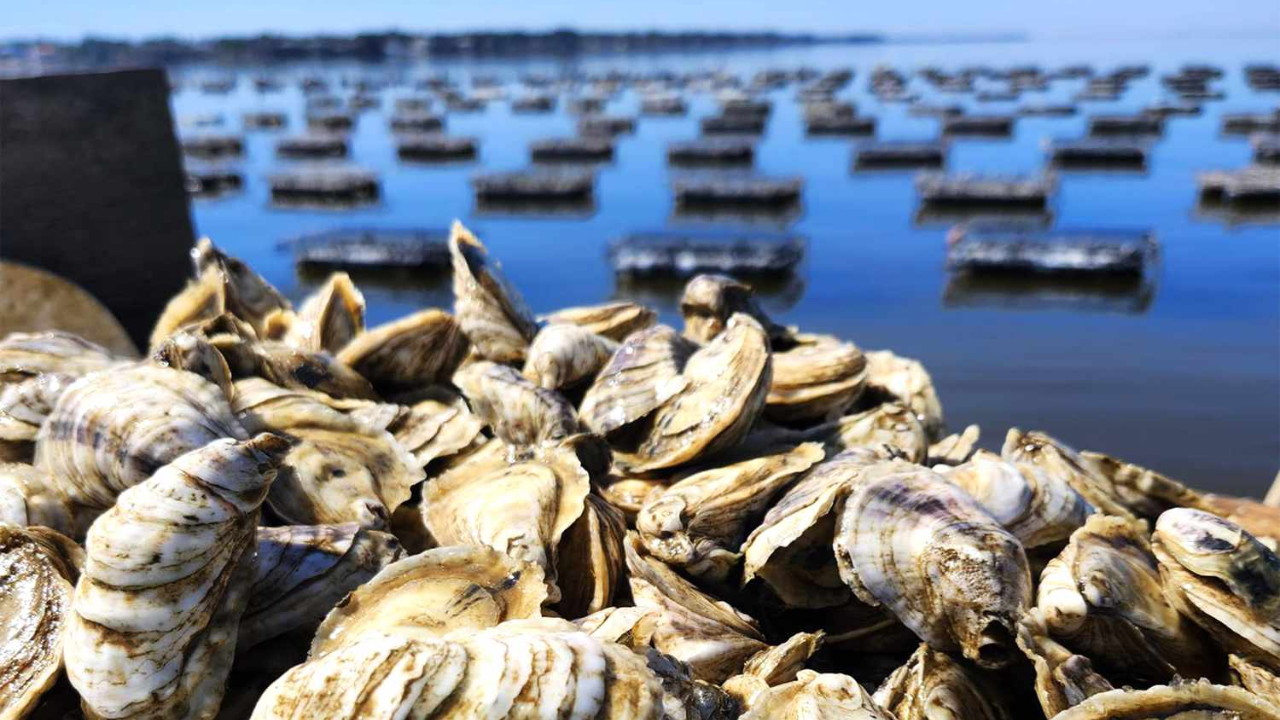
Four hundred thousand oysters vanished from an Australian farm, and the mainstream media ran the exact same lazy narrative. They painted a picture of helpless coastal growers crying over spilled bivalves, staring wistfully out at the tide while hundreds of thousands of dollars in stock evaporated into the black market. The internet dutifully clicked, clucked its tongue, and mourned the tragedy of rural crime.
Everyone missed the actual story.
I have spent years watching primary producers treat marketing like an afterthought, relying entirely on weather reports and wholesale brokers to dictate their survival. Then a crew of professional nocturnal aquaculturists executes a logistics operation involving heavy cages, temperature-controlled transport, and immediate distribution networks, and the farm gets a quarter-million dollars in global press coverage. If you paid an elite public relations agency to engineer a stunt this effective, you would burn through a six-figure retainer before lunch.
Let us look at the mechanics of aquaculture theft. You cannot simply stuff four hundred thousand live oysters into your pockets. This requires specialized gear, heavy sorting equipment, diesel-powered vessels, and an intimate working knowledge of tidal charts. More importantly, it requires an existing downstream buyer network that asks zero questions about provenance. The conventional take frames this as a security failure. It is actually a terrifyingly efficient distribution audit.
The Myth Of The Vulnerable Farm
The standard commentary following the Australian heist centered on the lack of coastal surveillance. Farmers are being told to install infrared cameras, deploy sonar tripwires, and turn their operations into high-security penitentiaries. This advice is fundamentally flawed and financially suicidal.
Security theater on the water does not work. Saltwater destroys electronics faster than you can write off the depreciation. Marine environments chew through cabling, blind optical lenses with salt spray, and trigger endless false alarms via passing stingrays, pelicans, and floating logs. If you try to fortify an open-water lease to the standards of a commercial bank, your capital expenditure will outweigh the replacement cost of your entire inventory within two quarters.
I have watched mid-sized fisheries blow their operational budgets on surveillance hardware that rusted into useless orange scrap metal within eighteen months, only to get cleaned out anyway by someone who knew how to cut a zip-tie underwater with a dive knife.
The smart money does not build walls around the ocean. The smart money changes the liquidity of the asset.
Turning Stolen Goods Into Dead Inventory
If you want to stop ocean rustling, you stop trying to protect the perimeter and start weaponizing traceability. The black market thrives on anonymity. An oyster in a bag is a commodity; an oyster with a cryptographic identity is a liability.
Right now, most shellfish producers rely on basic tags attached to mesh bags that state the harvest zone and batch number. These tags are routinely snipped off and tossed overboard the second the cargo changes hands. To kill the secondary market for stolen stock, producers need to adopt micro-batch water-chemistry profiling and shell-marking techniques that make stolen product radioactive to commercial restaurateurs.
Imagine a scenario where high-end hospitality groups face mandatory fines for purchasing unmarked biometrics. The black market relies on upscale bistros looking to shave three dollars off their raw bar costs. If a chef knows that a random health department audit or an ultraviolet lamp check will expose stolen stock instantly, the demand side of the equation collapses. Thieves do not steal four hundred thousand oysters to eat them at home; they steal them to flip them. Cut the liquidity, and you kill the crime.
The Brutal Economics Of Wholesale Margins
Let us address the elephant in the tank. The valuation attached to these headline-grabbing heists is almost always a work of fiction. When headlines scream about three hundred and fifty thousand dollars in stolen inventory, they are calculating retail menu prices—six dollars a pop on a half-shell with a mignonette.
That is not what the grower lost. The grower lost cost-of-goods-sold plus a fraction of wholesale value.
Primary producers operate on razor-thin margins dictated by massive distributors who control the cold chain. The farmer doing the hard work in the mud gets pennies on the dollar compared to the white-tablecloth establishment in Sydney or Melbourne. When a theft happens, the insurance payout or the media sympathy tour often generates more immediate cash flow and brand awareness than the actual harvest would have yielded through traditional wholesale channels.
I am not suggesting anyone should invite thieves into their leasehold. But we need to stop pretending that traditional wholesale is a viable long-term model for independent growers. If your business model depends on floating thousands of vulnerable animals in a public ocean waiting for a middleman to buy them at a discount, you are not running an enterprise; you are running a lottery.
The Playbook For Modern Aquaculturists
If you are growing anything in an open-access environment, stop treating security as a local police matter and start treating it as a supply chain optimization problem.
- Ditch the wholesale race to the bottom. Build direct-to-consumer pipelines that make your farm a destination. People do not steal from brands they feel emotionally connected to; they protect them.
- Embrace public attention. When the worst happens, do not hide behind corporate silence. Use the news cycle to tell your quality story. Turn a logistical nightmare into a masterclass in product demand.
- Invest in biological markers, not barbed wire. Focus your capital on seed genetics, shell branding, and rapid supply-chain transparency that makes your specific harvest instantly recognizable to health inspectors and competing buyers.
The ocean is wild, unpredictable, and impossible to police. The moment you accept that reality, you stop wasting money on cameras that rust and start building a business that cannot be easily copied, fenced, or forgotten.
Stop guarding the water. Build a brand they cannot steal.