Mainstream financial media loves a ghost story. For the past three months, the narrative was simple: a shooting war involving the United States, Israel, and Iran would inevitably choke the Strait of Hormuz, spark a global energy apocalypse, and launch Brent crude into orbit well past triple digits.
Then reality intervened. The preliminary peace deal announced out of Islamabad—brokered by Pakistan and Qatar, and rubber-stamped by Donald Trump on social media—sent crude cascading down by 30% from its mid-crisis peak. Now, the traditional commentary desks are hand-wringing over "uncertainty." They warn about unexploded naval mines, shipping insurance premiums, and the slow implementation of the Geneva framework. They claim that the market is hovering just above pre-war levels because traders are terrified of a sudden relapse into hostilities.
They are completely misreading the tape.
The nervous hesitation keeping Brent at $81 and West Texas Intermediate at $79 has almost nothing to do with the trust deficit between Washington and Tehran. The fixation on geopolitical risk premiums is a convenient smokescreen. The real structural shift occurs thousands of miles away from the Persian Gulf, driven by a quiet, devastating demand contraction and an unprecedented wave of supply from the Western Hemisphere. The war did not break the global oil market; it merely exposed how fundamentally broken the old assumptions about energy scarcity really are.
The Mirage of the Geopolitical Premium
Wall Street commodities desks have spent decades selling the concept of the "Hormuz Premium." The rule of thumb stated that any kinetic conflict near the world's most critical maritime chokepoint automatically justified a $15-to-$20 per barrel tax on global economic activity.
I have watched trading desks bleed hundreds of millions of dollars over the last fifteen years trying to trade this exact thesis. They treat geopolitical friction as an absolute physical constraint rather than what it actually is: a highly flexible logistics problem.
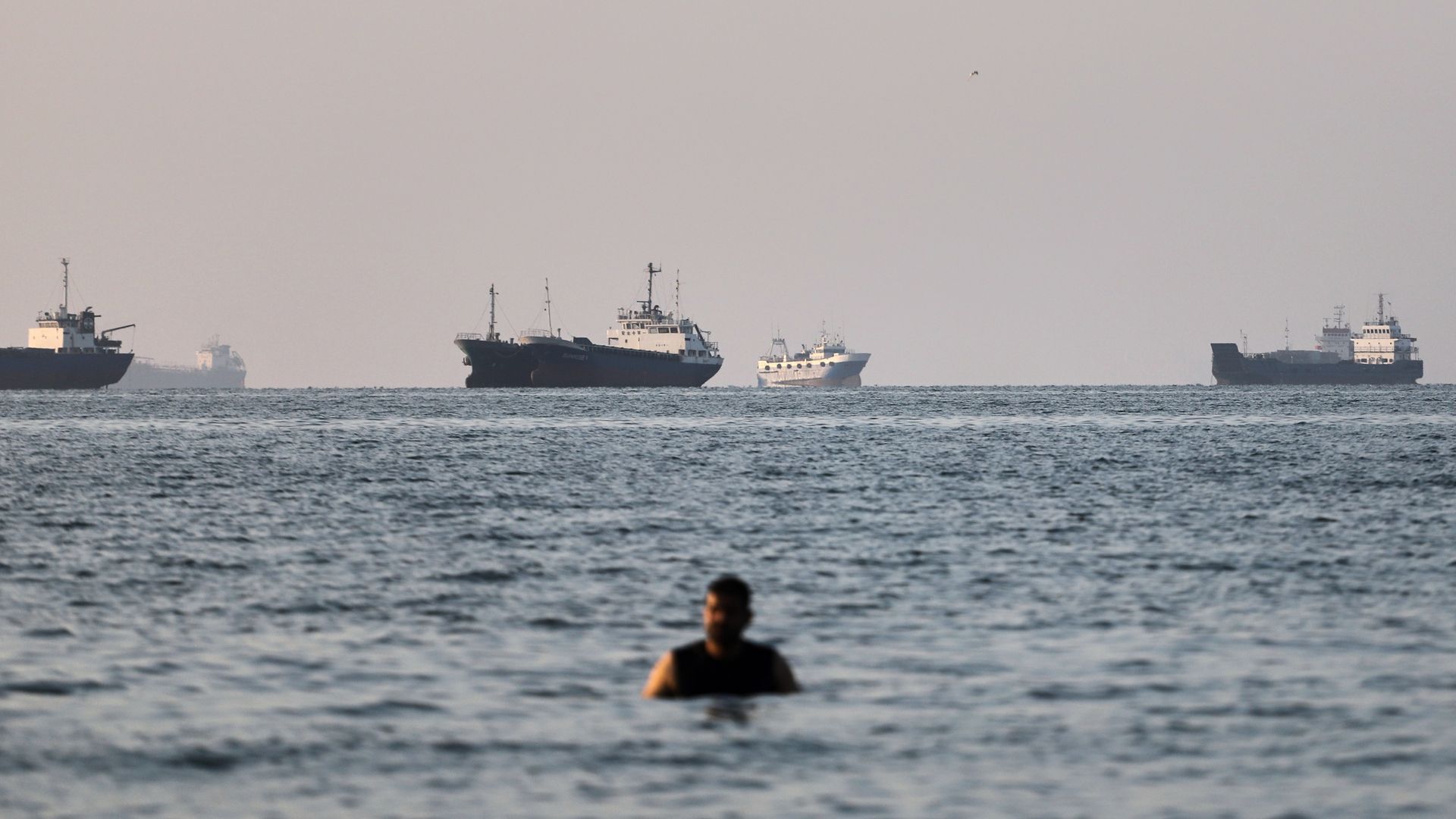
Consider what actually happened over the last 100 days. Even with a formal U.S. naval blockade and Iranian retaliatory maneuvers effectively sealing off standard tanker routes, crude did not stop moving. It adapted.
Imagine a scenario where the world's most vital artery is clamped, yet the patient’s blood pressure barely ticks up. That is the modern energy grid.
- Saudi Arabia and the United Arab Emirates quietly maximized their overland pipeline infrastructure, routing millions of barrels per day directly to East Coast terminals bypasses the strait entirely.
- High-volume tanker shuttle operations shifted to alternative hubs, utilizing off-ramps that didn't exist during the oil shocks of the late twentieth century.
- Global refining networks proved drastically more flexible than legacy models predicted, swapping out heavy Persian Gulf crudes for lighter variants with minimal operational downtime.
The market did not avoid a $150 spike because traders got lucky. It avoided a spike because the physical reality of oil logistics has outpaced the rigid models used by television talking heads. The peace deal signed in Switzerland did not save the global economy; it merely forced the market to price barrels based on physical fundamentals rather than speculative panic.
The Four Million Barrel Ghost in Beijing
The single biggest blind spot in the current analysis is the obsessive focus on Western diplomatic maneuvers while ignoring the structural collapse of Asian demand.
While the media was tracking every statement from the Iranian Foreign Ministry, Chinese crude imports by tanker quietly fell to 6.7 million barrels a day. According to verified vessel-tracking data from Vortexa, that represents a massive 40% decline relative to the 2025 average.
To put that drop into perspective, the market lost roughly 4 million barrels a day of Chinese purchasing power in a matter of months. That is the equivalent of erasing the entire oil consumption of France and Germany combined from the global ledger.
The lazy consensus attributes this entirely to temporary economic headwinds or cyclical refinery maintenance. That is a dangerous misunderstanding of the structural reality. This is not a temporary dip; it is an economic pivot.
Chinese Tanker Imports (Barrels Per Day)
2025 Average: ███████████████ 11.1M
May 2026:     █████████ 6.7M (-40%)
Beijing has spent the last three years aggressively re-engineering its industrial base away from crude dependency. The deceleration of their year-over-year gross domestic product from 5.0% in the first quarter to 4.6% in the second quarter of 2026 is only half the story. The deeper trend is the massive electrification of their commercial transport fleets and a permanent slowdown in domestic petrochemical manufacturing.
When the largest oil importer on the planet slashes its intake by millions of barrels without causing a visible crisis in its internal logistics, the global floor for crude changes forever. The reason oil is stuck at $80 despite unresolved tensions is because the Chinese economic engine no longer requires a constant, unyielding firehose of Middle Eastern crude to stay afloat.
The American Supply Wall
The second fundamental error in the current narrative is the failure to recognize where the new physical barrels are actually coming from. The traditional view still treats OPEC and the Persian Gulf as the ultimate swing producers of the world. That era is dead.
While the Gulf was locked down, a massive wall of non-OPEC supply hit the water from the Americas.
- United States Production: Domestic shale operators did not capitulate to high interest rates. Instead, hyper-efficiency in the Permian Basin pushed U.S. output past historic highs, acting as a massive buffer against the loss of commercial Iranian volume.
- The New Atlantic Giants: Guyana and Brazil have transitioned from emerging players into massive, low-cost extraction monsters. Their deepwater projects are highly profitable even if Brent slides deep into the $70 range.
- The Hidden Surplus: The global market entered this war not in a state of scarcity, but with a significant structural surplus. Strategic reserves were deployed efficiently, and commercial inventories were far higher than public tracking models estimated.
The Street is currently operating under the assumption that once the Strait of Hormuz is completely cleared of naval hazards, the return of Gulf exports by late July will create a tidy equilibrium.
The opposite is true. The return of normal Iranian and regional volumes into a market that has already been filled by American, Guyanese, and Brazilian barrels is going to create an immediate, aggressive oversupply. Analysts at institutions like Goldman Sachs have already had to rapidly walk back their fourth-quarter forecasts, dropping their Brent targets to $80 with a clear trajectory toward $75 for 2027. They are still being too conservative.
The Paper Market Trap
To understand why the price is hovering where it is today, you have to look past the physical docks and look at the derivatives market.
During previous Middle Eastern crises, macro hedge funds and speculative capital would express geopolitical anxiety by buying front-month physical crude futures. This direct buying pressure forced immediate upward momentum on the prompt price, creating an artificial feedback loop that translated directly to the pump.
This time, the mechanics changed. Sophisticated trading desks did not chase the physical spot price up to $100. Instead, they managed risk through the options market, buying out-of-the-money call options and downside puts to insulate their portfolios.
"Traders have realized that buying physical crude during a geopolitical flare-up is an incredibly inefficient way to hedge risk when global supply chains are this distributed."
This shift in capital allocation completely altered the futures curve. The CME group noted a steep backwardation where front-end pricing was elevated purely by temporary logistical fears, while the December 2026 futures contracts consistently traded at a steep discount, hovering near $87 even during the worst days of the naval standoff. Now that the Islamabad accord has taken the immediate military escalation off the table, that paper cushion is evaporating.
The Real Actionable Takeaway
If you are managing capital, planning industrial manufacturing, or structuring corporate energy hedges based on the assumption that oil will march back toward $90 once the "uncertainty" clears, you are setting yourself up for an expensive lesson.
The downside risk to crude is drastically underpriced. The market has undergone a structural reset that the mainstream press refuses to acknowledge because "peace deal brings boring stability" does not generate clicks like "imminent global supply shock."
The temporary floor at $80 is held together by three fragile variables: the time it takes to physically clear shipping lanes, the deliberate pace of strategic inventory replenishment, and the hope that China will suddenly resume its mid-2025 buying patterns.
None of those factors are durable. Once the physical clearing operations in the Gulf are wrapped up over the next few weeks, the reality of a massive global supply overhang, paired with a structurally altered Chinese economy, will hit the market all at once. The floor is about to give way, and the descent will be swift.


