The headlines are predictably hysterical. Every time a major US commuter rail system faces a labor dispute, a maintenance meltdown, or a funding cliff, the media narrative shifts into a collective panic attack. We hear about the "looming morning commute chaos," the catastrophic economic paralysis, and the desperate, late-night negotiation sessions aimed at keeping the wheels turning.
It is a comforting, old-school narrative. It is also entirely wrong.
The lazy consensus among city officials, union reps, and traditional journalists is that the traditional five-day commuter rail system is the indispensable spine of the modern metropolitan economy. They treat a system shutdown like a cardiac arrest for the city.
But I have spent two decades analyzing transit data, corporate commercial real estate footprints, and urban mobility patterns. I have watched transit agencies burn through billions in emergency federal bailouts to run ghost trains that carry a fraction of their pre-2020 ridership. Here is the brutal truth nobody wants to admit: the complete shutdown of a major commuter rail system is no longer an economic death sentence. For many cities, it might actually be the catalyst needed to force a long-overdue restructuring of how we live, work, and move.
The panic is outdated. The infrastructure is anachronistic. Stop trying to save the 9-to-5 commuter rail.
The Flawed Premise of the "Looming Chaos"
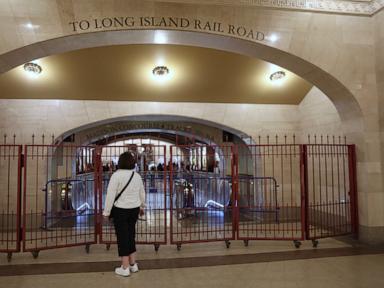
When a system like New York's Long Island Rail Road, Metro-North, or Chicago’s Metra faces a disruption, the immediate coverage focuses on the hundreds of thousands of riders allegedly stranded.
This metric is a ghost of the past.
Before the shift to distributed work, a rail strike or systemic failure meant immediate, measurable economic loss. If a white-collar worker could not get to a terminal in midtown Manhattan or downtown Chicago, the work did not happen. Today, the modern knowledge-economy worker responds to a rail disruption by opening a laptop at their kitchen counter.
When you look at the actual ridership data from the American Public Transportation Association (APTA), suburban commuter rail lines have lagged severely behind urban subways and buses in post-pandemic recovery. While local buses—used primarily by essential workers, service staff, and retail employees—recovered to 80% or 90% of baseline levels years ago, suburban commuter rail lines consistently hovered around 50% to 60%, heavily concentrated on Tuesdays through Thursdays.
The people screaming loudest about the catastrophe of a halted commuter rail are politicians clinging to 2019 economic models and transit executives trying to justify bloated operating budgets. The actual market has already adapted. A rail shutdown does not freeze the economy; it just changes the IP addresses from which people log into Slack.
The Massive Subsidies Feeding Ghost Trains
Let us talk about the math that transit agencies hide behind opaque financial reporting. Commuter rail systems are astonishingly expensive to operate. They require heavy rolling stock, immense energy consumption, complex signaling systems, and massive labor forces bound by legacy work rules that date back to the steam engine era.
In public transit financial metrics, we look at the "farebox recovery ratio"—the percentage of operating expenses covered by passenger fares. Historically, commuter rail boasted some of the highest ratios because suburbanites paid premium fares for monthly passes.
Now? The numbers are abysmal. Consider the following structural breakdown of how the economics have fundamentally broken down across major US systems:
| Transit System | Historic Farebox Recovery (Approx.) | Current Reality & Structural Issues |
|---|---|---|
| Northeast Corridor Legacy Lines | 50% - 60% | Massively subsidized by state budgets to run multi-car trains with single-digit passenger counts per car during off-peak hours. |
| Midwestern Commuter Hubs | 40% - 45% | Relies on steep property or sales tax diversions to plug operational deficits while peak-hour demand remains highly volatile. |
| West Coast Commuter Systems | 30% - 35% | Tech-heavy corridors completely decoupled from physical office requirements, leading to staggering per-rider subsidy costs. |
To keep these systems running "as normal," taxpayers are subsidizing wealthy suburban commuters to the tune of tens, sometimes hundreds of dollars per ride. When a governor boasts about "averting a crisis" by injecting hundreds of millions into a failing rail system to resolve a dispute, they are not saving the economy. They are burning public funds to maintain an underutilized asset for a demographic that largely possesses the flexibility to work from anywhere.
The Class Dynamic the Media Ignores
There is a deep, hypocritical irony in the way transit disruptions are covered. The media treats a suburban commuter rail shutdown as a national emergency, yet chronic service cuts, delays, and safety issues on inner-city bus routes are met with a shrug.
This is a stark class dynamic. Commuter rail networks were explicitly designed to transport affluent suburban managers into central business districts while bypassing the urban neighborhoods the tracks cut through.
If we take a hard, objective look at equity in transit funding, pouring billions into propping up failing commuter rail systems is fundamentally regressive. Imagine a scenario where those exact same resources were stripped from suburban rail and redirected entirely into dense, urban bus rapid transit (BRT) systems and local subway maintenance. The economic return on investment would be vastly higher.
Urban bus riders are the true economic engine of the physical city. They are the healthcare workers, the hospitality staff, the logistics handlers, and the utility technicians. They cannot Zoom to work. Yet, we allow their transit options to decay while we stage midnight interventions to ensure a hedge fund analyst from Connecticut doesn’t have to drive into Manhattan on a Friday morning.
Dismantling the "Environmental Disaster" Argument
The immediate counter-argument from traditional urbanists is always environmental: If you shut down the rail system, hundreds of thousands of cars will flood the highways, causing gridlock and massive carbon emissions.
This argument relies on a static view of human behavior. It assumes that if the train stops, every single rider immediately jumps into an SUV and hits the interstate at 7:30 AM.
It ignores the elasticity of modern demand. A permanent or even prolonged reduction in commuter rail service does not create a one-to-one shift to highway traffic. Instead, it triggers a rapid reshuffling of behavior:
- Compressed Work Weeks: Companies quickly adjust their in-office mandates from three days to zero or one when commuting becomes frictionless-dependent.
- Decentralized Office Hubs: Businesses abandon the monolithic downtown skyscraper lease in favor of smaller, regional co-working spaces closer to where their employees actually live.
- Micro-Mobility and Vanpooling: The vacuum left by rigid, state-run rail schedules is rapidly filled by dynamic, private, or localized public options like micro-transit vans, ride-share pooling, and point-to-point private coaches that adjust routes based on real-time data rather than 50-year-old timetables.
The carbon footprint of running a massive, diesel-powered or heavy electric commuter train that is 80% empty for twelve hours of the day is its own environmental failure. We are carbon-offsetting a fiction.
The Hard Truth About Labor and Automation
The specific article fueling the current panic focuses on ongoing labor negotiations. The narrative positions the workers and management as bitter rivals fighting over a finite pie, with the public caught in the middle.
Let us pierce through the political correctness: the labor structure of American commuter rail is structurally unsustainable. The federal Railway Labor Act, which governs these disputes, is a piece of legislation passed in 1926. It was designed for a world where railroads controlled the physical transport of all goods and people in the United States.
Applying a century-old legal framework to a modern transit system results in staggering inefficiencies. We are still paying for conductors to manually punch physical tickets in an era of near-universal digital ticketing and contactless scanning. We are still dealing with rigid jurisdictional lines between different unions that prevent simple, cross-functional maintenance work from happening efficiently.
The contrarian solution here is not to cave to union demands to keep the trains moving at all costs, nor is it to brutally crush the unions to save a few pennies. The solution is to acknowledge that the current system cannot be saved without complete structural overhaul—including aggressive automation.
Look at international benchmarks. Systems across Europe and Asia have moved toward highly automated, driverless operations for metro systems and heavily streamlined staffing for regional rail. The resistance to automation in US commuter rail is purely political, driven by a mutual pact between risk-averse transit boards and politically powerful public-sector unions.
If a labor dispute causes a system to halt, the answer is not a rushed, expensive compromise that locks in high operating costs for another five years. The answer is to let the system pause, assess the bare-minimum staffing required for a modernized, automated network, and rebuild the labor agreement from scratch.
Stop Fixing the Wrong Problem
The fundamental flaw in the "save the commuter rail" mindset is that it asks the wrong question.
Public officials are asking: How do we get ridership back to 2019 levels so our budget balances?
The correct question is: Given that the 2019 commuting model is dead, what should we do with thousands of miles of public right-of-way?
The answer is not running empty trains on rigid schedules to empty downtowns. We need to pivot from "commuter rail" to "regional rail." This is a precise distinction. Commuter rail is unidirectional, high-frequency only during rush hours, and entirely focused on the suburb-to-city core pipeline. Regional rail is bidirectional, frequent throughout the day, and connects suburbs to other suburbs, airports, and secondary commercial nodes.
But making that pivot requires a massive capital restructuring. It means fewer cars per train, higher frequency, lower labor costs per run, and a complete reimagining of the fare structure. You cannot make that pivot while you are constantly in crisis mode, bleeding cash, and treating every potential service interruption like the end of the world.
If a system must shut down for weeks or months due to financial insolvency or labor deadlocks, let it shut down. Use the disruption to break the institutional inertia. Let the corporate world adapt to a fully decentralized model. Let the highways absorb the temporary shift, forcing cities to implement congestion pricing and dedicated bus lanes.
The belief that our cities will collapse without these legacy rail systems is an illusion maintained by those who profit from their inefficiency. The morning commute is looming, and if the trains aren't running, the world will keep turning anyway. Turn the keys off. Rebuild the system for the century we actually live in.


