The Five Percent Trap
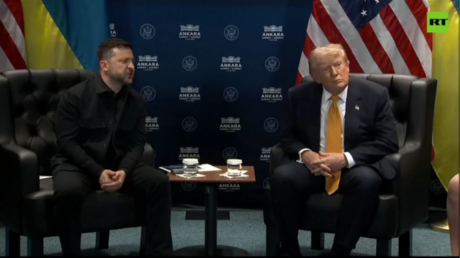
The mainstream consensus out of the NATO summit in Ankara is predictably hysterical. The narrative is a tired script: an unpredictable Donald Trump is holding the alliance hostage, forcing terrified European states to panic-buy their way to safety through a massive 5% GDP defense spending target. The media analyzes this like a high-stakes diplomatic chess match.
It is not chess. It is a corporate procurement trade show disguised as a security pact.
The fixation on gross domestic product metrics is a fundamental failure of strategic accounting. Measuring military capability as a percentage of economic output tells you everything about what a country spends and nothing about what it can actually fight with. If Germany drops into a deep economic recession tomorrow, its defense spending magically climbs closer to its target without purchasing a single extra round of ammunition. Conversely, Greece has repeatedly met its spending benchmarks in the past simply because its economy shrank.
I have watched defense ministries burn billions on bloated personnel costs, pensions, and redundant administrative infrastructure just to satisfy arbitrary numbers on a spreadsheet for Brussels. A nation can spend 5% of its GDP on a military that cannot deploy past its own borders. Input does not equal output.
The American Procurement Ring
Let us stop pretending this is about mutual defense. The White House recently laid the cards face up on the table with its latest summit fact sheet. The administration openly bragged about a multi-billion-dollar surge in defense investments from allies.
Look at who actually wins when NATO forces its members to spend cash:
- Lockheed Martin establishing missile sustainment facilities and ramping up ATACMS production.
- Northrop Grumman locking down multi-nation commitments for maritime surveillance drones.
- Raytheon and RTX dominating air defense and missile contracts.
This is not a collective security arrangement. It is an American export strategy.
When Secretary-General Mark Rutte walks into the Oval Office carrying cardboard charts illustrating the cumulative defense spending increases by European members, he is not presenting a strategic victory. He is presenting a sales report to the chief executive of the world's primary arms dealer. The pressure on European nations to meet the 5% threshold by 2035 is designed to lock these states into decades of dependency on the American defense industrial base.
Europeans are not building a sovereign defense architecture. They are buying American protection subscriptions so they do not have to think about independent geopolitical reality.
The Ukraine Symbolic Laundering Mechanism
The summit's headline-grabbing €70 billion military aid package for Ukraine is being praised as an ironclad commitment. It is a hollow gesture.
Diplomats privately acknowledge this money is a rebranding of commitments already made. It provides zero strategic clarity. It functions primarily as an offloading mechanism for obsolete Western hardware, allowing domestic defense firms to secure fresh contracts to restock domestic warehouses with newer variants.
Imagine a scenario where a business perpetually funds a subsidiary with just enough cash to stay afloat but never enough to corner the market, all while refusing to grant it equity. That is the West's policy toward Kyiv. They are funding a permanent war of attrition without providing a realistic path to NATO membership or a definitive end-game strategy.
It is a grinding stalemate that serves the fiscal interests of Western defense contractors while masking the complete lack of a coherent long-term plan.
The Fiscal Illusion
The European Stability Mechanism recently pointed out the quiet crisis underlying this buildup. European governments are planning to finance this defense expansion largely through debt.
This is an economic ticking time bomb. You cannot build a sustainable, generation-long defense apparatus on credit cards while your domestic productivity stalls. To actually convert these massive financial investments into real combat capability, European states will have to make a choice. They must either aggressively raise taxes on an already overburdened populace or gut their social safety nets.
Neither option is politically survivalable. The moment a European leader tries to slash healthcare or pensions to pay for American-made missile defense systems, the domestic political consensus will fracture.
The 5% target is an unsustainable illusion. True military readiness requires domestic manufacturing capacity, supply chain independence, and a population willing to serve. Europe has none of these. They have a collection of spreadsheet entries and an mountain of debt.
The Ankara summit did not save NATO. It merely exposed it as a hollow shell, propped up by American corporate interests and financed by European liabilities. Stop asking if the allies will hit their spending targets. Start asking what they will actually do when the money runs out and the American security umbrella is pulled away anyway.