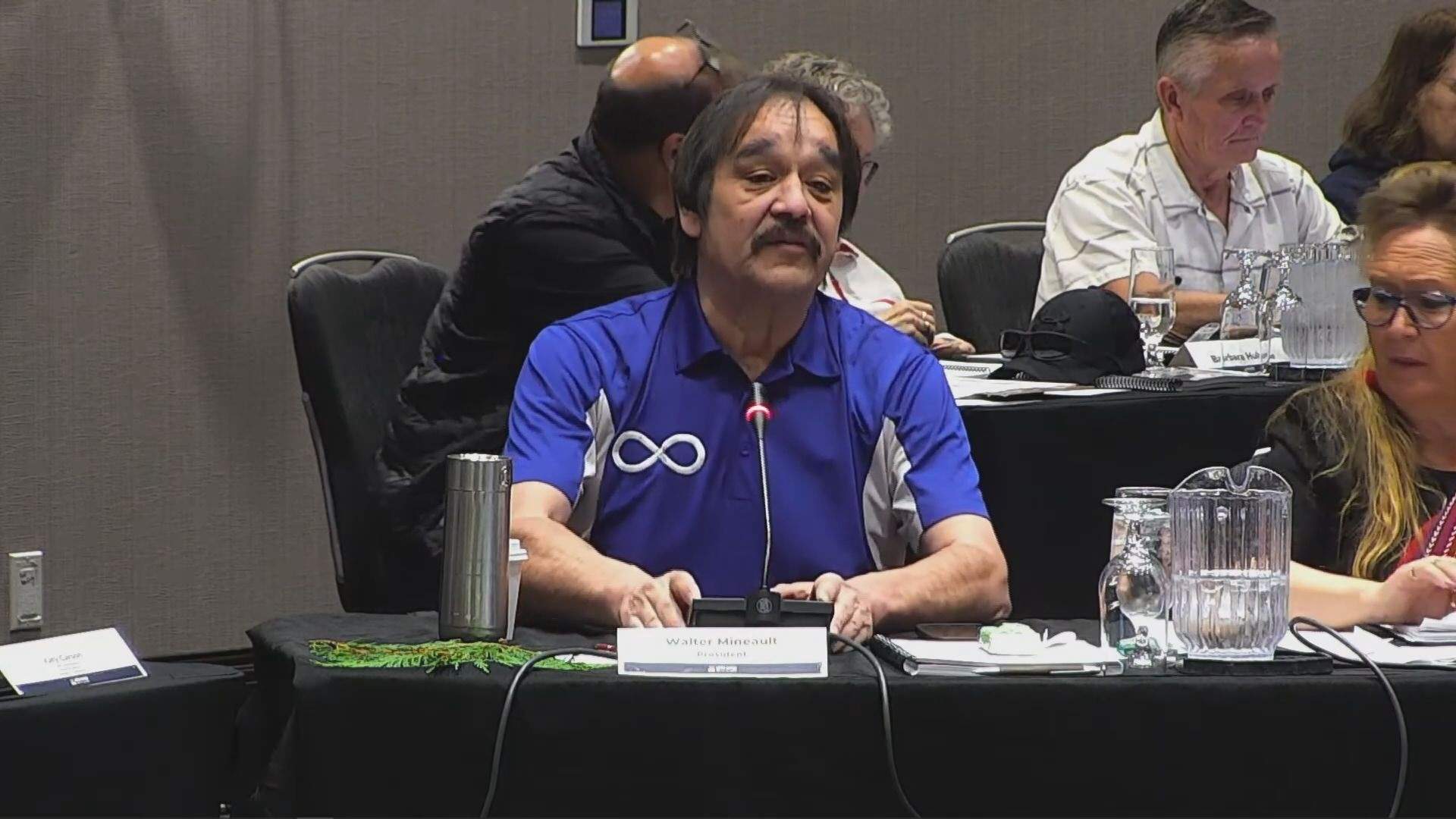
The removal of a sitting president within a provincial Indigenous government—specifically the Métis Nation British Columbia (MNBC)—is rarely a localized personnel dispute; it is a stress test of institutional design and the precarious balance between executive mandate and board-level oversight. When "serious allegations of misconduct" trigger a dismissal, the immediate focus centers on the individual, yet the structural significance lies in the breakdown of the Administrative-Political Interface. The stability of the MNBC, which represents approximately 100,000 Métis citizens and manages significant provincial and federal funding envelopes, depends on the predictability of its bylaws. Any deviation from these bylaws during an ousting creates a liability vacuum that can paralyze the organization’s ability to execute long-term strategic goals.
The Anatomy of the Removal Mechanism
The dismissal of a president is the terminal point of a specific sequence of governance failures. To understand why this happens, one must categorize the misconduct into three distinct risk profiles that boards typically use to justify such high-stakes interventions.
- Fiduciary Breach: This involves the unauthorized allocation of capital or the failure to disclose conflicts of interest. In an organization like MNBC, which operates as both a representative body and a service provider (housing, education, health), the president acts as the ultimate steward of public and communal funds.
- Statutory Non-Compliance: This occurs when an executive ignores the Constitution or the Senate’s rulings. Indigenous governance often features a dual-chamber or elder-inclusive check on power; bypassing these bodies constitutes a direct assault on the democratic legitimacy of the Nation.
- Reputational Contagion: If the allegations involve personal conduct that threatens the Nation’s standing with federal partners (Crown-Indigenous Relations) or private sector stakeholders, the board may move for removal to "cauterize" the political damage before it impacts funding renewals.
The MNBC Board of Directors functions as the legislative gatekeeper in this scenario. Their authority to remove an elected official is generally derived from specific clauses within the MNBC Constitution and the Societies Act of British Columbia. However, a "serious allegation" is not a conviction. The gap between an accusation and a formal finding of fact is where most Indigenous governments face their greatest legal risks.
The Bottleneck of Due Process in Self-Governance
A fundamental tension exists between the need for immediate executive suspension and the right to due process. When a board removes a president, they often cite an "urgent need to protect the assets of the Nation." This creates a procedural bottleneck:
- The Evidentiary Threshold: Boards often rely on internal audits or third-party investigations. If the removal occurs before the final report is tabled, the organization risks a wrongful dismissal suit or a constitutional challenge.
- The Mandate Conflict: Unlike a CEO who is appointed by a board, a president is often elected by the citizenship. Removing an elected official creates a "democratic deficit." The board must prove that the misconduct was so severe that it overrode the will of the voters.
- The Interim Vacuum: The appointment of an acting president is a stop-gap measure that inevitably leads to "Lame Duck Governance." Decisions on multi-year infrastructure projects or land-claim negotiations are typically paused, leading to an opportunity cost that is rarely quantified but deeply felt by the citizenship.
This process is further complicated by the Dual-Legal Reality. MNBC must simultaneously satisfy the requirements of provincial corporate law and the internal "Manoeuvring" of Indigenous self-determination. If these two legal frameworks clash—for instance, if the provincial Societies Act allows for a board-led removal but the Métis Constitution requires a general assembly vote—the organization enters a state of "Legal Limbo."
The Cost Function of Leadership Instability
Institutional instability carries a measurable price tag. For a Métis government, the costs of a presidential removal are partitioned into direct and indirect categories.
Direct Fiscal Leakage
- Legal Fees: External counsel is required for the investigation, the removal execution, and the inevitable defense against a counter-suit.
- Severance and Buyouts: Depending on the contract and the nature of the misconduct (proven vs. unproven), the organization may be forced to pay out significant sums to avoid protracted litigation.
- Special Election Costs: Organizing a province-wide vote for 100,000 citizens involves logistics, security, and communication expenditures that are often not budgeted for in a standard fiscal year.
Indirect Strategic Erosion
- Partnership Devaluation: Federal and provincial ministries (such as Indigenous Services Canada) prioritize "stable recipients." Frequent turnover at the executive level signals a high-risk environment, potentially leading to increased reporting requirements or the withholding of discretionary grants.
- Human Capital Flight: High-level bureaucrats within the MNBC—the directors and policy analysts who drive actual service delivery—often exit during political upheaval, fearing for their own job security or being unwilling to navigate a fractured workplace.
The Triad of Institutional Reform
To prevent "Serious Misconduct" from becoming a recurring systemic failure, Indigenous governments must transition from a person-centric model to a process-centric model. This requires reinforcing three specific structural pillars.
1. Independent Ethics Commissions
Most removals fail or become messy because the board is seen as a political actor rather than an impartial judge. Establishing a permanent, non-political Ethics Commission—composed of elders and legal experts who do not sit on the board—removes the "political hit" optics from the dismissal process. This commission should have the sole power to recommend removal based on clear, pre-defined metrics of misconduct.
2. Transparent Fiduciary Firewalls
Misconduct often thrives in environments where executive spending and decision-making are opaque. Implementing real-time financial dashboards and requiring double-signature authorization for any expenditure over a specific threshold (e.g., $50,000) reduces the "Surface Area for Malfeasance." When the system is designed to be "Fail-Safe," the individual’s ability to commit misconduct is structurally constrained.
3. Recall Legislation
Instead of relying solely on board-level interventions, Indigenous constitutions should include robust "Recall" mechanisms. This allows the citizenship to act as the ultimate check on power. If a president faces serious allegations, a petition-based recall ensures that the removal remains a democratic act rather than a boardroom coup. This preserves the legitimacy of the office regardless of the incumbent’s actions.
Governance as an Asset Class
In the modern landscape of Indigenous-Crown relations, governance is not just a set of rules; it is an asset. A stable, predictable government can leverage its position to secure better financing for housing, negotiate more favorable resource-sharing agreements, and attract top-tier talent. Conversely, a government characterized by executive removals and misconduct allegations sees its asset value depreciate.
The removal of the MNBC president should be viewed as a "Systemic Reset." It is an admission that the current checks and balances were either ignored or insufficient. The path forward requires a brutal assessment of how "Power Concentration" at the executive level enabled the alleged misconduct in the first place.
The primary strategic move for the MNBC board now is to move beyond the personnel issue and initiate a Constitutional Audit. This audit must identify every point where executive discretion can bypass board oversight. Only by narrowing the "Discretionary Gap" can the Nation ensure that the removal of one individual does not destabilize the progress of 100,000 citizens. The goal is to build an "Antifragile" system—one that becomes stronger and more transparent every time it is forced to purge a failing leader.
Immediate action must focus on the formalization of the "Interim Governance Protocol" to signal to external financial and political partners that service delivery will remain uninterrupted. This is the only way to protect the Nation’s creditworthiness and political capital during a period of extreme internal volatility.