The earth here does not merely hold wealth; it breathes it up through the dust. In the blistering heat of the Sahel, where the horizon stretches like a taut bowstring between earth and sky, men lean over wooden troughs with wooden pans. They wash the grit, day after blinding day, looking for the tiny, heavy flakes that promise survival. Gold. It is ancient, patient, and merciless.
For generations, this gold slipped through the fingers of local communities into the vast, global currents of international trade, leaving little behind except scarred earth and vanishing futures. But the map of power is being redrawn. In Burkina Faso and Mali, military leaders have looked at the yellow dust and decided that the old rules—written in distant capitals and boardrooms—no longer apply.
Power shifts. Sometimes it happens with a treaty, and sometimes it happens with a decree.
To understand what is happening now across these borderlands, you have to look past the political speeches and into the shafts where independent miners, known locally as orailleurs, dig by hand in the searing sun. Imagine standing at the edge of a vast, chaotic pit in western Mali. The air tastes of copper and sweat. Thousands of men work side by side in a makeshift economy driven entirely by raw, unrefined ambition. For years, foreign mining conglomerates held the lion's share of industrial concessions, extracting tons of bullion while local populations watched the wealth bypass their villages entirely.
The juntas in Bamako and Ouagadougou seized upon a profound, festering resentment. They argued, with undeniable populist resonance, that the soil belongs to those who bleed on it.
State control is tightening. Mining codes are being rewritten. Permits granted to international giants are scrutinized, suspended, or renegotiated under threat of nationalization. The message is blunt: the gold stays, or the company goes.
Yet, ambition is a fragile currency.
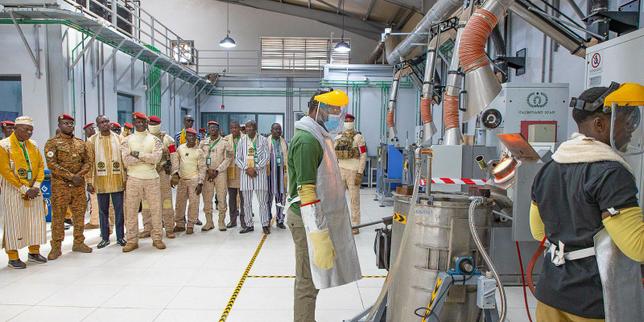
When a government pivots from relying on foreign capital to seizing direct stakes in mineral wealth, it assumes a crushing burden. Industrial gold mining is not merely a matter of shoveling ore into a furnace. It requires immense, uninterrupted capital, deep technical expertise, complex supply chains, and secure transport lines. When political friction chases away multinational operators, the state must fill the vacuum.
And filling that vacuum is extraordinarily difficult.
Consider the mechanics of the transition. A state can decree that a percentage of every ounce mined must remain in national vaults. It can demand local processing plants. But if the machinery breaks down, if the global market fluctuates, or if security deteriorates in regions plagued by insurgency, the golden stream begins to dry up at the source.
Security is the silent partner in every transaction here. Large swathes of both Mali and Burkina Faso lie outside effective government control, contested by armed militant groups who finance their campaigns through taxation of informal mining sites and smuggling networks. When the state attempts to redirect the gold trade into official, taxed channels, it often collides head-on with these shadow economies. The mines are not just economic assets; they are battlefields.
By betting their political survival on the gold sector, the leadership in both countries has tied its fate to a volatile commodity. Gold prices soar during global crises, offering a tempting cushion for cash-strapped administrations cut off from traditional Western aid and international financial markets. But reliance on a single commodity is a dangerous tightrope walk. When the price dips, or when production falters due to strikes, equipment shortages, or militant attacks, the fiscal foundation begins to fracture.
There is also the human cost etched into the margins of this grand strategy. The independent miners, whose grievances were weaponized to justify the takeover of foreign concessions, now find themselves squeezed by new state regulations designed to centralize control. Artisanal mining, which sustains millions of families across the region, faces mounting pressure to formalize, tax, or outright surrender territory to state-backed industrial projects.
The promise was sovereignty. The reality is a complicated, high-stakes scramble for control over the very dust that built empires centuries ago.
History tends to echo itself in the desert. Empires have risen and fallen on the trade routes that cross these sands, fueled by the same yellow metal that now tempts modern generals. The current leaders are betting that they can succeed where past administrations failed—that by bending the global mining industry to their will, they can secure true economic independence.
The sun dips below the horizon, painting the dust in shades of bruised purple and amber. In the camps, the fires are lit, casting flickering shadows against the walls of mud-brick huts. The pans are set aside until dawn. Deep underground, the unyielding rock waits, indifferent to the decrees signed in palaces far away, holding fast to secrets that outlive every government brave enough to claim them.