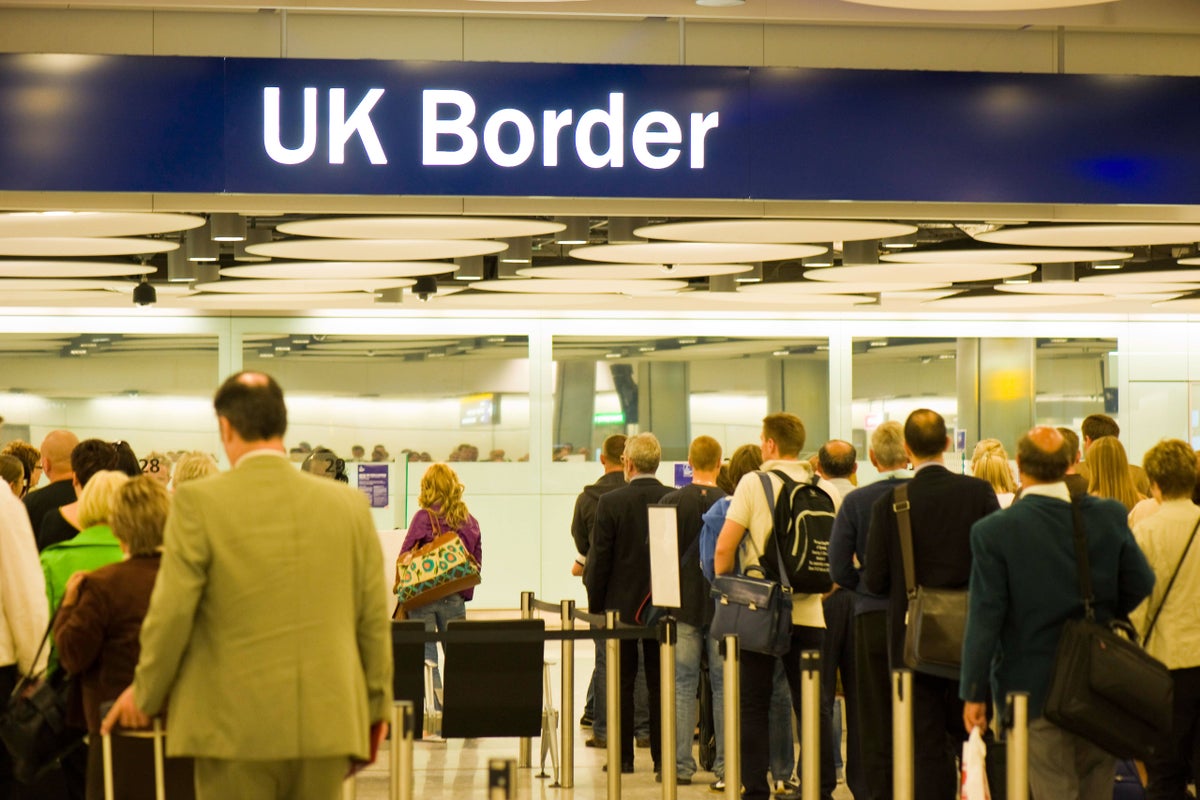
When a film director is forced to surrender an Academy Award to a gate agent at JFK, the resulting panic isn’t just about the $400 gold-plated statuette. It is a collision between the rarified air of Hollywood achievement and the brutal, egalitarian indifference of modern air travel. The recent incident involving a filmmaker forced to check their Oscar into the belly of a commercial jet exposes a growing friction point in the aviation industry—the systematic breakdown of the "fragile item" protocol and the erosion of passenger agency over their most prized possessions.
Security and logistics at major hubs like John F. Kennedy International Airport have become so rigid that even the highest symbols of cultural prestige are treated with the same cold pragmatism as a bag of gym clothes. The director in question was caught in a classic pincer movement of modern flying: a full flight, a gate agent under pressure to maintain an on-time departure, and a rigid adherence to overhead bin dimensions that don't account for the irregular shapes of trophy cases.
The statue eventually made its way back to its owner, but the ordeal highlights a massive disconnect. Airlines sell the dream of global connectivity while operating with the soul of a conveyor belt. If an Oscar isn't safe from the forced-check mandate, nothing is.
The Logistics of High-Stakes Cargo
Most passengers assume that once they clear TSA, the battle is won. That is a dangerous misconception. The real gatekeeper is the airline’s weight and balance manifesto. When a flight is "capacity controlled," the gate agent becomes a judge, jury, and executioner for carry-on luggage.
For an artist carrying an Oscar, the stakes are unique. These awards are surprisingly heavy—solid bronze plated in 24-karat gold, weighing roughly 8.5 pounds. To a TSA scanner, that’s a dense, opaque mass that requires manual inspection. To an airline agent, it’s a heavy object that could become a projectile in turbulence or, more likely, an awkward item that prevents a rolling suitcase from fitting into the bin.
The "checked at the gate" tag is the most feared sticker in travel. Once that tag is applied, the item enters the ramp system. This is a world of centrifugal sorters, rain-slicked tarmac, and high-speed baggage carts. While airlines claim to handle "pink-tagged" gate-checked items with more care, the reality is that these bags often end up on the same belts as every other piece of luggage. For a delicate gold finish, the friction of a rubber belt or the vibration of a cargo hold is a recipe for permanent scuffing.
Why the System Ignores Your Value
Airlines do not care about the sentimental or historical value of your luggage. They care about the Contract of Carriage. This dense legal document, which every passenger agrees to upon buying a ticket, explicitly limits the airline's liability for high-value items.
In the United States, the maximum liability for lost or damaged baggage on a domestic flight is capped at $3,800. For most people, that covers a laptop and some clothes. For a filmmaker, an Oscar is literally priceless; the Academy of Motion Picture Arts and Sciences actually has a "buy-back" rule where winners cannot sell their statues for more than $1. However, the cost of repair or replacement from the official foundry—Chicago’s R.S. Owens—is a bureaucratic nightmare that can take months.
The gate agent at JFK wasn't acting out of malice. They were acting out of a metric-driven necessity. Airlines are penalized for every minute a plane sits at the gate past its departure time. If a passenger is fumbling with a bulky box in the aisle, they are an obstacle to the "D0" (Departure at Zero minutes) goal. In this environment, the "forced check" is the easiest lever to pull.
The Myth of the Closet
Frequent flyers often mention the "onboard closet" reserved for first-class jackets or hanging bags. In the past, a polite request might have seen an Oscar safely tucked away there. However, modern aircraft configurations are stripping these amenities out to make room for more seats. On many narrow-body jets used for domestic hops out of New York, those closets have been replaced by slim-line galleys or extra rows of "Economy Plus" seating.
If you are flying on a Boeing 737 or an Airbus A320 today, you are competing for a finite amount of cubic inches. The hierarchy of the cabin is clear: those who pay for early boarding get the space. Those who board last, regardless of what they are carrying, get the cargo hold.
The Counter-Argument for Rigid Enforcement
While it is easy to cast the airline as the villain, there is a logistical counter-argument. If every passenger carried an irregularly shaped, heavy, "priceless" item, the cabin would become a safety hazard. Overhead bins are rated for specific weight limits. A dense, 8.5-pound bronze statue, if not properly secured, can easily crack the plastic housing of a bin or fall out during an emergency, causing serious injury.
Flight attendants are trained to view the cabin as a pressurized tube that must be evacuated in 90 seconds. To them, a director clinging to a trophy case is a potential bottleneck. The tension arises because the airline industry has spent two decades incentivizing passengers to avoid checked bags by charging fees, leading to a surplus of carry-on items. We have reached a breaking point where the bins are physically incapable of holding the volume of luggage we’ve been told to bring on board.
How to Protect High-Value Assets
For those traveling with items that cannot be replaced—whether it’s an Oscar, a Stradivarius, or a specialized piece of medical equipment—the "standard" passenger experience is no longer sufficient.
- Buy a Seat: This is the only way to guarantee a delicate item stays in the cabin. Professional cellists have done this for decades. It is expensive, but it removes the gate agent’s discretion from the equation.
- The Pelican Strategy: Never travel with high-value items in "prestige" packaging. A fancy leather case with an Academy logo is a magnet for theft or "random" inspections. Use a crush-proof, waterproof Pelican case that looks like boring industrial equipment.
- AirTags are Mandatory: The director at JFK was able to find their award, but many aren't so lucky. A hidden GPS tracker inside the lining of the case provides the only leverage a passenger has when an airline says, "We don't know where it is."
- Courier Services: If the item is truly irreplaceable, don't put it on a passenger plane. Specialty couriers provide door-to-door white-glove service, bypassing the chaos of the airport entirely.
The JFK incident shouldn't be viewed as a quirky celebrity mishap. It is a warning to every traveler that the infrastructure we rely on is strained to the point of failure. The systems designed to move humans and their things have become so optimized for speed and cost that they have lost the ability to handle the exceptional.
The Future of the Carry-On Conflict
We are moving toward a tiered system of "space rights." Some airlines are already testing "Basic Economy" fares that explicitly prohibit the use of overhead bins. This will eventually lead to a world where the bin itself is a monetized asset, much like a seat with extra legroom.
Until then, the struggle at the jet bridge will continue. The director’s lost-and-found Oscar is a symptom of a broader malaise in the service industry: the replacement of human judgment with rigid, algorithmic policy. When we stop allowing employees to make common-sense exceptions for extraordinary items, we turn the miracle of flight into a mere transit of meat and metal.
Next time you board, look at the bins not as a convenience, but as a contested territory. The person standing at the podium isn't looking at your achievements or your status; they are looking at a countdown clock. In that world, even a golden god is just another piece of excess weight.
Pack accordingly. Assume the hold is inevitable.