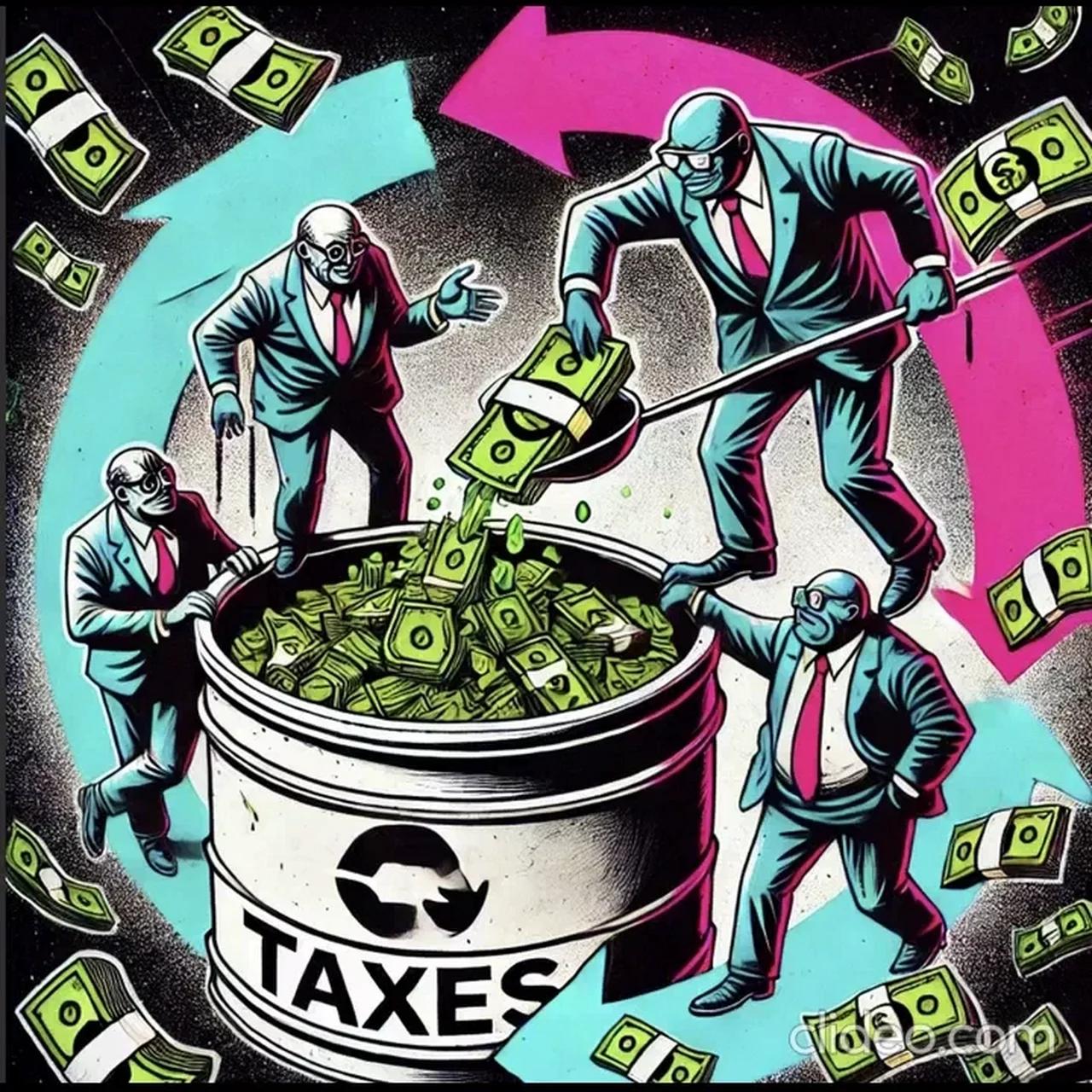
California is currently testing a dangerous economic hypothesis. The theory suggests that the state’s natural beauty, cultural capital, and ingrained industry clusters are so powerful that the wealthy will pay any price to remain. But the data shows the breaking point has arrived. For decades, the state’s budget has relied on a progressive tax structure that leans heavily on a tiny sliver of the population. When that sliver moves to Austin, Miami, or Incline Village, they don't just take their personal consumption with them. They take the capital gains, the corporate headquarters, and the future tax receipts that fund the very social programs California prides itself on maintaining.
This isn't a simple case of "taxation is theft" rhetoric found in local op-eds. It is a structural failure of risk management. By tethering the state's financial health to the volatile fortunes of the top 1% of earners, Sacramento has created a boom-and-bust cycle that is becoming increasingly difficult to stabilize. When the tech sector cools or the stock market dips, the state faces multibillion-dollar deficits. The knee-jerk reaction is often to suggest even higher levies on the "ultra-wealthy," a move that ignores the unprecedented mobility of modern capital.
The Myth of the Sticky Billionaire
There was a time when being a California titan of industry meant being anchored to a physical location. You had to be near the port, the studio, or the factory. That era is over. Digital infrastructure and the normalization of remote executive leadership have decoupled wealth from geography.
Evidence of this shift is no longer anecdotal. We see it in the migration patterns of high-earners who are increasingly opting for states with zero income tax. While the total population of California has seen slight fluctuations, the specific loss of high-income taxpayers is what should keep the Department of Finance awake at night. These individuals represent a disproportionate share of the tax base.
Consider the mechanics of the California personal income tax. The top 1% of earners frequently account for nearly half of all personal income tax revenue. This is a staggering level of concentration. If a few hundred key families decide that the combination of high taxes, rising crime in urban centers, and a failing public school system no longer justifies the "sunshine tax," the entire budgetary house of cards collapses.
Wealth Tax Proposals as a Catalyst for Exit
The recurring discussion of a wealth tax—levying a charge on net worth rather than just annual income—serves as a powerful psychological trigger for relocation. Even if such bills fail to pass the legislature, their constant introduction signals a hostile long-term environment.
For a venture capitalist or a founder with a massive unrealized gain in a startup, the mere threat of a wealth tax is a mandate to leave. They have to protect their liquidity. A wealth tax would require many to sell shares in their own companies just to cover the tax bill, potentially diluting their control and harming the businesses they built.
Moving is a one-time cost. Once a resident establishes domicile in Nevada or Florida, the hurdle to return is incredibly high. They buy new homes, move their philanthropic foundations, and re-center their professional networks. California isn't just losing today's revenue; it is losing the compound interest of that wealth for generations.
The Infrastructure of Discontent
High taxes are often tolerated if the services provided are world-class. That is the social contract. In California, that contract is fraying. High-net-worth individuals are looking at the state's infrastructure and seeing a poor return on investment.
Public transportation projects, like the high-speed rail, have become symbols of bloat and inefficiency. The electricity grid struggles under the weight of seasonal heatwaves, leading to preemptive power shutoffs. Meanwhile, the cost of living—driven largely by a chronic housing shortage—affects the ability of these wealthy individuals to hire and retain staff for their companies.
The Education Gap
Affluent parents are increasingly pulling their children out of the public system, opting for private institutions that cost as much as an Ivy League tuition. When the wealthy feel they must pay twice for essential services—once through heavy taxation and again through private fees—their resentment grows. They begin to view the state government not as a partner in progress, but as a predatory entity that provides diminishing utility.
Business Climate and the Regulatory Thicket
It isn't just the personal checkbook that drives the exit. The regulatory environment in California has become a dense thicket that stifles the very innovation the state claims to champion.
Small and medium-sized businesses, often the feeders for future wealth, find themselves buried under a mountain of compliance costs. From the Private Attorneys General Act (PAGA), which has been criticized for fueling frivolous employment lawsuits, to complex environmental regulations that can delay a simple building permit for years, the friction of doing business is at an all-time high.
When a CEO moves their residence to escape income tax, the company headquarters often follows. They want their executive team nearby. They want to be in a jurisdiction where the local government is hungry for their presence, rather than one that treats them as an ATM.
The False Narrative of the Replacement Resident
Some analysts argue that for every millionaire who leaves, a new one is minted in Silicon Valley. This is a dangerous assumption. It ignores the fact that the "new" millionaires are often more mobile and less tied to the state than the previous generation.
Furthermore, the "replacement" theory doesn't account for the loss of institutional memory and mentorship. The veteran entrepreneurs who leave take with them the wisdom and capital that fuels the next generation of startups. When they relocate, they start investing in the local ecosystems of their new homes. We are seeing a massive transfer of intellectual and financial seed corn from the Bay Area to places like the "Silicon Hills" of Austin.
A Hypothetical Fiscal Crisis
To understand the stakes, imagine a scenario where the top 5% of earners reduce their California-sourced income by just 15%. Because of the highly progressive nature of the tax brackets, this would not result in a simple 15% drop in revenue. It would trigger a catastrophic shortfall.
The state would be forced to choose between massive cuts to social services or raising taxes on the middle class—the very people who are already struggling with the highest gas prices and utility bills in the country. This is the "death spiral" that fiscal conservatives have warned about for years, and it is moving from the realm of theory into reality.
The Social Cost of Capital Flight
When wealth leaves, the first thing to dry up is local philanthropy. California’s non-profits, arts organizations, and community programs rely heavily on the generosity of the state's wealthiest residents. A billionaire living in Miami is far less likely to fund a new wing for a San Francisco museum or a scholarship program for Los Angeles youth.
The downstream effects are also felt in the service economy. The high-end construction, hospitality, and professional services sectors all shrink when the big spenders depart. This leads to job losses for the very people the state's progressive policies are intended to help.
Rethinking the Revenue Model
The solution isn't necessarily to slash all taxes to zero, but to create a more stable and predictable system. California needs to broaden its tax base and reduce its reliance on the highly volatile top tier. This would involve difficult political choices, such as reforming property tax laws or implementing a more moderate, flatter income tax structure that doesn't punish success so aggressively.
There must also be a radical focus on government efficiency. Taxpayers are more willing to contribute when they see tangible results—safe streets, functioning schools, and reliable water and power infrastructure. Without these basics, any tax rate will feel too high.
The Reality of Competition
California is no longer a monopoly. For most of the 20th century, it had no real competitors for its unique mix of climate and opportunity. Today, it is in a fierce competition with other states and even other countries that are aggressively courting its most valuable citizens.
States like Texas and Tennessee aren't just "not California." They are actively marketing themselves as the new frontiers of the American Dream, offering a lower cost of living and a government that views the private sector as an ally.
If California continues to treat its wealthiest citizens as a captive resource, it will find itself presiding over a hollowed-out economy. The "Golden State" brand is losing its luster, replaced by a reputation for dysfunction and fiscal instability. The exodus is a signal—a loud, clear warning that the current path is unsustainable.
Sacramento must stop viewing the departure of the wealthy as an ideological victory and start seeing it for what it is: a systemic failure that threatens the future of every Californian. The time for grandstanding is over. The state must decide if it wants to be a place that creates and retains wealth, or a place that merely remembers it.
Stop treating the tax base as a bottomless well. Start treating it as a mobile, global asset that requires cultivation rather than just extraction.