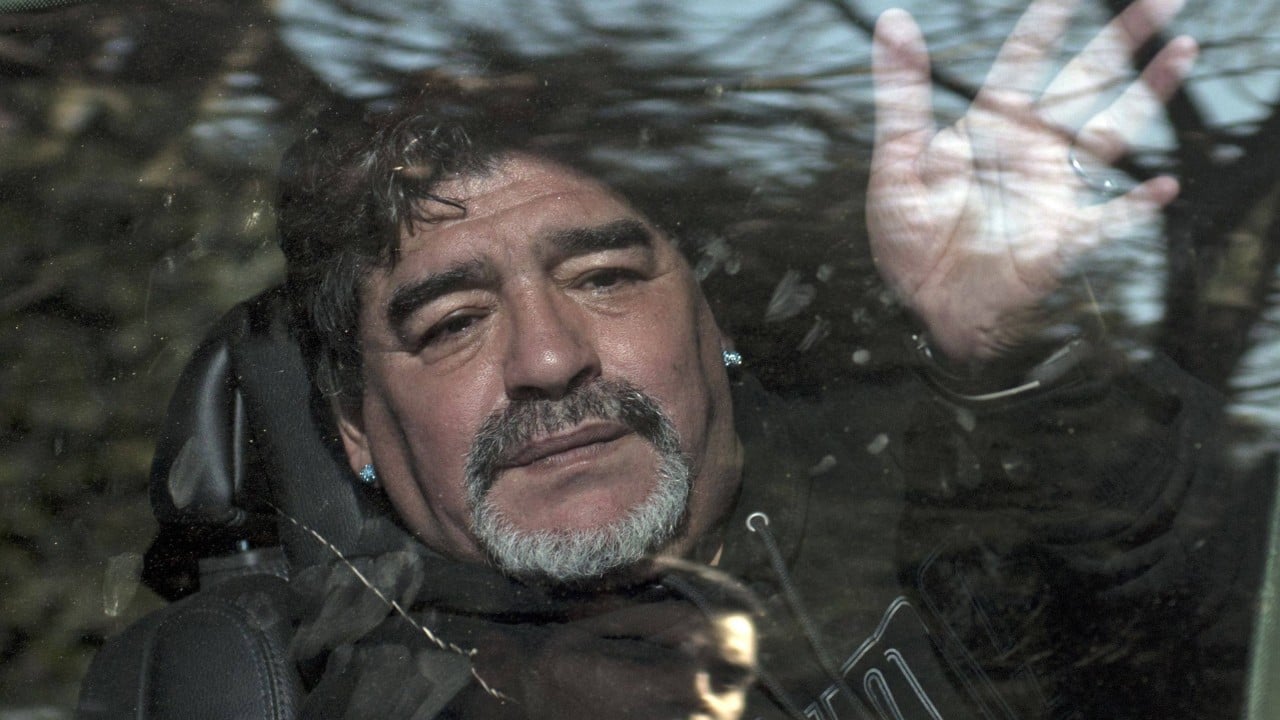
The world knows him as the boy from Villa Fiorito who carried the weight of an empire on his left foot. They remember the hand of God suspended in the warm Mexico air. They remember the tears of 1990, the frantic sprint toward the camera in 1994, the blue-and-white jersey soaked in sweat and exhaustion. But greatness is a jealous god. It demands everything, and when it is finished, it leaves you in a quiet room with the door locked from the outside.
Diego was never just a man. He was an idea we all projected onto—a chaotic, magnificent, fragile idea.
By the time the autumn leaves began to fall in Buenos Aires in 2020, that idea was fading behind locked doors in a rented house in Tigre. The house was supposed to be a sanctuary. It was meant to be a place of recovery, a quiet harbor after brain surgery. Instead, it became an island.
Listen to the silence of that house.
There were no machines beeping. There were no frantic nurses monitoring the steady rhythm of a failing heart. There was only quiet. And sometimes, silence isn't peace. Sometimes, silence is abandonment dressed up as privacy.
To understand what happened in those final weeks, you have to throw away the medical charts for a moment and look at the human architecture of neglect.
Imagine waking up after invasive neurosurgery. Your head throbs. Your body feels heavy, waterlogged, betrayed by decades of excess and adoration. You reach out for help. You expect a team of professionals—cardiologists, neurologists, emergency specialists—to be standing watch. You expect the rigorous vigilance that keeps a fragile life tethered to the earth.
Now imagine looking around and seeing an empty hallway.
Courtrooms in San Isidro would later echo with the sharp, clinical language of prosecutors. They would talk about homicidio simple con dolo eventual—homicide committed with eventual intent. It is a heavy, legalistic phrase that sounds cold on paper. But translate it into human terms, and it breaks your heart. It means knowing that someone is driving toward a cliff, watching them press their foot down on the gas, and simply turning your back.
The medical board’s report was devastating. It read like a catalog of systemic abandonment. Diego was left to his fate for hours, perhaps up to twelve, while his heart stuttered and stopped. His lungs filled with fluid. His body swelled. The warning signs weren't subtle whispers; they were screaming sirens that anyone with a basic medical license should have heard from across the street.
Yet, the doctors walked away.
Why? Because when you treat a myth, you stop seeing the mortal.
We have all been there in our own small ways. We look at someone who appears invincible—a parent, a leader, a fiercely independent friend—and we assume they do not need us to check in. We tell ourselves they are strong enough to handle the storm. Diego was the ultimate victim of his own mythology. Because he was Maradona, people assumed he could survive anything. Even his own failing ticker. Even a botched environment.
The prosecution argued that his medical team formed a deficient, reckless crew. They pointed to the psychiatric evaluation, or the lack thereof, the absence of a proper telemetry device, the lack of an on-site ambulance equipped for a man whose heart was a ticking time bomb. They pointed to a house that lacked basic emergency infrastructure.
It was a house designed for hiding, not healing.
Consider what happens when adoration turns into a smokescreen. For decades, crowds shielded him. They loved him so fiercely that they smothered him. In the end, that same dynamic inverted itself. The crowds were gone, replaced by handlers, fixers, and medical professionals whose duty of care dissolved into administrative indifference.
The trial details cut deep. Neurosurgeon Leopoldo Luque and psychiatrist Agustina Cosachov found themselves at the center of a storm they tried to weather with deleted text messages and frantic alibis. But text messages cannot rewrite a corpse. They cannot fill the cavernous void left by an hour-long delay in calling an ambulance.
As the legal wheels grind forward, seeking accountability for seven defendants facing up to twenty-five years in prison, the true tragedy remains untouched by gavels or sentencing guidelines.
The tragedy is the loneliness.
Diego spent his entire life surrounded by millions of people, yet he died in a rented room with a swollen heart and a pulse that slowly faded into nothingness while his caretakers argued over who was supposed to be watching the monitor.
We built the pedestal so high that no doctor could reach the top to check his pulse. We demanded that he remain a titan, even as his lungs drowned in his own fluids.
The courtroom doors in San Isidro will close eventually. Verdicts will be read. Sentences will be handed down or appealed. Justice, bureaucratic and measured, will try to balance the scales. But no verdict can bring back the man who taught a generation how to dream with their feet.
The house in Tigre stands empty now. The quiet has returned. But it is no longer the quiet of a sanctuary. It is the heavy, resonant silence of a world that looked away when the warning signs flashed red, leaving a lonely god to fight his final battle in the dark.



.png?width=1200&auto=webp&trim=0%2C0%2C0%2C0)