The air inside the sales office at One Victoria Cove smells faintly of fresh laminate, espresso, and adrenaline. Outside, the midday humidity of Hong Kong clings to the glass facades of Kai Tak, but in here, the climate is a crisp, expensive 19°C.
Consider a hypothetical buyer named Arthur. He is forty-two, a mid-level logistics director, wearing a linen shirt that is starting to wrinkle under the strain of a three-hour wait. In his right hand, he holds a glossy brochure detailing a 500-square-foot, two-bedroom flat. In his left, his phone displays a live financial feed.
Arthur is looking at a number: HK$9.2 million. After the developer’s maximum discounts, it feels almost reasonable. For the last several months, the city’s real estate market seemed to be shaking off its long winter, buoyed by the removal of historic stamp duties and a steady influx of talent from the mainland. But today, the atmosphere in the room is different. The frantic energy of the spring rebound has cooled into something heavier.
Hesitation.
The invisible weight holding back Arthur’s pen isn't the price of the concrete. It is the cost of the money used to buy it.
The Anchor of the Peg
To understand the sudden stillness in Hong Kong’s sales halls, one must look ten thousand miles away, across the Pacific, to the decision-making chambers of the US Federal Reserve. Because the Hong Kong dollar has been pegged to the US greenback since 1983, the city’s monetary policy moves in lockstep with Washington. When America tightens its belt, Hong Kong feels the squeeze.
For much of the past year, whispers of declining borrowing costs had injected a sense of urgency into local buyers. Rents were climbing toward near-record highs, and the cost of owning a home suddenly looked attractive against the backdrop of a 3.5% mortgage rate.
But geopolitical friction half a world away has scrambled those calculations. Renewed disruptions in global shipping and volatile energy prices have kept inflation stubborn. Now, instead of the anticipated cuts, the Hong Kong Monetary Authority has issued a quiet, deliberate warning: the interest rate trajectory is deeply uncertain, and an increase later this year remains firmly on the table.
For a local family, that uncertainty is not an abstract economic metric. It is a monthly math problem.
On a HK$7 million mortgage, a mere half-percentage-point hike translates to roughly an extra HK$2,000 every single month. That is not just a statistical adjustment; it is the price of grocery bills, school tuitions, or a family dinner in Causeway Bay. When money becomes more expensive, choices become deliberate.
The Shift in the Room
The buyers queuing for the 130 flats released on this particular evening are not panicking. They are calculating. The sheer, unbridled optimism that characterized the market's recent peak—where units sold out in a matter of hours via frantic lottery systems—has given way to a measured restraint.
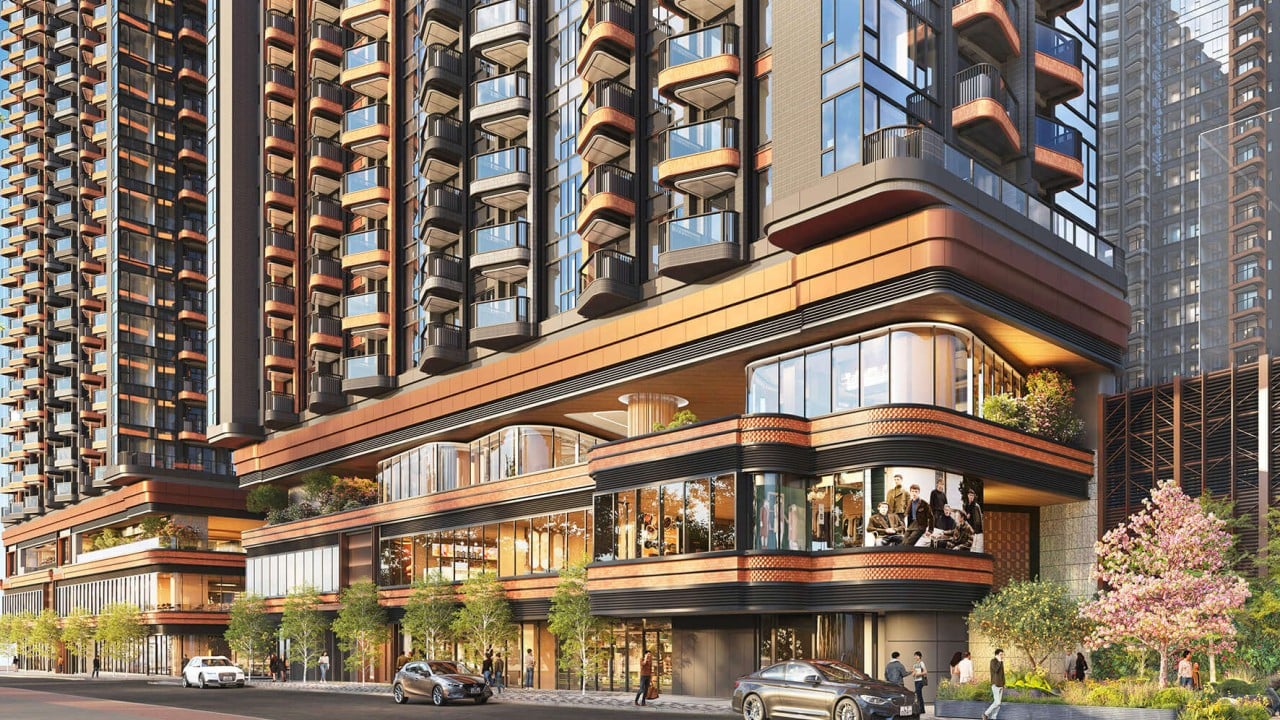
Developers are adjusting to this new psychological landscape. At One Victoria Cove, jointly backed by Henderson Land, Hysan Development, and Empire Group, the pricing strategy tells the story. Flats are priced between HK$6.88 million and HK$13.52 million, working out to roughly HK$19,589 to HK$23,105 per square foot. These are aggressive, calculated numbers designed to tempt buyers who are suddenly hyper-aware of their own financial margins.
The local owner-occupiers—the young couples attempting to escape the brutal rental cycle, the upgraders needing an extra room for a growing child—are playing a game of chicken with the banks.
They know the fundamentals of the city remain tight. Land is finite. The population is shifting, with over 100,000 arrivals via talent admission schemes keeping the rental market incredibly robust. Yet, the cost of leverage acts as a heavy brake on enthusiasm.
The Cost of Free Capital
There was a time when buying property in Hong Kong felt like an inevitability, a rite of passage for anyone who managed to accumulate a sliver of wealth. During the decade of ultra-low interest rates, keeping cash in a savings account felt like watching it slowly evaporate. Property was the only vault that mattered.
Now, the alternative to buying is no longer penalizing. With high-yield fixed deposits and low-risk financial instruments offering returns above 4%, the opportunity cost of tying up millions in a down payment has fundamentally shifted.
Arthur stares at the floor plan of the Kai Tak apartment. He thinks about his current rent, then compares it to the projected mortgage payments if interest rates climb another 50 basis points. The math is close. Too close.
The sales agent at his elbow speaks softly, pointing out the panoramic view of the harbor shown in the rendering, emphasizing the premium finishes. But Arthur isn't looking at the marble countertops. He is visualizing a amortization schedule.
He steps out of the queue, folding the brochure into his leather briefcase. He decides to wait for the next quarter’s data. He is not alone. Across the city's gleaming show flats, hundreds of similar conversations are ending not with a signed contract, but with a polite nod and a step backward into the humid afternoon air.
The market isn't crashing. It is pausing to breathe, waiting to see which way the global wind blows before committing its wealth to the stone.