You can hear the air conditioning in the back rows of the General Assembly hall. It is a dry, artificial hum that never quite stops, a mechanical lung breathing for a room built to hold the arguments of the world.
Outside, on the streets of Manhattan, autumn is arriving with the sharp scent of roasted chestnuts and exhaust. Sirens wail through the gridlock, folding into the cacophony of a city that has learned to ignore everything and notice everything all at once. Inside, beneath the vast, cobalt-blue mural of human rebirth that dominates the chamber, the atmosphere is heavier. It smells of old wool, floor wax, and history.
This is where speeches become weather.
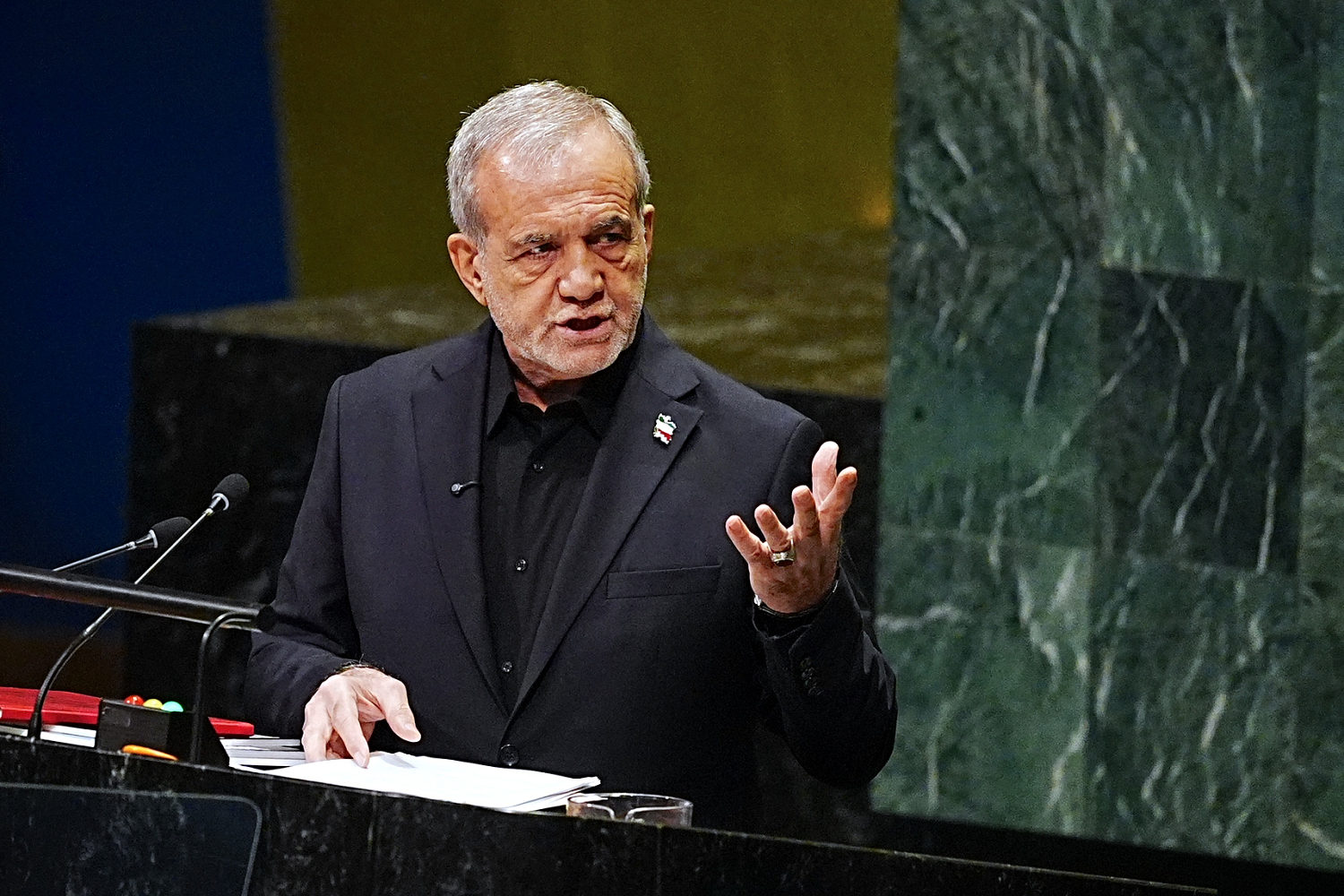
When a leader steps up to that green marble podium, the room shifts. Delegates slide notes across mahogany desks. Translators adjust their headphones. Earpieces click. In a few moments, Benjamin Netanyahu will stand behind that glass shield—a security measure that has become as permanent a fixture of the United Nations as the flags snapping in the wind outside—and he will speak.
To the news tickers, it is an address. A scheduled event. A line item on a global calendar. But for the people sitting in the shadow of the conflict, and for the diplomats trying to chart a course through the smoke, it is something entirely different. It is a moment where language is tested to its absolute limit.
Words, in places like this, are not just communication. They are munitions. They are shields. They are anchors dropped into a churning sea of grief and rage.
Consider what happens in a typical living room thousands of miles away from Turtle Bay. A television is tuned to the live feed. A mother in Tel Aviv glances at the screen while pouring tea, her eyes tracing the familiar silhouette of the Israeli prime minister adjusting his notes. In a kitchen in Gaza, beneath a flickering light powered by a generator sputtering on its last drops of fuel, another screen glows in the dark, translating those same words into Arabic, waiting for a signal of escalation or relief.
The distance between those two kitchens is only a few hundred miles, yet they exist in entirely different galaxies of experience. And the speech at the U.N. is the bridge that spans that impossible chasm—a fragile, contested bridge built entirely of rhetoric.
We often talk about geopolitics as if it were a game played on a flat map by emotionless pieces. We look at arrows drawn on touchscreen monitors by analysts in crisp suits. We count artillery shells, tally casualties, and debate resolutions that will likely meet the velvet veto of the Security Council.
Yet, beneath every statistic is a human nervous system pushed past its breaking point.
When a prime minister takes the global stage during a period of profound regional crisis, he is not just addressing the delegates in the room. He is performing a delicate, high-stakes alchemy. He must speak to the domestic audience back home—voters who are grieving, angry, exhausted, and deeply divided over the path forward. He must answer the skeptics and allies in Washington, London, and Berlin. And he must look directly into the eyes of his adversaries, sending a message written in the cold grammar of deterrence.
It is an impossible performance. To satisfy one corner of this triangle is to infuriate the others.
Walk the halls of the U.N. headquarters on the day of a major address, and you can feel the tension in the terrazzo floors. Diplomats in dark suits cluster around corners, whispering in French, English, and Hebrew. Security guards stand a little straighter, their earpieces glowing with faint blue light. There is an electric, anxious energy that precedes the prime minister's arrival, because everyone in the building knows the fundamental truth of international diplomacy: words have consequences, and sometimes, a single sentence can light a fuse that no amount of diplomacy can put out.
We have seen this script before, though the actors and the stakes change with every generation. The podium has hosted defiance, reconciliation, fury, and despair. From Khrushchev pounding his fist to Arafat wearing an olive branch on his hip, the General Assembly hall is a theater of ultimate consequence. It is where nations go when they have run out of room to maneuver on the ground.
When Netanyahu speaks, the core of his message invariably circles back to a single, haunting concept: survival.
To his supporters, his rhetoric is the necessary shield of a nation surrounded by hostile forces, a reminder of historical trauma that refuses to fade into the background of polite diplomacy. To his critics, that same rhetoric is an obstacle to peace, a wall of absolute certainty that hardens hearts and forecloses the messy, painful compromises required to build a shared future.
Both things can be true at the exact same time. That is the tragedy of it.
History is rarely a neat story with clear heroes and villains; more often, it is a catastrophic collision of competing traumas. Every community involved in this conflict is carrying an archive of pain so heavy that it dictates their vision of tomorrow. When the prime minister speaks of existential threats, he is channeling a collective memory that goes back generations—a memory of persecution, exile, and the constant, gnawing fear of annihilation.
At the same time, look out across the region, and you see another archive of pain. Children growing up in the rubble of bombed neighborhoods, families displaced multiple times over, lives uprooted by forces entirely beyond their control. For them, the rhetoric booming out of the U.N. loudspeakers is not an abstract political strategy; it is the voice of the storm that is currently tearing their world apart.
This is why the address matters. Not because the General Assembly will suddenly vote to rewrite the Middle East, and not because speeches instantly stop wars. They rarely do.
It matters because it exposes the narrative architecture of the conflict. It lays bare the stories nations tell themselves to justify their actions, to comfort their grief, and to steel their resolve.
When the cameras zoom in on the Israeli delegation sitting quietly in the assembly hall, their expressions are masks of intense concentration. Every nod, every silence, every polite piece of applause is weighed, measured, and analyzed by the global press corps. In the press gallery above, journalists tap furiously on keyboards, translating the cadence of the speech into breaking news alerts that will flash across millions of phones within seconds.
We live in an era where attention is fractured into tiny, digital splinters. We consume our news in bite-sized fragments, stripped of context, smoothed out for easy digestion. We pick our tribes, lock ourselves into echo chambers, and treat complex human tragedies like sports rivalries.
Yet, moments like this force us to look up. They remind us that behind the social media debates and the political talking points, real people are living—and dying—at the mercy of these decisions.
As the prime minister's voice echoes off the marble walls of the U.N., carrying across continents and time zones, the real test is not how many diplomats stand up to clap or walk out in protest. The real test is whether those words bring us one inch closer to an ending, or whether they simply add another layer of sediment to the deep, enduring bedrock of our conflicts.
The air conditioning hums on. The translators lean into their microphones. And out in the vast, complicated world, the millions who have the most to lose wait to see what tomorrow will bring.