The air in the high-desert of the American Southwest smells of sagebrush and parched earth. It is a clean scent, the kind that makes you want to fill your lungs to the brim. But for some, that very act of breathing becomes a gamble with a ghost.
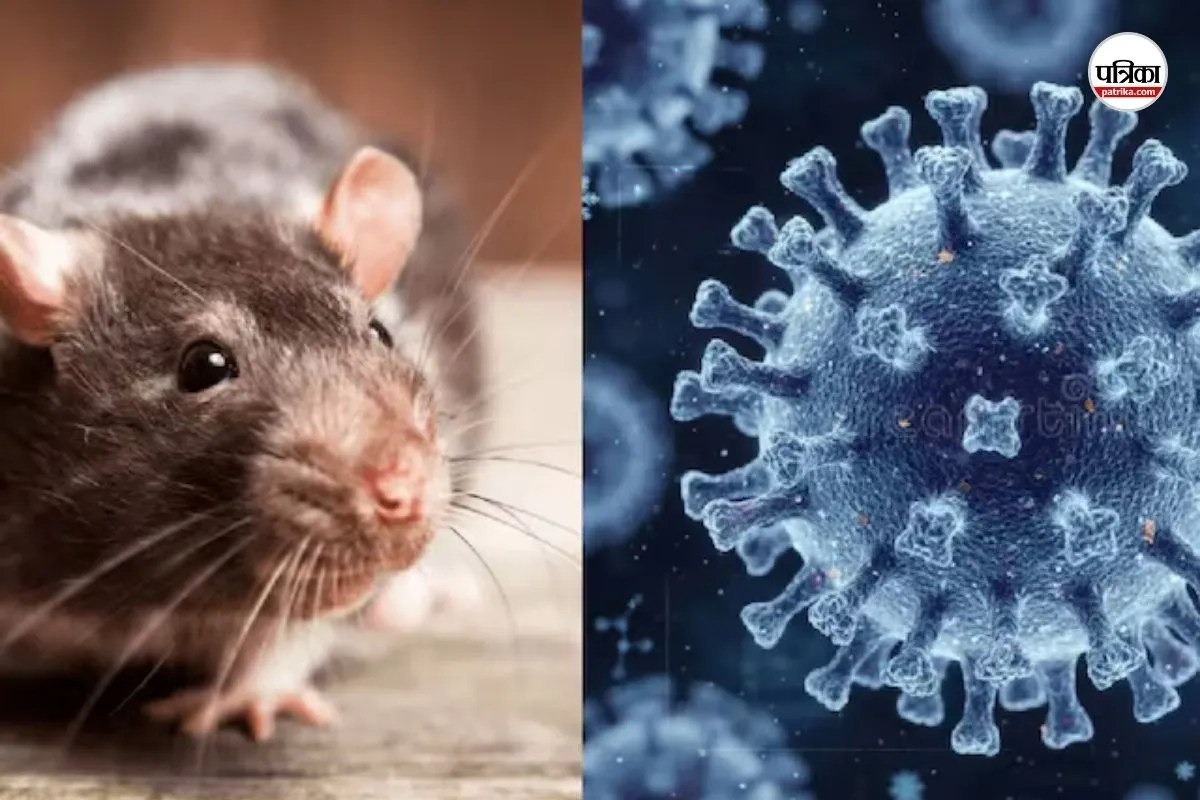
Deep within a secure facility, a technician watches a monitor. The room is climate-controlled, a stark contrast to the shifting temperatures of the Four Corners region outside. On the screen, a series of data points flicker—geographic coordinates, humidity levels, and the population density of Peromyscus maniculatus, the common deer mouse. To the casual observer, it looks like mundane ecological tracking. To the people inside this wire-rimmed monitoring hub, it is a map of a silent war.
This is the front line against Hantavirus Pulmonary Syndrome (HPS). It is a disease that doesn't care about your politics or your bank account. It only cares about the dust.
The Weight of a Speck of Dust
Imagine a young man named Elias. He’s hypothetical, but he represents a composite of dozens of cases tracked by public health officials every year. Elias is cleaning out his grandmother’s old shed in rural New Mexico. He sees the cobwebs, the rusted garden shears, and the small, dark droppings scattered across a workbench. He grabs a broom. He sweeps.
In that moment, a cloud of fine particles rises. It’s invisible in the dim light of the shed. Within that cloud is the Sin Nombre virus. Elias breathes it in. It’s effortless. It’s a Friday afternoon, and he’s thinking about dinner.
The virus doesn't strike immediately. It waits. It’s a hitchhiker that has spent millennia evolving alongside rodents, causing them no harm while perfecting its ability to dismantle human biology. For the first few days, Elias feels fine. Then comes the fever. The muscle aches in his thighs and lower back. He thinks it’s the flu. He takes some ibuprofen and goes to bed.
But Hantavirus is a master of deception. While Elias rests, the virus is busy invading the endothelial cells that line his capillaries. Specifically, the ones in his lungs. It doesn't destroy them directly; instead, it triggers a massive, panicked overreaction from his own immune system. His blood vessels begin to leak. His lungs, designed to be pillows of air, start to fill with his own plasma.
He is drowning on dry land.
The Sentinels in the Dark
Back at the monitoring facility, the data shifts. An unusual spike in deer mouse populations has been recorded following a particularly wet winter. More rain means more pinyon nuts. More nuts mean more mice. More mice mean more contact with humans.
The scientists here aren't just bureaucrats; they are detectives of the invisible. They use satellite imagery to track "green-up" events—periods where vegetation flourishes, signaling a looming boom in the rodent population. They know that nature operates on a pulse, and they are trying to stay one heartbeat ahead of the next outbreak.
The stakes are staggering. Hantavirus has a mortality rate of around 38%. Compare that to the seasonal flu, which usually hovers well below 1%. If you get sick enough to be hospitalized with HPS, your survival becomes a coin flip.
The facility acts as an early warning system, a bridge between the wild, unpredictable biology of the desert and the sterile halls of the ICU. They coordinate with local clinics, telling doctors to look past the "flu-like symptoms" when a patient comes in from a high-risk area. They push for public awareness, begging people like Elias to use bleach and masks instead of brooms.
But data can only do so much against human habit. We are a species that likes to tidy up. We see a mess, we sweep it. We don't think about the microscopic monsters lurking in the debris of a mouse’s nest.
The Anatomy of an Outbreak
Why does a tiny virus in a mouse’s nest matter to a tech-heavy society obsessed with AI and space travel? Because biology is the ultimate equalizer.
The monitoring facility tracks more than just mice. They track the human-land interface. As we push further into rural areas, building dream homes in the shadows of mesas, we are encroaching on a viral reservoir that has existed long before we arrived. We are invited guests who forgot to wipe our feet.
Consider the complexity of the surveillance. It involves:
- Zoonotic Mapping: Identifying which specific rodent species are carrying the viral load in a given county.
- Serology: Testing blood samples from trapped rodents to see how the virus is circulating in the wild.
- Meteorological Correlation: Predicting outbreaks based on El Niño cycles and local rainfall patterns.
It is a massive, multi-disciplinary effort to prevent a single breath from becoming fatal. The cost of running these facilities is high, but the cost of the alternative is measured in empty chairs at dinner tables. When a case is confirmed, the facility goes into overdrive. They trace the patient's movements. Was it a shed? A cabin? A woodpile? They need to know if this is an isolated incident or the beginning of a cluster.
The fear is always a mutation. While Hantavirus currently requires direct contact with rodent excreta or saliva, the nightmare scenario for every person in that facility is a variant that jumps from human to human. If that ever happens, the quiet desert disease becomes a global catastrophe.
The Cold Reality of the ICU
When Elias finally goes to the emergency room, his blood pressure is cratering. His oxygen levels are dropping faster than the staff can supplement them. This is the "cardiopulmonary phase," and it happens with terrifying speed. One hour he is talking; the next, he is being intubated.
There is no "cure" for Hantavirus. No magic pill. No specific antiviral that can stop the leakage. The treatment is purely supportive. Doctors try to keep the patient alive long enough for their body to clear the virus on its own. Often, this requires Extracorporeal Membrane Oxygenation (ECMO)—a machine that takes the blood out of the body, oxygenates it, and pumps it back in, bypassing the fluid-clogged lungs entirely.
It is a brutal, high-tech fight against a primitive enemy.
The nurses in these units are some of the most resilient people on earth. They watch as otherwise healthy, young individuals struggle for air. They see the terror in the eyes of family members who can’t understand how a simple cleaning chore turned into a death sentence.
The monitoring facility sees this, too. They see the reports. They see the names. They know that every data point on their screen represents a life that could be extinguished by a speck of dust.
The Human Element in the Data
We often talk about public health in terms of "manpower" and "resources." But inside the monitoring center, it’s about intuition. It’s about the veteran researcher who notices a slight shift in the way the wind is carrying dust across a specific valley. It’s about the field technician who braves the heat to check traps, knowing that one bite or one scratch could put them in the very hospital beds they are trying to keep empty.
There is a strange intimacy in this work. You are studying a creature—the deer mouse—that is both a common household pest and a biological weapon. You learn its habits. You learn where it sleeps, what it eats, and how it survives the winter. You start to see the world through its eyes, and in doing so, you see where the human world is most vulnerable.
The facility’s true purpose is to act as a shield. It is a thin, fragile layer of expertise and vigilance standing between a sprawling, unaware public and a virus that has been refining its lethality for millions of years.
The Silence of the Desert
The sun sets over the facility, casting long, purple shadows across the scrubland. Inside, the monitors continue to hum. The data streams in, a constant flow of information that most people will never see and fewer will understand.
Outside, in a thousand sheds and barns and summer cabins, the mice are moving. They are small, bright-eyed, and seemingly harmless. They go about their lives, oblivious to the fact that they carry a silent passenger.
Elias survives, but his recovery takes months. His lungs are scarred. He tires easily. He never looks at a dusty room the same way again. He buys a respirator. He keeps a gallon of bleach under the sink. He has learned the lesson that the monitoring facility tries to teach the world every day: the smallest things are often the most dangerous.
The facility isn't just about science. It’s about the fundamental human desire to survive in a world that doesn't always want us here. It’s about the recognition that we are part of an ecosystem, not masters of it. Every time a technician flags a rising rodent population or issues a public health warning, they are performing an act of profound hope. They are betting that knowledge can overcome instinct. They are betting that we can learn to breathe safely in a world where the air itself can be a betrayal.
The monitors flicker. A new data point appears. Somewhere, a mouse has moved, and somewhere else, a human is reaching for a broom. The watch continues.
The desert stays silent, keeping its secrets in the dust, waiting for the next person to take a deep, unsuspecting breath.